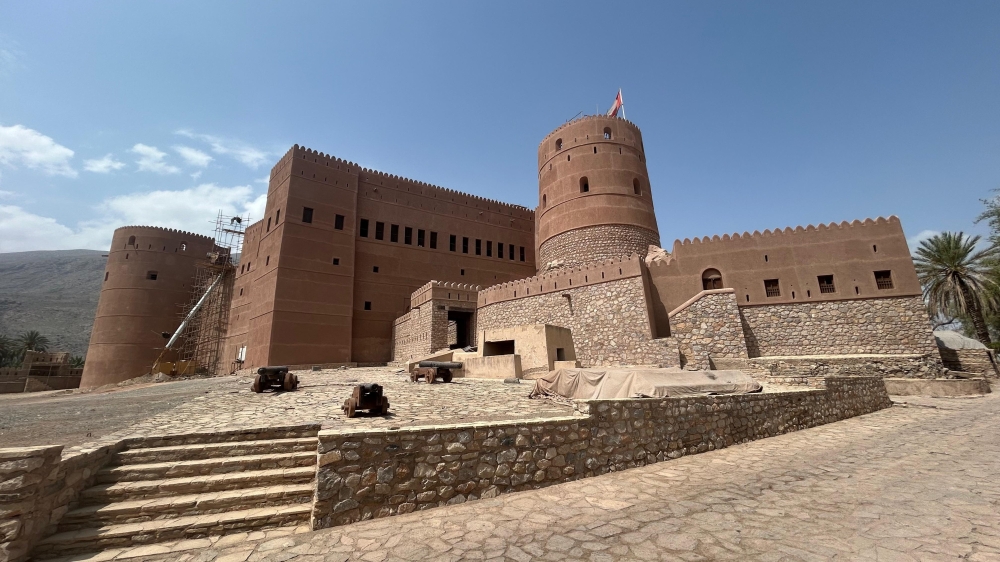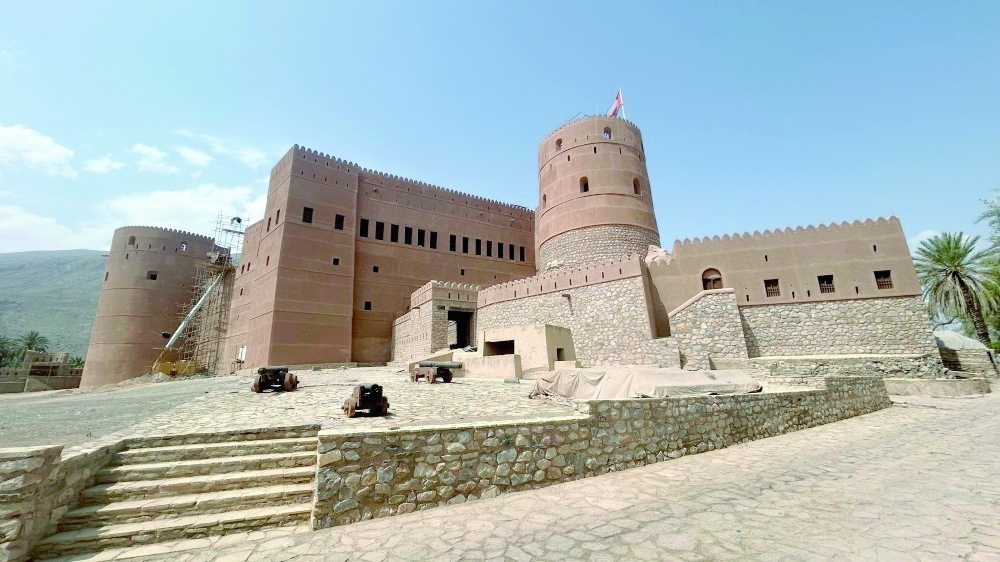





MUSCAT: The Ministry of Heritage and Tourism (MoHT) is advancing a comprehensive restoration of Al Rustaq Fort, one of Oman’s oldest and most significant forts, to preserve its unique architectural heritage and underscore its cultural value.
Scheduled to continue until November 2027, the project aims to enhance the fort as a cultural and tourist destination, promote local craftsmanship and attract investment in heritage tourism.
Al Rustaq Fort’s walls reflect a rich history, dating back to the pre-Islamic era, with significant expansions during the Yaaribi dynasty and the reign of Imam Ahmed bin Said al Busaidy. Recently, the fort was inscribed on the Islamic Heritage List in recognition of its cultural significance and exceptional architectural features.
Implemented by the ministry, the restoration follows a multi-stage plan. Key efforts include rebuilding cracked walls using traditional stones and materials, treating damaged exterior cladding with 'sarooj,' maintaining historic wooden and metal windows and restoring towers, most notably the 'Devils' Tower,' which was reconstructed after a partial collapse using traditional techniques faithful to the original design.
Engineering teams have also documented important architectural evidence, such as traditional rammed-earth layers, leaving portions exposed for scientific study.
On the western façade, restoration work - including surface cleaning, treatment of damaged layers, and new cladding—has been completed. Historically significant architectural openings discovered in this phase are currently under study.
Inside the fort, courtyards and interior façades have undergone cleaning, crack treatment and application of initial cladding layers, with final layers pending completion of electrical installations.
Re-roofing and structural reinforcement have been completed for 24 rooms, with roofing underway on an additional 25 rooms. Most of the fort’s four façades have been restored, with discovered architectural remnants preserved and documented.
Restoration of the outer wall is in progress in collaboration with relevant authorities, reinforcing Al Rustaq Fort’s status as a prominent symbol of Oman’s historical and cultural heritage.
Oman Observer is now on the WhatsApp channel. Click here