




MUSCAT, AUG 28
OQ Gas Networks (OQGN), the operator of Oman’s national gas transportation system, announced that it has begun mapping out a CO₂ pipeline network to support the decarbonisation requirements of early adopters of Carbon Capture, Utilisation and Storage (CCUS) technology – a key pathway to achieving Oman’s Net-Zero goals.
Publicly traded OQGN – part of Oman’s integrated energy group OQ – disclosed the plan during a recent conference call to discuss the company’s financial and operational performance for the first half of 2025.
“OQGN is conceptualising a CO₂ pipeline network to meet first movers’ requirements,” company officials stated in a presentation. “OQGN is working with key partners to progress the Northern CCUS opportunity. The first phase of development has been identified to pursue potential capture of CO₂ from a power plant.”
Additionally, the operator is collaborating with Occidental of Oman (Oxy) to build an integrated CCUS value chain to meet the latter’s requirements for CO₂-Enhanced Oil Recovery (EOR), including the commercial aspects of developing a CO₂ transportation pipeline. EOR operators such as Oxy plan to use captured CO₂ for injection into reservoirs to boost crude output while simultaneously storing the CO₂ underground.
"We are now focusing on a particular opportunity in northern Oman, which is to support an EOR project with Oxy. The idea is to develop a safe and effective system to route CO₂ from emission sites in Suhar and Ibri to a block in northern Oman operated by Oxy for EOR. Both teams, with the support of policymakers, are converging on a feasibility or concept realisation of this opportunity,” an official explained.
Other likely first movers with a stake in the development of a CO₂ pipeline include developers of blue hydrogen and blue ammonia projects that reform natural gas into hydrogen or ammonia while capturing the CO₂ byproduct for storage or utilisation.
Also among the prospective early adopters are energy, industrial, and petrochemical companies – such as oil refineries, power plants, and steel or cement producers – that plan to capture CO₂ emissions from their facilities as part of CCUS initiatives.
Officials further highlighted OQGN’s support for the Omani government in decarbonising the national economy, noting in particular its collaboration with the Ministry of Energy and Minerals in formulating a National CCUS Regulatory and Policy Framework. OQGN leads the CO₂ Transportation Workstream of this framework, while other stakeholders are responsible for complementary areas: Oxy (CO₂ Capture), Petroleum Development Oman (CO₂ Storage), and Shell (Blue Products and Synthetic Fuels).
Preliminary master plans for CO₂ pipeline development have already been assessed, with OQGN formally recognised as the country’s CO₂ transporter responsible for owning, operating, and maintaining Oman’s CO₂ transmission network.
Separately, OQGN is also advancing the master planning of an optimal hydrogen pipeline network to cater to both awarded and future green hydrogen developers. This network will leverage economies of scale and Right of Way (ROW) efficiencies to reduce transportation costs.
In addition, OQGN is actively engaged in a feasibility study led by Hydrom – the orchestrator of Oman’s green hydrogen industry – to align on technical, commercial, legal, and financial considerations, officials added.
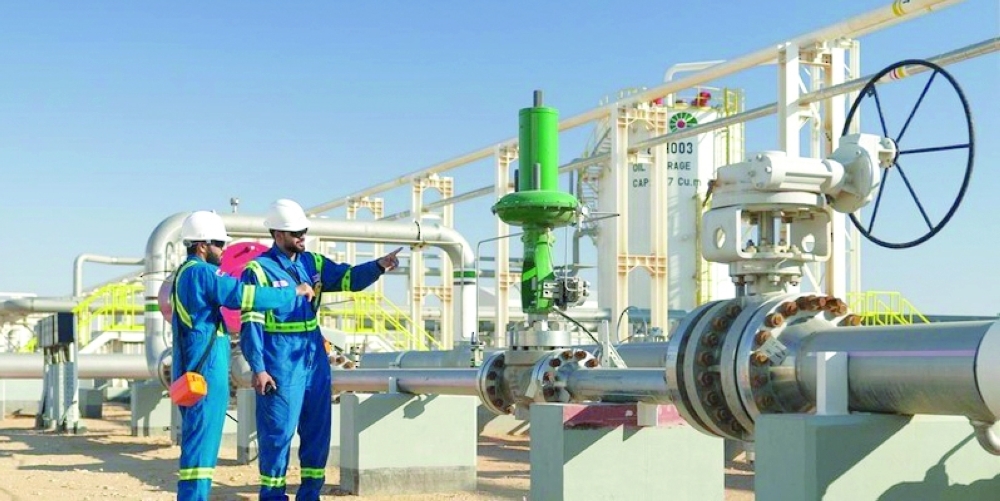
Caption:
OQGN is formally recognised as the country’s CO₂ transporter responsible for owning, operating and maintaining Oman’s CO₂ transmission network.
Oman Observer is now on the WhatsApp channel. Click here