Agriculture in Oman is more than production; it is about safeguarding food security, sustaining rural families, celebrating cultural know-how and countering shifting climates. With finite land and dwindling water, the nation draws on centuries-old palm-studded oases and desert-edge farms, mastering dates and citrus, and then augments this heritage with greenhouses, high-tech greenhouses, affordable dairy and a rising aquaculture industry. When aligned with the principles of Oman Vision 2040 and the bold backing of the Oman Investment Authority alongside discerning private investors, the promise becomes a coherent national food system.
Over the past decade, Oman has invested in a 360-degree food pipeline, knitting mills, hatcheries, dairy parlours, dates refinements and chilled-seafood hubs into an ecosystem that cuts down on outside essentials, lifts the economy and gears output to global-standard identities.
Arable expansion is no longer the operating question; the solution kit is far more sophisticated: (i) laser-guided water resource finesse; (ii) high-density greenhouses sheltered from desert extremes; (iii) an unbroken, hygienic, chilled journey from harvest to home and table; (iv) the transformation of dates, yoghurt and farmed shrimp from primary ingredients into branded, profit-strengthening signatures; (v) an inland transport network that threads past sandy ridges and through looming mountains, knitting hinterland farmsteads to central logistics hubs and to the commercial arteries of the Gulf and beyond.
Policy Architecture: Vision 2040 and Food-Security Platforms
Oman Vision 2040 places food and water security among its strategic priorities, calling for efficient resource use, technology uptake and active private sector participation.
In 2024, Oman unified the country’s food and fisheries investment portfolios to sharpen decision-making, improve execution speed and eliminate duplication of resources; the new curation accelerates self-sufficiency and export-related objectives by channelling resources to priority initiatives.
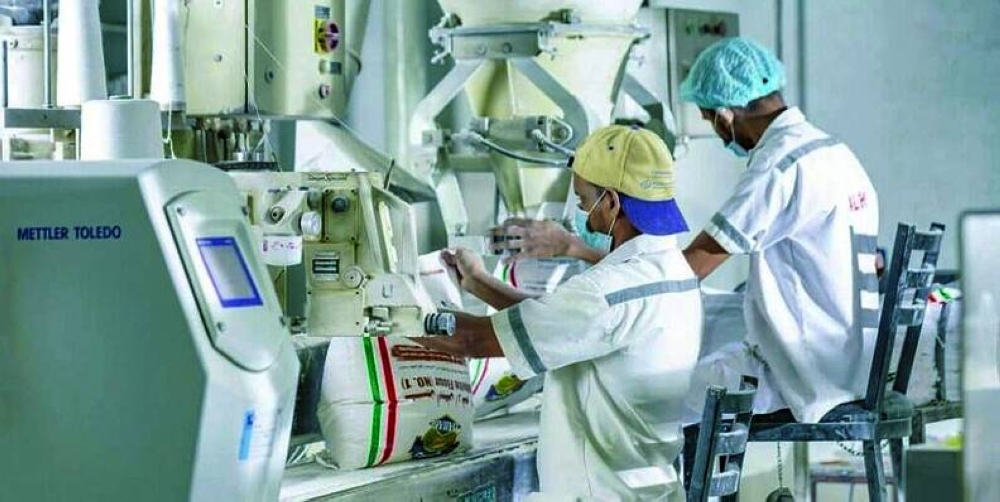
The merger drew upon a ten-year base of dedicated capital in poultry (A’Namaa), dairy (Mazoon), milling and feed (Oman Flour Mills with subsidiaries), and seafood (Fisheries Development Oman), where state sponsorship has served to derisk new projects, establish critical mass, and later invite private operators to manage commercial scales once governance and systems are stable.
Added governance is provided by the Sustainable Agriculture and Rural Development Strategy 2040 (SARDS 2040), which structures planned change around ecological resilience, commercial viability and rural income, specifying the agricultural sector’s contribution to wider economic diversification and social well-being.
Recommendations
A) Water and Climate Resilience
1. Deploy basin-scale smart metering complemented by basin-level, dynamic water accounting; categorise all use permits according to volumetric ceilings and proportionate recharge goals.
2. Broaden blanket adoption of well-designed deficit irrigation and subsurface drip in tree, palm and nut orchards; evaluate salinity profiles and remediate with gypsum/soil amendments and salt-resilient lines.
3. Pilot synergistic, blended-water systems initially targeting grains and non-leafy animal feed; develop and publish transparent safety protocols, crop specifications and cross-jurisdictional compliance guidelines.
4. Aflaj modernisation fund to finance canal lining, leakage repairs and telemetry — respects communal governance while introducing sufficient technical resilience.
B) Productivity and Technology
5. Greenhouse acceleration programme: co-finance semi-intensive greenhouses equipped with evaporative cooling, fertigated systems and integrated pest management, bundling power tariff incentives with mandatory efficiency benchmarks.
6. National horticulture genetics initiative: fast-track heat-tolerant cultivars of tomato, cucumber and pepper, leveraging public–private partnerships and local seed multipliers to multiply seed swiftly.
7. Date palm genomics and propagation: enlarge elite cultivar tissue-culture production capacities, map and register mother gardens, and prioritise genetic targets including yield, sensory quality and salt stress resilience.
C) Value-Addition and Branding
8. Dates 2.0: create a National Date Quality Mark that incorporates grading, secure packaging and end-to-end traceability, with a premium on retail packs, syrups, energy bars and co-branded confectionery.
9. Dairy product diversification: offer financial incentives for production of refined cheeses, lactose-free lines, and fortified protein beverages, while deploying public-school procurement to secure minimum volumes.
10. Poultry integration and contract farming: develop standardised grower contracts that codify animal welfare, litter management standards, and cold-chain key performance indicators, and expand hatchery capacities along with breeder biosecurity protocols.
11. Seafood processing excellence: implement HACCP and BRCGS certification upgrades, conduct plant hygiene audit cycles, and drive product innovation in breaded, smoked and ready-to-cook offerings while rigorously managing the environmental footprint of aquaculture clusters.
D) Feed and Forage Strategy
12. Formulate optimised feed rations incorporating locally produced by-products — such as date pits, rice bran and fishmeal side streams — where peer-reviewed results validate efficacy and support these trials with partner university laboratories.
13. Forage water-productivity standards: certify farms that hit defined water-per-tonne limits; run pilot blocks of saline-tolerant forage irrigated with brackish water.
E) Quality, Safety and Standards
14. Unified Food Quality Authority dashboard: stream live plant certifications, lab results and recalls; merge port-entry data for exporters.
15. National cold-chain code with temperature-logging for poultry, dairy, and seafood; connect compliance records to retailer contracts.
F) Finance and Market Development
16. Blended finance facility combining development and commercial banks, to finance SME greenhouses, packhouses and HACCP upgrades; partial credit coverage linked to offtake agreements.
17. Export acceleration: special task force to secure GCC retail listings, run category pilots and develop e-commerce-ready packaging.
18. Public procurement as market anchor: establish local-content thresholds for schools, hospitals and military contracts, aligned with WTO and GCC rules, and coupled with quality standards.
G) Skills, Extension and Data
19. AgTech extension corps: educate a cohort of agronomists and veterinarians in hydroponics, integrated pest management, dairy nutrition and biosecurity; assign them to producer associations.
20. Data commons: release anonymised farm-gate and wholesale prices, water-use data, and yield trends to stabilise markets and inform investor decisions.
H) Governance and Institutional Efficiency
21. Harmonise post-merger governance: confirm authority lines, define investment thresholds and set divestiture clauses for the unified food-and-fisheries enterprise; share an adaptable 36-month project visibility horizon.
22. Create a consolidated permitting portal for greenhouses, aquaculture and value-add plants with statutory exit times; digitise land-lease and water-right processing flows.
The writer is local content, sustainability and innovation expert
Oman Observer is now on the WhatsApp channel. Click here