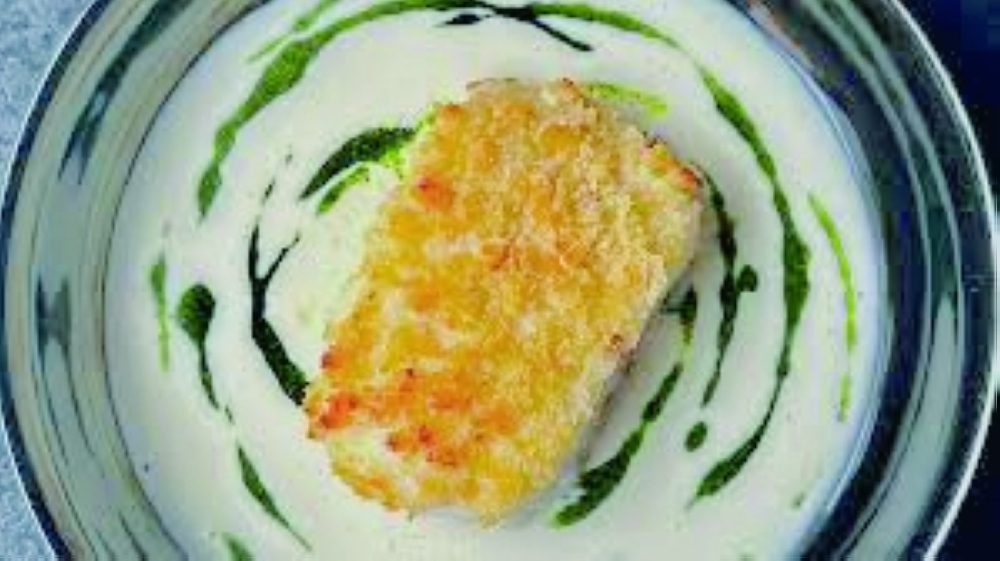





In the end, the high-stakes summit meeting of President Donald Trump and Russian President Vladimir Putin in Anchorage, Alaska, proved notably short on specifics. But one tiny detail caught the eye of many Alaskans: a lunch menu featuring a humble, nostalgic local dish called halibut Olympia.
“It has the vibe of being homey and comforting and mildly retro, but palatable,” said Jeremy Pataky, an editor and co-publisher of Edible Alaska magazine. “I would not characterize it as haute cuisine. To see that on the menu for an extremely high-level state dinner felt a bit surprising.”
Images of the menu were published Saturday by National Public Radio, which said it was among documents that appeared to have been created by the American staff and accidentally left on a hotel printer. The menu included a green salad, a “duet” of filet mignon and halibut Olympia, and crème brûlée.
Sadly, halibut Olympia did not get its Mount Olympus moment. The summit ended early Friday, and lunch was canceled.
But its appearance on the menu prompted some head-scratching. “In our culinary Venn diagram of what’s possible to harvest at sea between Alaska and Russia, I mean certainly we have halibut, so there’s that,” Pataky said.
Though the seafood dish is eaten elsewhere and possibly named for a town in Washington state, Alaskans feel a keen sense of ownership about it, and there are even regional variations. In general, it is prepared with fish generously covered in a mayonnaise-based sauce, sprinkled with cracker crumbs and baked atop a bed of sautéed onions.
Versions of it have appeared in the state’s community cookbooks from at least as far back as the late 1950s, many calling specifically for Best Foods mayonnaise. Some who grew up in Alaska have negative memories of the once-common weeknight dish, comparing it to tuna casserole.
“Freezer-burned, squeaky halibut, coated in mayonnaise and bread crumbs and sometimes bacon,” recalled chef Beau Schooler, of In Bocca al Lupo in Juneau.
At the close of the last century in Alaska, halibut were large and abundant, often caught by sport fishermen, portioned, frozen and served in regular rotation over the winter until people grew tired of them. In recent decades, Alaskans’ attitudes toward the fish have changed. Halibut have grown smaller on average, less plentiful and much more expensive, at times costing up to $40 a pound.
With that shift, new takes on Olympia have emerged on restaurant menus. Schooler makes a version with salt-brined fresh fish topped with a sauce made with mayonnaise, crème fraîche and Dijon mustard, and sprinkled with buttery, crumbled Ritz crackers. He bakes it on top of a soubise of onions and cream.
“I think there’s a soft spot for it because of, you know, you eat it when you’re over at your friend’s house or family get-togethers,” he said. —NYT
Oman Observer is now on the WhatsApp channel. Click here