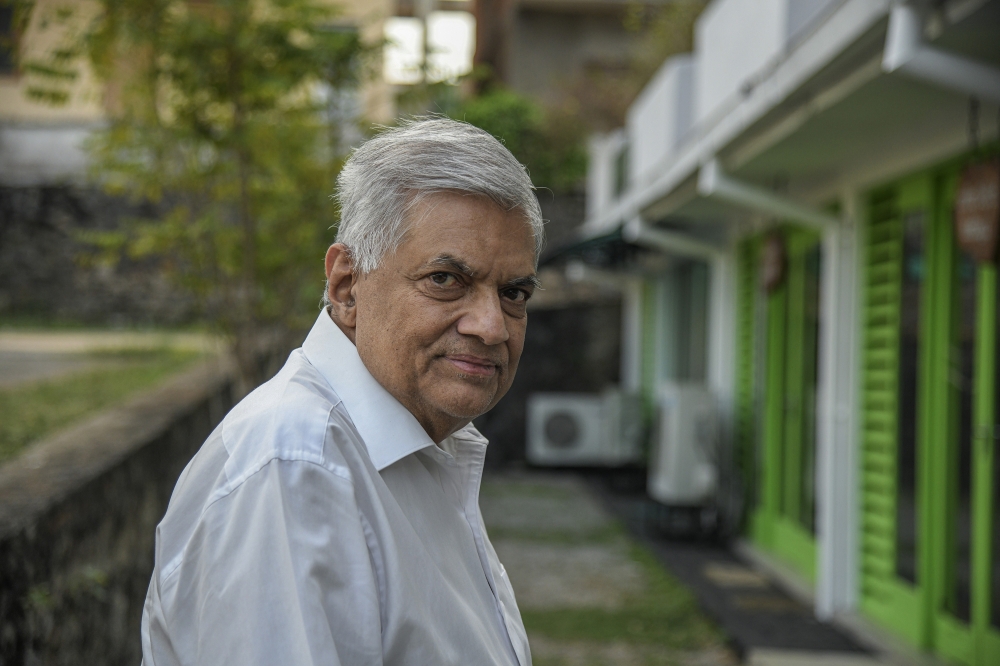





A former Sri Lankan president who helped to steer the country through a painful economic crisis but lost to a populist leader in the 2024 presidential election was arrested Friday on charges that he had used public funds for personal travel during his two-year tenure.
The former leader, Ranil Wickremesinghe, was arrested in Colombo, the capital of Sri Lanka, while providing a statement to the country’s Criminal Investigations Department amid multiple government investigations into widespread bribery and corruption. Wickremesinghe was not granted bail and was put in custody until Tuesday.
Friday’s arrest is tied to a detour Wickremesinghe, 76, made to Britain in 2023 on his way back to Sri Lanka from an official visit to the United States. He made the stop to attend an awards ceremony for his wife, Professor Maithree Wickremesinghe, who had obtained an honorary professorship from the University of Wolverhampton. The government alleged that it was a personal trip for which about 17 million Sri Lankan rupees (about $56,000) of public money was used.
Ranil Wickremesinghe’s arrest is the most high-profile case since the National People’s Power, a leftist coalition, won the presidential election in September, and its leader, Anura Kumara Dissanayake, became the president. Dissanayake, 56, had campaigned on a promise of weeding out corruption and prosecuting those who had misused public funds.
His election reflected the desire for change of Sri Lankans grappling with the fallout from the island nation’s worst economic crisis since its independence in 1948.
Starting in 2019, Sri Lanka fell into a downward spiral, partly driven by poor policymaking by the government of then-President Gotabaya Rajapaksa that depleted foreign reserves and eventually forced the country to default on its debt. Terrorist bombings in 2019 and the pandemic, which crushed tourism, also pummeled the domestic economy.
By 2022, when Sri Lanka’s foreign exchange reserves ran so low that it couldn’t even buy fuel, popular anger led to protests and the ouster of Rajapaksa.
After he was forced to resign, Rajapaksa appointed Wickremesinghe as prime minister. Wickremesinghe secured the presidency through a parliamentary vote in 2022. Although Wickremesinghe is one of Sri Lanka’s most prominent political figures, having led the United National Party, one of its oldest political parties, since 1994, he lost each of his three bids to become president in 1999, 2005, and 2024.
However, Wickremesinghe has held the post of prime minister six times.
As president, Wickremesinghe helped secure an International Monetary Fund bailout in 2023. But the deal required several austerity measures. Those unpopular policies, a growing sense among people that he was part of the old guard, and discomfort that he was close to Rajapaksa led Sri Lankans to reject him during last year’s elections.
In the past six months, 63 people, including politicians, their relatives, and government officials, were taken into custody on bribery or corruption allegations, Prime Minister Harini Amarasuriya told parliament this month.
This article originally appeared in The New York Times.
Oman Observer is now on the WhatsApp channel. Click here