


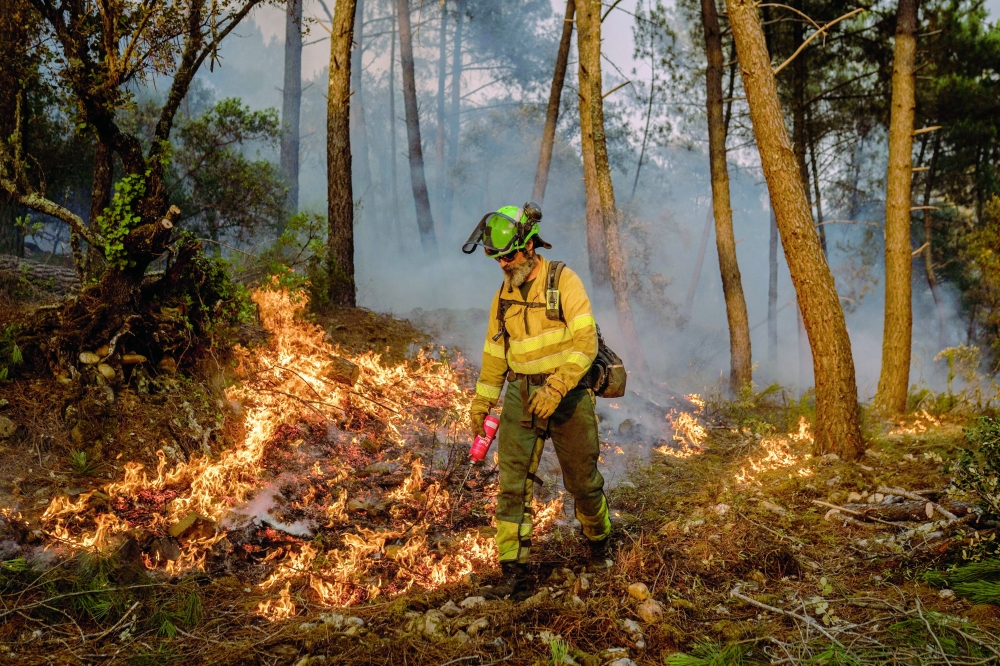





MADRID: Spanish Prime Minister Pedro Sanchez warned that "difficult hours remain" in the fight against wildfires that have ravaged a record area of land, despite temperatures dropping. "I ask the media, and also citizens, to exercise extreme caution, to not let our guard down. Critical moments remain, difficult hours remain," he said during a visit to the hard-hit western region of Extremadura.
After 16 days of scorching heat, Tuesday saw lower temperatures and higher air humidity across the country. The improved weather conditions gave firefighters an edge in their battle against massive fires raging in western Spain that have burned over 100,000 hectares in less than two weeks.
Some 373,000 hectares have been scorched in Spain this year, according to the European Forest Fire Information System. That marks the country's worst fire season since records began in 2006, surpassing 2022, when 306,000 hectares were consumed by flames. A firefighter was killed in a road accident in Spain on Sunday, taking the death toll from the blazes to four.
Tuesday's visit was Sanchez's second to the affected areas, following a similar trip on Sunday. During both appearances, he called for a "state pact to confront the climate emergency", emphasising the growing severity of climate-related crises. "Every year the climate emergency worsens, every year it becomes more recurrent, and every year its effects accelerate," he said.
Scientists say climate change is worsening the frequency and intensity of heat and dryness in parts of Europe, making the region more vulnerable to wildfires. By lowering humidity in the air, vegetation and soil, and reducing the threshold at which materials ignite, heatwaves turn vegetation into highly flammable fuel, making wildfires even harder to control and extinguish.
On Monday, thousands of firefighters backed by soldiers and water-bombing aircraft battled over 20 major wildfires raging across western Spain, where officials say a record area of land has already been burnt. Spain and neighbouring Portugal have been particularly affected by forest fires fuelled by heatwaves and drought.
Residents said they were frustrated with what they regarded as poor preparation and limited resources. "No one's shown up here, nobody," Patricia Vila, 42, said. Signs of the fires were everywhere in the province, from ashen forests and blackened soil to destroyed homes, with thick smoke forcing people to wear masks. — AFP
Oman Observer is now on the WhatsApp channel. Click here


