
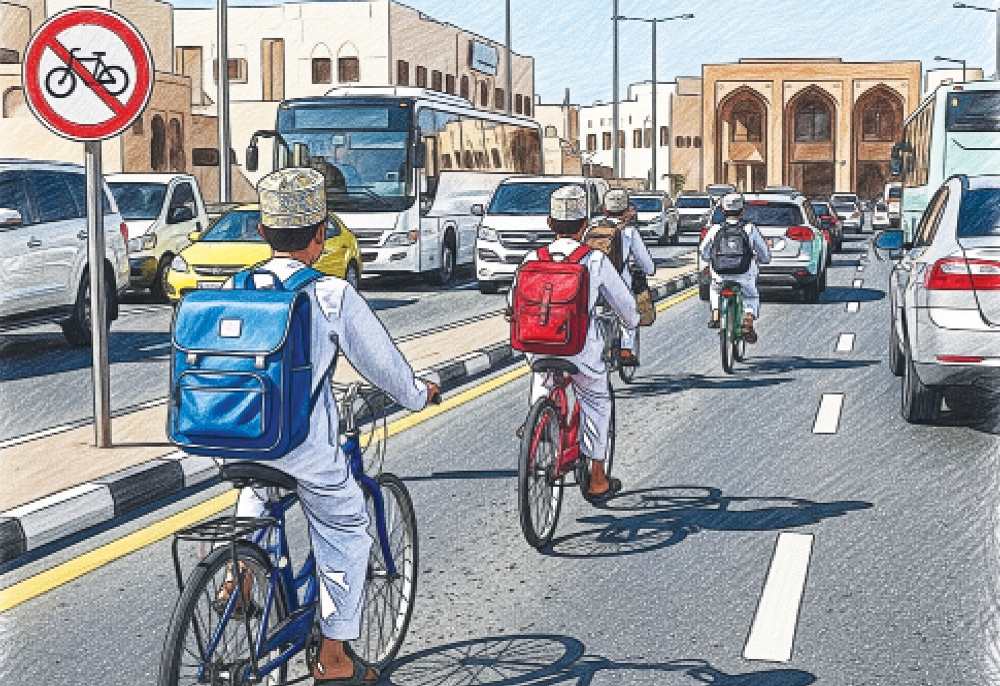





Bicycling offers numerous benefits, including physical activity, environmental friendliness and cost-effectiveness, but it also presents significant safety challenges, particularly for students. The primary dangers for student cyclists stem from interactions with motor vehicles and pedestrians, a lack of dedicated and continuous cycling infrastructure, and rider-related factors such as distraction and insufficient knowledge of traffic laws.
In a move aimed at ensuring a safe and secure learning environment, the Ministry of Education recently announced a ban on students bringing bicycles of all types – particularly unlicensed ones – onto school premises.
The decision comes in response to growing concerns over the increasing number of students using bicycles to commute to school, raising safety risks both inside and outside school grounds. The ministry confirmed that the ban applies to all types of bicycles – including pedal, electric and motorised – with strict monitoring measures to ensure compliance.
The ministry stressed that the primary objective of this measure is to prevent accidents and injuries that could result from cycling in crowded school environments. “Schools must remain places dedicated to education and extracurricular development, away from activities that might put students at risk,” the statement noted.
The move also follows recommendations from safety committees highlighting the need for practical measures to reduce behaviours that may compromise student safety, especially given the rise in bicycle-related incidents among young people.
As part of its plan, the ministry will launch a comprehensive awareness programme in cooperation with the Royal Oman Police’s Traffic Safety Institutes. The programme will feature interactive activities and lectures to educate students on traffic laws and the dangers of unsafe bicycle use.
In addition, school councils across the governorates will host meetings with parents to raise awareness within the wider community and to promote the importance of safe and regulated transportation for children.
Ahmed al Alawi, a Grade 9 student, said: “I used to ride my bicycle to school every day, but I noticed some students speeding near the gate, which was dangerous. Even though I will need to find another way to get to school, I think the rule is necessary for everyone’s safety.”
Mohammed al Saadi, an 11th grader, said: “Some students would use electric bikes to show off in the school yard, which caused a lot of chaos and worry among us. I believe the ban will make the school environment calmer and safer.”
Parents also expressed strong support for the ban. “I fully support this decision. I have heard of injuries among children caused by such bicycles. Now I have a strong reason to say no when my son insists on riding one,” Salem al Shukaili, father of a Grade 6 student, remarked.
Fatma al Hosni, mother of a primary school student, was of the view that safety comes first. “I think schools and families should work together to provide safe transport alternatives, especially in remote areas,” she said.
Traffic safety experts warn that cycling near school grounds can lead to collisions and injuries, particularly if the bicycles lack essential safety features such as helmets and lights. Many younger riders also lack the road awareness and experience needed to avoid accidents.
The ministry stressed that the success of the ban depends on providing safe and reliable alternatives, encouraging parents to use school buses or supervised family transport. Discussions are underway to expand school transport services in some areas, particularly for students living far from school.
Schools have also been raising awareness among students about safe commuting practices, such as using pedestrian crossings and following safety protocols when boarding or alighting from buses.
The Ministry of Education is working to integrate road safety concepts into both curricular and extracurricular activities, through exhibitions, lectures and creative competitions.
Appropriate educational materials will also be distributed to ensure that students understand safety concepts relevant to their stage of development.
Oman Observer is now on the WhatsApp channel. Click here