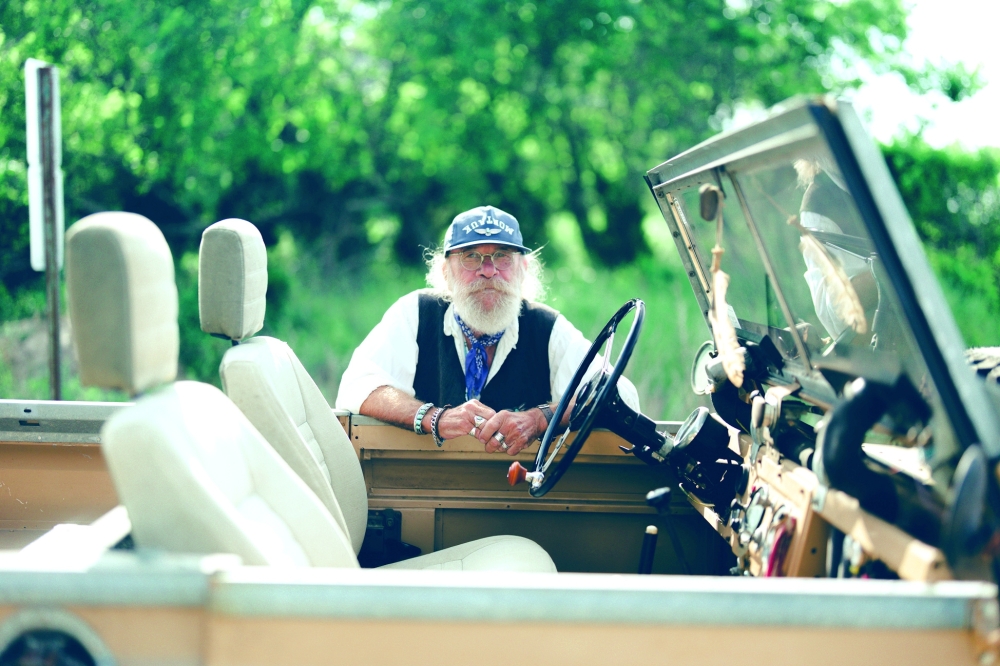





For more than a quarter century, Doug Bihlmaier has held a mythic position in the world of men’s fashion, especially among those who prize vintage style.
Matt Hranek, the founder of the men’s fashion magazine WM Brown, first heard about Bihlmaier in the mid-1990s. At the time, he noticed that Double RL, a Ralph Lauren spinoff brand, had the best versions of the vintage military clothing and watches he sought for his own collection.
“You’d say, ‘Who finds this stuff?’” Hranek said.
He soon learned of the man whose job sounded like a fantasy: he travelled the world on a Ralph Lauren corporate credit card to find and buy cool old stuff.
One day, while waiting in line outside a vintage show, Hranek met the man himself — a shy, bearded figure in faded denim. From then on, whenever they spotted each other at fairs, Bihlmaier would smile beatifically and give Hranek the peace sign.
“It was like the pope putting up his hands”, said Hranek, 58. “For somebody like myself who really loved vintage, Doug was the benchmark of what to be looking for”. Though Bihlmaier remains largely unknown to the wider world, his profile has been rising in recent years, especially among young vintage collectors and online fashion influencers.
TikTok creators proclaim him a “low-key style savant” and regard him as the spirit, if not the uncredited architect, behind Double RL, whose Americana aesthetic has shaped trends. Cameron Ross Steiner, a 31-year-old podcaster, spent two years emailing Bihlmaier before persuading him to appear on his show, Collectors Gene and talk about his life’s work.
Bihlmaier, 71, lives in a funky cedar-shake house in a wooded part of East Hampton, New York, When he greeted me on a recent afternoon, he was dressed in baggy canvas shorts and a loose white T-shirt. His small dog, Ziggy, circled his bare feet.
With his full beard and ponytail, he may look like an aging hippie or beach bum, but his life has been fairly conventional. He married his high school sweetheart, Kathy and they raised two daughters in Darien, Connecticut. Now they live in the Hamptons full time.
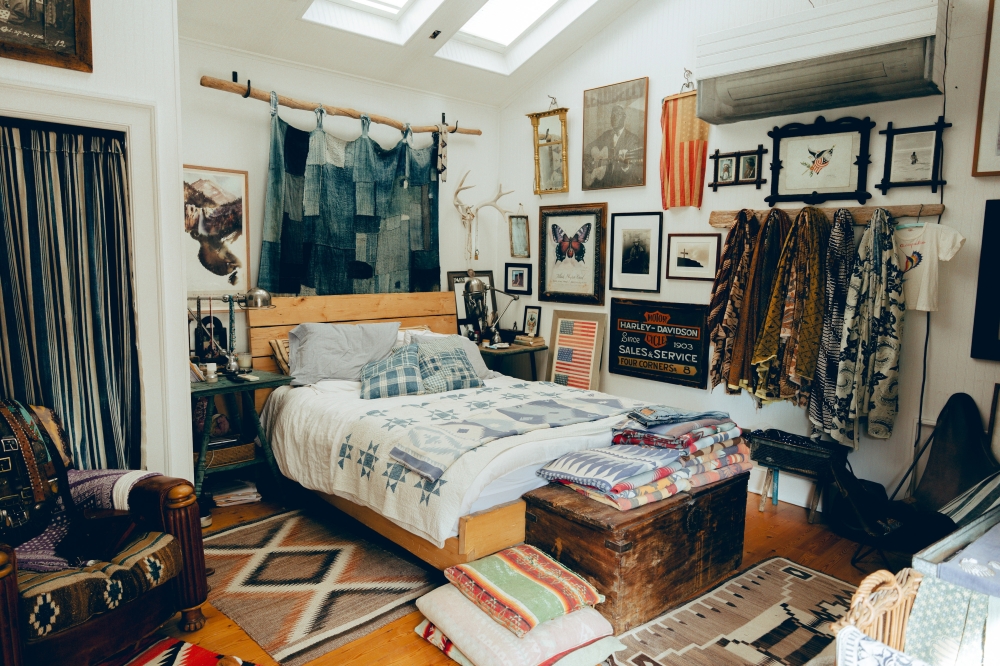
As their home makes clear, Bihlmaier has collected not only for his employer, but for himself: the closets are stuffed with vintage chambrays, French work clothes, old flannels, distressed military leather jackets.
In the bedroom, dozens of Navajo silver rings and bracelets were arranged on the dresser and the arm of a beat-up leather club chair was piled with early 20th-century Pendleton blankets. Native American rugs of an older vintage covered the floors.
Such items are in high demand in today’s vintage market, in part because Bihlmaier, through his work with Ralph Lauren, helped popularise them. On the patio over lunch, he talked about how he fell into his singular career.
He was born in Osborne, Kansas, a farming town. A great-uncle taught him to ride a horse, milk cows and feed chickens. Once a year, the family would drive four hours to Kansas City to go Christmas shopping. Like many boys in the 1950s and ’60s, Bihlmaier liked to dress up as a cowboy. Even as a teenager, he noticed that the quality of the denim was slipping and he started buying up old pairs of Levi’s.
“I loved wear and patina”, he said. “I loved my grandfather’s old pickup rather than my father’s new one”. His father, an insurance agent who became the owner of three small banks, was a sharp dresser. While Bihlmaier attended Kansas State University, his father arranged to get him a job at a local men’s store, Woody’s. Some of the clothes in the shop came from a young New York designer, Ralph Lauren.
In the early 1970s, Bihlmaier was sent to the airport to pick up a sales representative from the label. The man stepped off the plane dressed in a brown corduroy suit, red plaid shirt with a yellow club tie and argyle socks.
“I’d been dressing in what I called my Neil Young look — old jeans and flannels”, Bihlmaier said. “I thought, ‘Wow, I want to look like this guy’”. In 1993, Lauren started Double RL, the brand named for his “RRL” ranch in Colorado. It sold selvage denim, sportswear, accessories and an assortment of vintage pieces, a novel idea in fashion retail at the time. Originally, Double RL was tucked like a secret within the Ralph Lauren store on Madison Avenue.
Bihlmaier was part of the team that gave the brand its identity. He installed new wooden floors that squeaked like old ones.
“It had to squeak on purpose”, he said. To find the stuff to fill the showrooms and stores, he went on shopping excursions to the Brimfield Antique Flea Market in Brimfield, Massachusetts and the Rose Bowl Flea Market in Pasadena, California. The merchandise was plentiful and cheap. “You’d find the coolest 1920s hunting coat for $20”, Bihlmaier said.
He worked with another Ralph Lauren employee, Bob Melet and the two of them would hit vintage fairs from Santa Fe to Paris like Vikings, only instead of swords and axes they had business cards and discerning eyes.
“If Doug and I walked into an antique venue, we could eviscerate a show as quickly and with quality as anyone”, Melet said.
Dealers gave them nicknames.
“They used to call Doug ‘Eagle Eye’ and me ‘Wandering Eye’”, Melet added.
Bihlmaier, who speaks with deference and caution about his employer, said his taste and Lauren’s were “almost perfectly aligned”. He added that his boss taught him that when hunting, “mint” wasn’t the goal. Rather, scuffs, dents and age made a vintage item special. Lauren also trusted him.
“He told me, ‘If you don’t want it, I don’t want it’”, Bihlmaier said.
Part of the legend of Bihlmaier is that he recognised the intrinsic style of certain items before others did, and mixed and layered them in novel ways. Hranek, the fashion editor, credits him with pairing American Western with vintage military, citing the combination of a turquoise silver watchband and a Waltham World War II watch — a look that Double RL merchandised.
“It looked as though he did it without effort”, Hranek said. “That is true talent”. — NYT
Oman Observer is now on the WhatsApp channel. Click here