




As the monsoon winds sweep across the eastern coast, the beaches of Ras Al Hadd in Sur transform into a sanctuary for thousands of sea turtles — and a magnet for tourists from around the world.
The Ras Al Hadd Turtle Reserve becomes a bustling eco-tourism hub every year from July to August. This 120-square-kilometre protected area, with a 40-kilometre coastline, is home to over 30,000 sea turtles annually, making it one of the most significant nesting sites in the world.
Established in 1996, the reserve hosts four turtle species: the green turtle, olive ridley, loggerhead and hawksbill. Its mission is to conserve marine turtles migrating to Oman from the Arabian Gulf, the Red Sea, Somalia, and beyond.
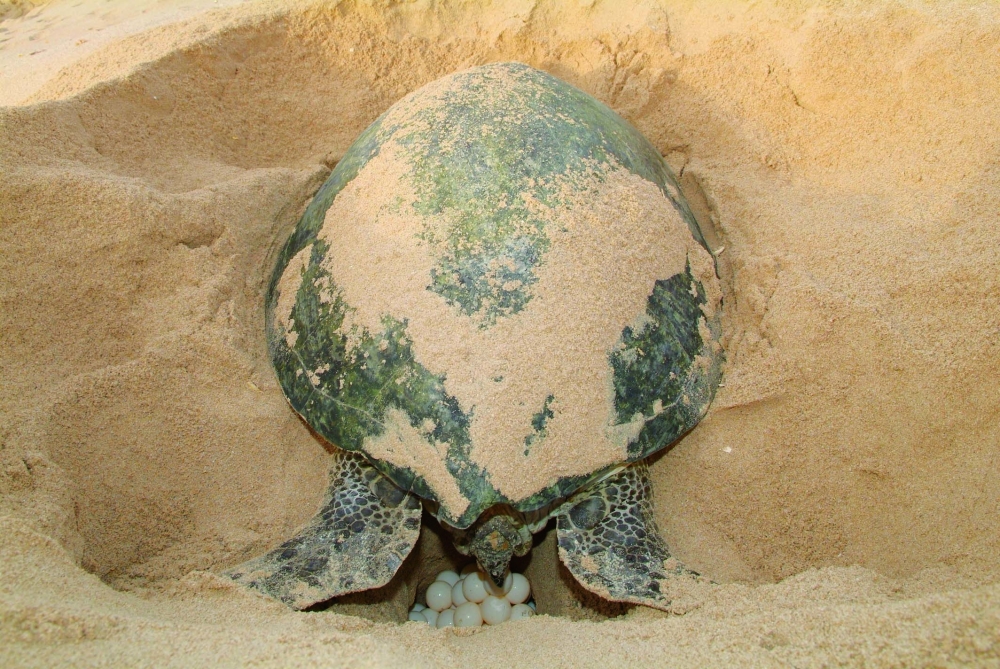
Tourists visiting the reserve are guided by trained Omani experts who explain the fascinating nesting process, which typically begins after sunset. The green turtle emerges cautiously, surveys the beach for safety, and then uses its flippers to dig a half-metre-deep nest.
After laying between 100 and 120 eggs, it carefully covers them and creates decoy holes to protect the nest from predators like birds and foxes. A female turtle repeats this cycle up to three times in a season, at roughly seven-day intervals.
Beyond turtles, the reserve teems with biodiversity. The surrounding plains serve as vital feeding grounds for migratory birds. Rocky cliffs host nesting seabirds and mammals like red foxes and wild rabbits inhabit the region. Coral reefs near the shoreline support marine life, including small fish, while patches of mangrove trees dot the area.
In a remarkable event, a green turtle recently returned to Saih Al Marai beach after more than 15 years — highlighting the turtle’s long memory and loyalty to its birthplace. In past years, similar returns have been recorded even after 29 and 31 years. Experts say these observations underscore the importance of long-term monitoring and turtle tagging.
With 30,000 turtles nesting annually, Oman is considered a global leader in sea turtle conservation. As climate change and habitat threats increase, the Environment Authority and its partners are committed to preserving this endangered species through rigorous data collection and awareness efforts — ensuring the green turtle’s underwater flight continues for generations to come.
Oman Observer is now on the WhatsApp channel. Click here