A day after the European Union and United States struck a trade deal Sunday, the French government has come out swinging against the agreement, calling instead for tariff retaliation and warning that Europe would be politically weakened if it didn’t hit back.
“It is a dark day when an alliance of free peoples, gathered to affirm their values and defend their interests, resolves to submit,” Prime Minister François Bayrou wrote about the deal, which imposes 15% tariffs on European imports to the United States, but lowers barriers in European countries for American imports.
France had been leading a charge in Europe to retaliate against the United States before the deal, after an earlier threat by Trump to impose a punishing 30% tariff on the Europeans. Trump’s on-again, off-again tariff threats had galvanised President Emmanuel Macron in particular, who said the EU had no choice but to present a show of force.
Macron has yet to comment on the recent deal, but the sharpened attacks by a phalanx of his closest Cabinet members were in line with his increasingly confrontational position toward Trump. Last week, Macron said his government would recognise a Palestinian state, setting France apart from the United States and most of its close allies, and risking friction with Trump.
With the outlines of a trade deal now clearer, Macron’s government has doubled down. Benjamin Haddad, France’s minister in charge of European affairs, suggested that Trump’s trade deal amounted to a predatory tactic and called for Europe to activate its powers to tax US digital services, or to exclude American tech companies from public contracts in Europe.
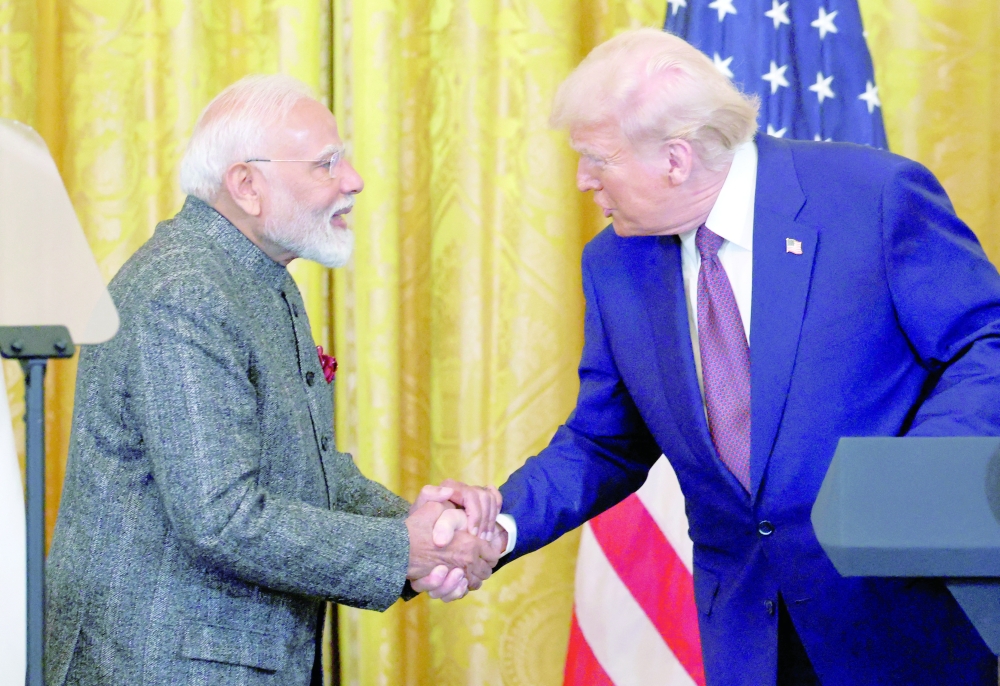
“The free trade that has brought shared prosperity to both sides of the Atlantic since the end of the Second World War is now being rejected by the United States, which has opted for economic coercion and complete disregard for WTO rules,” Haddad wrote Monday, referring to the World Trade Organisation. “We must quickly draw the necessary conclusions or risk being wiped out.” Trump and Ursula von der Leyen, the president of the European Commission, focused on the scale of the trade deal on Sunday when they met at Trump’s golf course in Scotland. The two sides have the biggest economic relationship in the world, trading nearly $2 trillion in goods and services annually.

Despite France’s push on other European countries to take a harder line, a majority of them had wanted a deal quickly. Von der Leyen “simply took into account the wishes of the majority of member states who do not want a confrontation with the United States,” Gérard Araud, France’s former ambassador to the United States, wrote on Monday.
A 15% tariff on EU goods is a notable increase, when just a few weeks ago Europe was working on negotiating a 10% across-the-board rate. Many European companies will be worse off under the recent deal than before Trump’s trade war, when US import tariffs were in the low single digits.
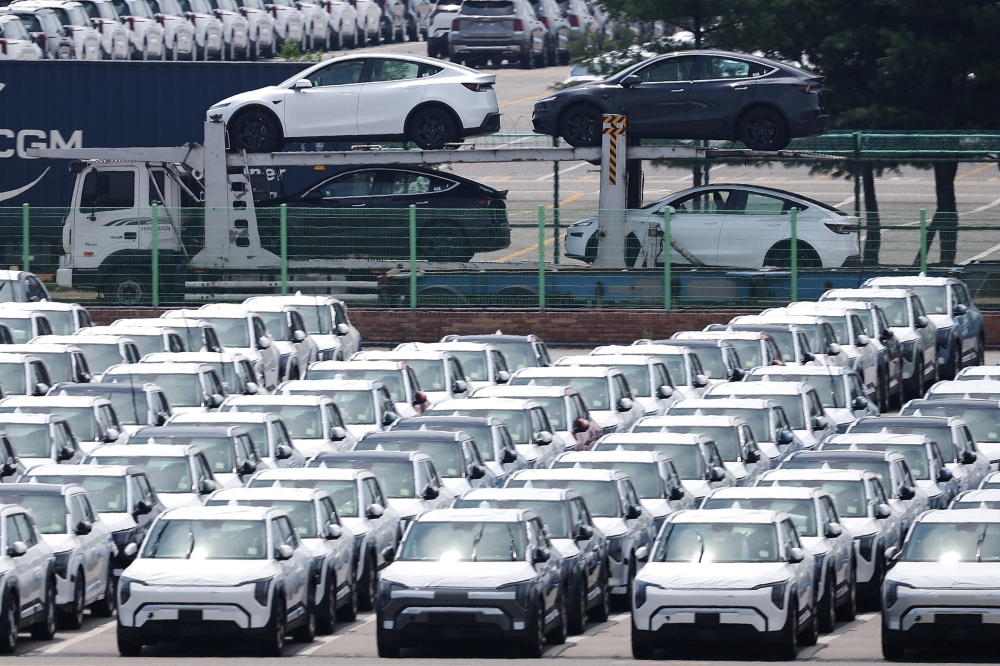
While the deal gives notable relief to Europe’s hulking car industry — in particular German automakers including Volkswagen and Mercedes-Benz, which had been facing separate 25% tariffs — it also puts other European industries in a bind.
France, in particular, did not get what it had been pushing for in several areas. Major industries got exemptions from the tariffs, including airplanes, which will benefit European aerospace giant Airbus, based in Toulouse, France, along with its American rival, Boeing.
But many companies that are symbolic of “Made in France” may find their products becoming more expensive for US buyers. French cognac, wine and Champagne, for example, make up nearly half of all of Europe’s drinks exports to America. Negotiations on potentially exempting the wine and spirits industries were continuing, von der Leyen said.
Also at risk are French cosmetics products, which previously had zero customs duties to enter the United States. They will now be taxed at 15%, said Emmanuel Guichard, secretary-general of the Federation of Beauty Companies, which includes L’Oreal and LVMH, which owns Sephora as well as high-end beauty brands including Christian Dior perfumes. That shift poses “a significant threat” that could put up to 5,000 jobs at risk, he said.
And as Trump headed out to his golf resort in Scotland on Monday with British Prime Minister Keir Starmer, the uneven nature of the United States’ trade deals with the EU and Britain was in stark relief.
Trump and Starmer hammered out an earlier deal for an across-the-board tariff of 10% on British goods in the US, including British-made cars. European companies were eager not to be taxed at the 30% rate Trump had threatened, but they are still worried that a 15% duty would make their exports more expensive in the US than British goods.
“This agreement should not be the end of the story,” France’s minister for foreign trade, Laurent Saint-Martin, said Monday. If it is, “we would simply have weakened ourselves.” — The New York Times
Oman Observer is now on the WhatsApp channel. Click here