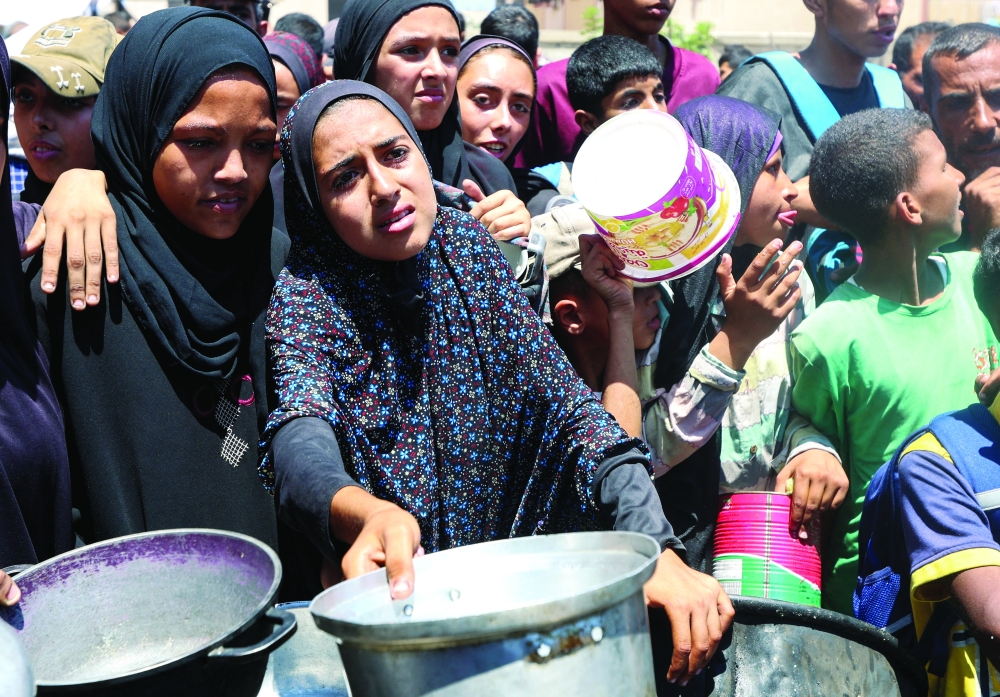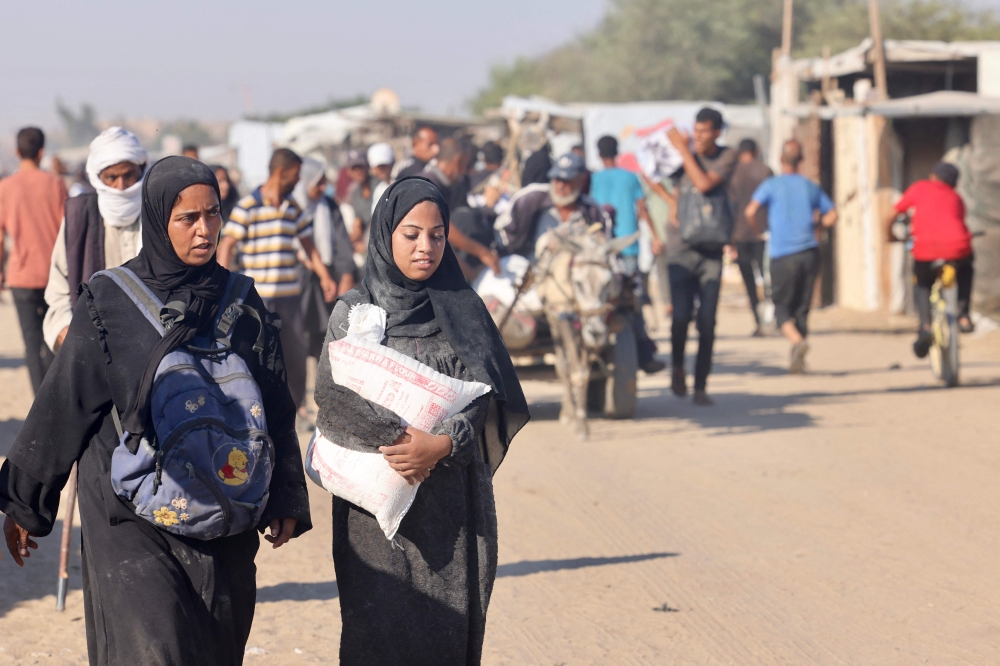





GAZA/CAIRO: The Bakrons and Al Bareems, two families from opposite ends of Gaza, have criss-crossed the rubble-strewn territory many times during 21 months of war, in search of food and shelter from Israeli attacks.
They’ve sought refuge in the homes of friends and relatives, in school classrooms and in tents, moving frequently as the Israeli military has ordered civilians from one zone to another.
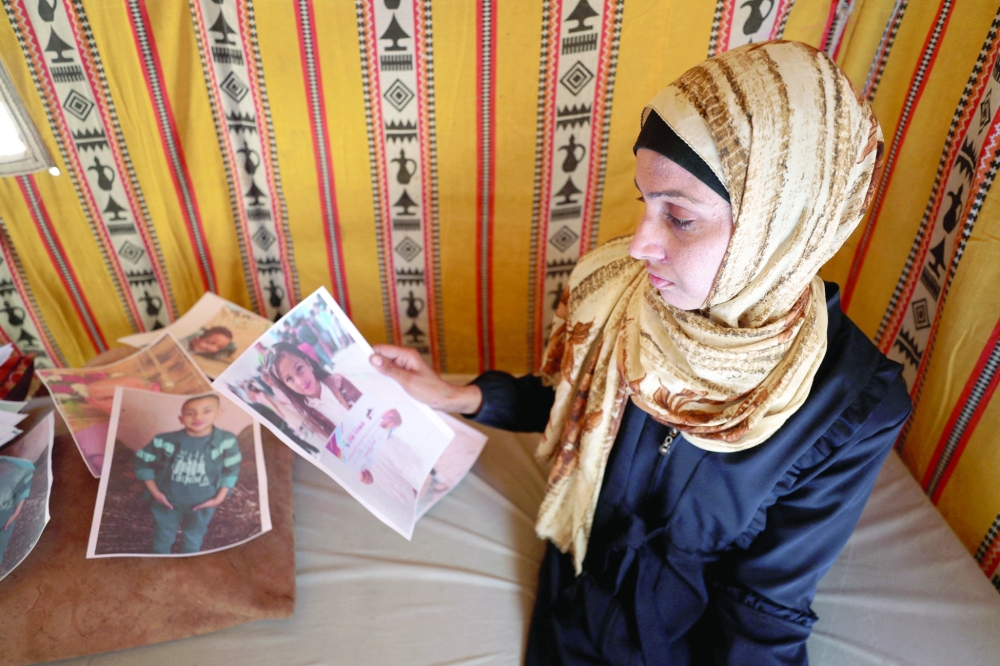
The Bareems, from southern Gaza, have a disabled child who they have pushed in his wheelchair. The Bakrons, from the north, stopped wandering in May after two children of their children were killed in an air strike.
“Our story is one of displacement, loss of loved ones, hunger, humiliation and loss of hope,” said Nizar Bakron, 38, who lost his daughter Olina, 10, and son Rebhi, eight.
The families’ experiences illustrate the plight of the 1.9 million Gaza residents - 90 per cent of the population - that the United Nations says have been displaced during the conflict.
Israel’s war in Gaza has left much of the enclave in ruins and its people desperate from hunger. It was triggered by an attack by Hamas - which governs the Strip - on Israeli border communities on October 7, 2023 that killed some 1,200 people and took 250 hostage. Before the war, Nizar and his wife Amal, four years his junior, had a happy life in Shejaia, a teeming district in the east of Gaza City. Their eldest Adam is 12; the youngest, Youssef, a baby.
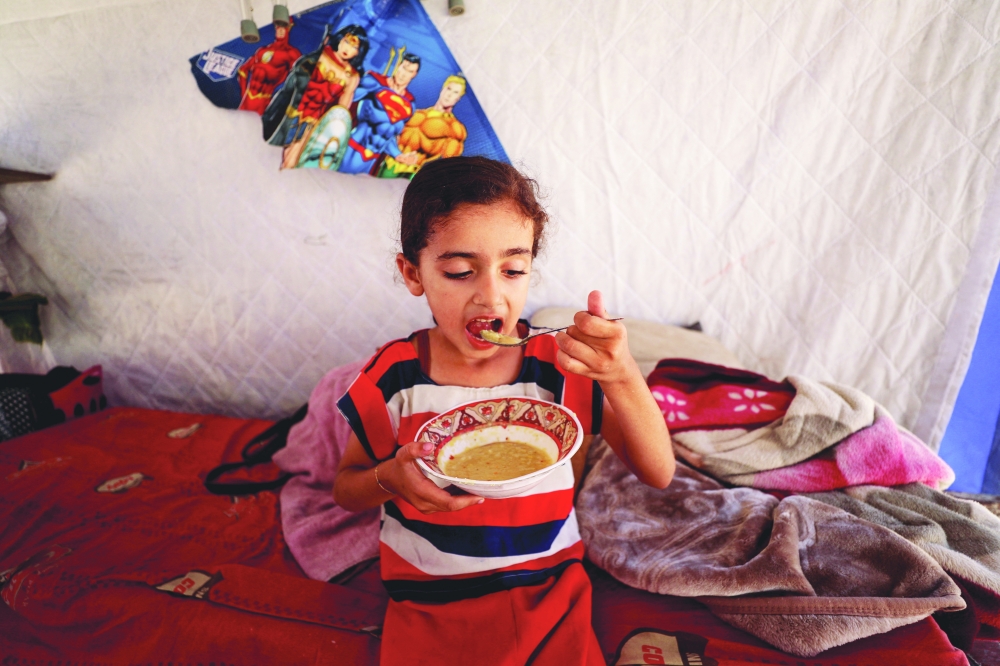
“When the October 7 attack happened, I knew it wouldn’t be something good for us,” Nizar said. They left home the next day for Amal’s mother’s house further south in Zahra, he said.
Five days later, Israel began ordering civilians in northern Gaza to move south and, on October 27, it launched a ground invasion.
Throughout the war Israel has issued evacuation orders in areas where it plans to conduct operations - though it has also struck elsewhere during those periods.
Israel says the orders protect civilians but it strikes wherever it locates Hamas fighters, who hide among the population. Hamas denies using civilians as shields.
Palestinians accuse Israel of using the evacuation orders to uproot the population, which it denies.
The family left for Nuseirat, an old refugee camp in central Gaza, where they crammed into an apartment owned by Amal’s relatives for five months.
Food and fuel were becoming very expensive, with little aid arriving. In April, Israel issued an evacuation order and the Bakrons went further south to Rafah on the border with Egypt where there was more to eat. They loaded the car and a trailer with mattresses, clothes, kitchen equipment and a solar panel and drove 15 miles along roads lined with ruins.
In Rafah, they squeezed into a classroom of a UN school which they shared with Nizar’s two brothers and their families - about 20 people. Their savings were quickly disappearing.
Weeks later, a new Israeli evacuation order moved them to Khan Yunis, a few kilometres away, and another crowded classroom.
In January, a ceasefire allowed them to move back north to Nuseirat, where the family had land. They cleared a room in a damaged building to live in. “We thought things would get better,” Nizar said. — Reuters
Oman Observer is now on the WhatsApp channel. Click here