Oman's vision for a net-zero future depends not only on cleaner fuels and renewable power but also on how its industrial sector adapts. Industries such as LNG, refining, cement, fertilisers, and steel are deeply embedded in the economy. These are also among the most energy-intensive and emission-heavy sectors. To achieve meaningful decarbonisation while remaining globally competitive, Oman must adopt a more intelligent approach, and artificial intelligence (AI) can provide that strategic advantage.
AI technologies are now at a turning point. No longer confined to automation or software, they are beginning to shape how materials are processed, how energy is consumed, and how emissions are measured and reduced.
The integration of AI with process simulation, as shown in recent LNG and hydrogen liquefaction research, demonstrates how surrogate modeling using artificial neural networks can drastically reduce computational costs and unlock complex optimisation problems that were previously unfeasible. AI-based surrogate models have reduced computational cost by 100% while keeping prediction error margins below 5%. This computational efficiency opens the door to real-time optimization and adaptive control in energy-intensive processes.
Similarly, in carbon capture technologies, AI is enabling solvent screening and process optimisation that would otherwise take years of experimentation. As highlighted in recent reviews on biphasic and amine-blended solvents, AI can accelerate the discovery of low-energy, high-efficiency capture agents suited for specific industrial gas streams. Rotating Packed Bed (RPB) systems, considered next-generation in carbon capture, are now being paired with AI algorithms to fine-tune solvent performance, regeneration energy, and capture rates.
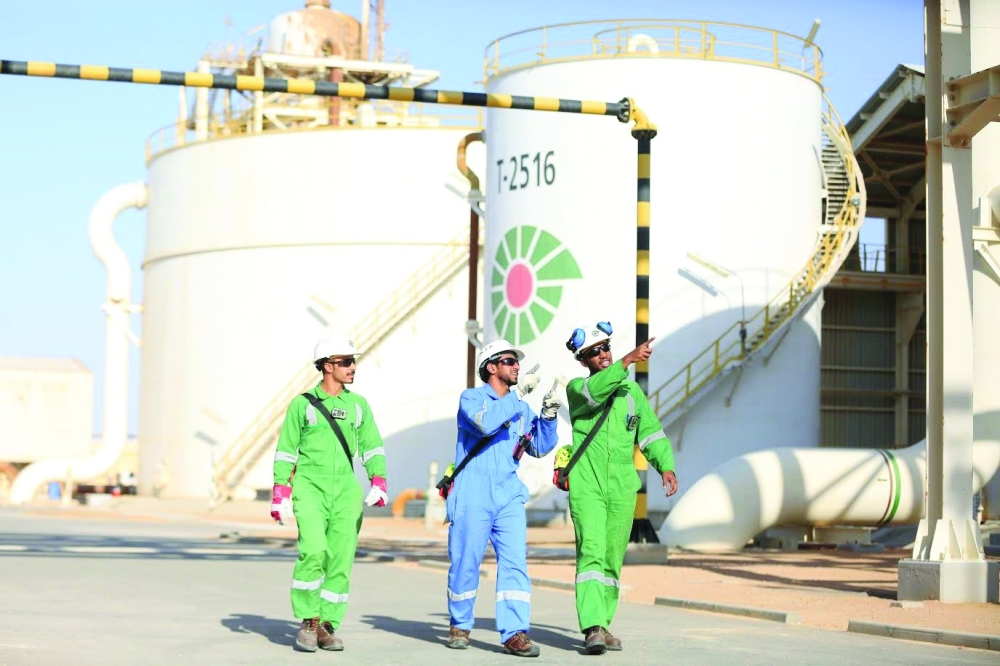
These innovations are especially relevant for Oman’s industrial hubs such as industrial hubs across Oman such as Sohar Port and Freezone, SEZAD, Salalah Free Zone, and Rusayl Industrial City, which collectively drive a large share of the country’s economic output and energy demand. AI-enabled technologies can support the transition of these zones to low-carbon clusters, enhance energy efficiency in steel, cement, and petrochemical sectors, and advance integrated decarbonisation plans across the value chain. By aligning with national industrial priorities and strategic development goals, AI can help deliver energy savings, emissions reduction, and digital competitiveness in line with Oman Vision 2040.
To unlock this potential, three strategic actions are needed. First, Oman must build national capacity in AI for process systems engineering. This includes workforce development across universities and training centers, focused on simulation, machine learning, and optimisation.
Second, industrial data must be integrated with secure digital platforms. Without trusted data, AI cannot generate actionable insights. Third, public-private partnerships should support pilot projects in areas such as hydrogen liquefaction, biodiesel production, and CO₂ capture, demonstrating the return on investment and scalability of AI-based decarbonization.
The roadmap is clear. From LNG to hydrogen and from CO₂ capture to sustainable fuels, Oman can lead the region by combining its industrial infrastructure with intelligent technologies. AI is not a future luxury. It is a present necessity. It enables Oman to shift from manual optimisation to systems that adapt, learn, and continuously improve performance.
By embedding AI into its sustainability strategy, Oman will be better positioned to achieve national emissions targets, attract green investments, and develop exportable technologies in energy and environment. Oman's industrial zones can serve as testbeds for AI-integrated industrial transformation, with Sohar being one notable example, supporting the country's ambition to become a global player in sustainable industry and energy transition.
Dr Muhammad Abdul Qyyum
The writer is an Assistant Professor at the Department of Petroleum and Chemical Engineering, Sultan Qaboos University.
Oman Observer is now on the WhatsApp channel. Click here