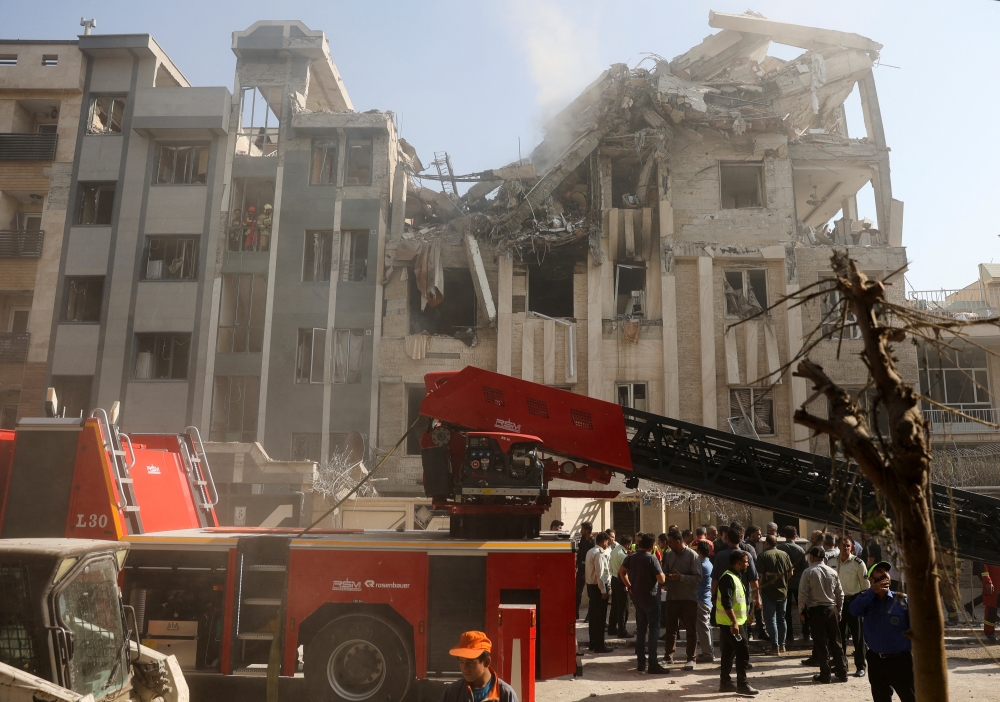
The recent Israeli-American strikes on Iran have reignited debates about a troubling reality: the Mossad's successful infiltration of Iranian territory and its ability to carry out precise and damaging operations deep inside the country. High-profile assassinations, targeted bombings, and the compromise of nuclear facilities raise serious questions about how Israeli intelligence has manoeuvred so freely, and why Iranian security agencies failed to detect and stop such breaches.
Che Guevara once said, “If you want to liberate a nation, load your gun with ten bullets — nine for the traitors within, and one for the external enemy. If not for the traitors, the enemy would never dare attack.” Guevara’s statement encapsulates the Iranian dilemma. Tehran seems to have waited too long to aim those metaphorical nine bullets inward. Despite numerous arrests and even executions of alleged collaborators, the real players — those in influential positions — appear untouched.
In a striking moment in 2021, former President Mahmoud Ahmadinejad revealed in a televised interview that Iran’s top counterintelligence official was himself an Israeli spy. He highlighted how Mossad agents managed to steal truckloads of sensitive documents, questioning how such an operation passed through checkpoints unnoticed.
The operation in question took place in January 2018, as confirmed by former Mossad chief Yossi Cohen in an interview with Israeli Channel 12. The stolen files related to Iran’s nuclear and space programmes were later revealed by Israel as a major intelligence triumph. But rather than shake the Iranian establishment into a deep internal reckoning, these revelations were met with limited action. Assassinations of scientists continued. Explosions struck military sites. Israeli agents reportedly reached the very heart of Iran’s Revolutionary Guard command.
Following the most recent Israeli air strikes, Iranian authorities announced the arrest of 18 alleged Mossad operatives in Mashhad, accused of manufacturing suicide and reconnaissance drones. Reports suggest the plan had been to eliminate senior Iranian figures on the ground while Israel launched air strikes from above. Iranian Parliament Speaker Mohammad Bagher Ghalibaf later admitted that “a large part of the enemy’s operations are carried out through infiltrators from within.”
While Tehran has now launched a campaign against espionage—with more than 700 arrests reported in 12 days — the sheer scale of infiltration points to a longstanding and well-entrenched network. The critical question now is: why do citizens become willing tools of foreign intelligence services?
Iranian media argue that Mossad exploits economic hardship and social marginalisation, particularly among minorities. The use of encrypted apps and cryptocurrency helps facilitate the secure transfer of intelligence. Recruits, reportedly trained in countries like Georgia and Nepal, are equipped with tools and knowledge to operate covertly. And while poverty may explain the motivations of some, the more unsettling reality is the presence of wealthy and influential collaborators — those whose betrayals are not born of desperation but opportunism.
Israel's deep interest in Iran is hardly a secret. According to Ronen Bergman’s book 'Rise and Kill First: The Secret History of Israel’s Targeted Assassinations', Mossad’s former chief Meir Dagan prioritised the Iranian nuclear threat when he assumed leadership in 2002. Dagan restructured the agency around two goals: preventing Iran’s acquisition of nuclear capabilities and countering armed movements like Hezbollah and Hamas. His 2003 strategy included a combination of sabotage, assassinations, cyber warfare, support for opposition groups, and economic pressure.
The story is all there in Bergman’s book — published in 2018, well before the recent strikes. This brings us to a troubling question: with so much information already public, why wasn’t Iran prepared?
The conversation has now widened to include concerns across the region. Gulf nations are questioning their own security vulnerabilities, especially in light of reports that some Asian companies working in the Gulf have connections with Mossad. These revelations, surfacing after the Israeli strikes, raise alarm over potential breaches across multiple sectors, particularly as many Gulf states rely heavily on foreign contractors.
The Iranian breach — despite the country’s strong military and intelligence capabilities—sends a sobering message to the Gulf. It’s not just the strength of your military that ensures security, but your vigilance against traitors within. Gulf citizens have voiced growing concerns online about “fifth column” elements operating under the guise of expatriate labour or business partnerships. The fear is not just espionage, but betrayal from those benefiting from the country’s wealth while working for its enemies.
Ultimately, no foreign adversary can inflict such damage without help from within. It’s not just the enemy at your door — it’s the one already inside your house.
Translated by Badr al Dhafri. The original version of this article was published in Arabic in the print edition of the Oman Daily newspaper on July 14.
Zahir al Mahrouqi, Al Mahrouqi is an Omani writer and the author of 'The Road to Jerusalem'
Oman Observer is now on the WhatsApp channel. Click here