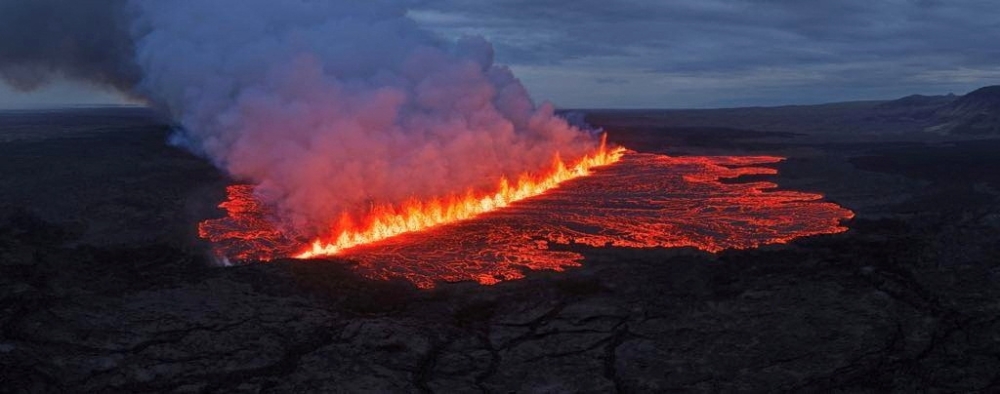





Reykjavik: A volcano erupted on Wednesday in Iceland's Reykjanes peninsula in the southwest, weather authorities said, the ninth eruption to hit the region since the end of 2023.
Live video feeds showed lava spewing out of a fissure in the ground, with the Icelandic Met Office saying that it began just before 4:00 am (0400 GMT).
Broadcaster RUV reported that the nearby fishing village Grindavik had been evacuated, as had the Blue Lagoon, Iceland's famed tourist spot.
The previous eruption to hit the area was in April.
When the first volcanic eruption first hit the area in late 2023, most of Grindavik's 4,000 residents were evacuated.
Since then, almost all of the houses have been sold to the state, and most of the residents have left.
Volcanoes on the Reykjanes peninsula had not erupted for eight centuries when in March 2021 a period of heightened seismic activity began.
Volcanologists have warned in recent years that volcanic activity in the region had entered a new era.
RUV said the latest eruption was not expected to impact international flights.
A volcanic eruption in another part of Iceland in 2010 caused worldwide travel chaos as the ash spewed into the atmosphere sparked airspace closures in Europe.
Iceland is home to 33 active volcanic systems, more than any other European country.
It is located on the Mid-Atlantic Ridge, a fault in the ocean floor that separates the Eurasian and North American tectonic plates and causes earthquakes and eruptions.
Often referred to as a land of ice and fire, the North Atlantic island nation with its many glaciers and volcanoes has now experienced a dozen eruptions since geological systems on its Reykjanes peninsula reactivated in 2021.
Magma forced through the earth's crust opened a massive fissure of length between 700 m and 1,000 m (0.4 miles and 0.6 miles), Iceland's meteorological office said, with the first signs of the eruption giving scant warning.
"(It does) not threaten any infrastructure at this time," the office said in a statement. "Based on GPS measurements and deformation signals, it is likely that this was a relatively small eruption."
Flights at Keflavik airport in the capital of Reykjavik were not affected, its web page showed.
The Reykjanes eruptions have not yet posed a threat to Reykjavik, nor ejected large volumes of ash into the stratosphere, so air traffic has not been disrupted.
Experts have said the eruptions in the area could recur for decades, or even centuries.
The fissure eruptions, as the outbreaks are known, are characterised by lava flows emerging from long cracks, rather than from a central crater. AFP and Reuters
Oman Observer is now on the WhatsApp channel. Click here