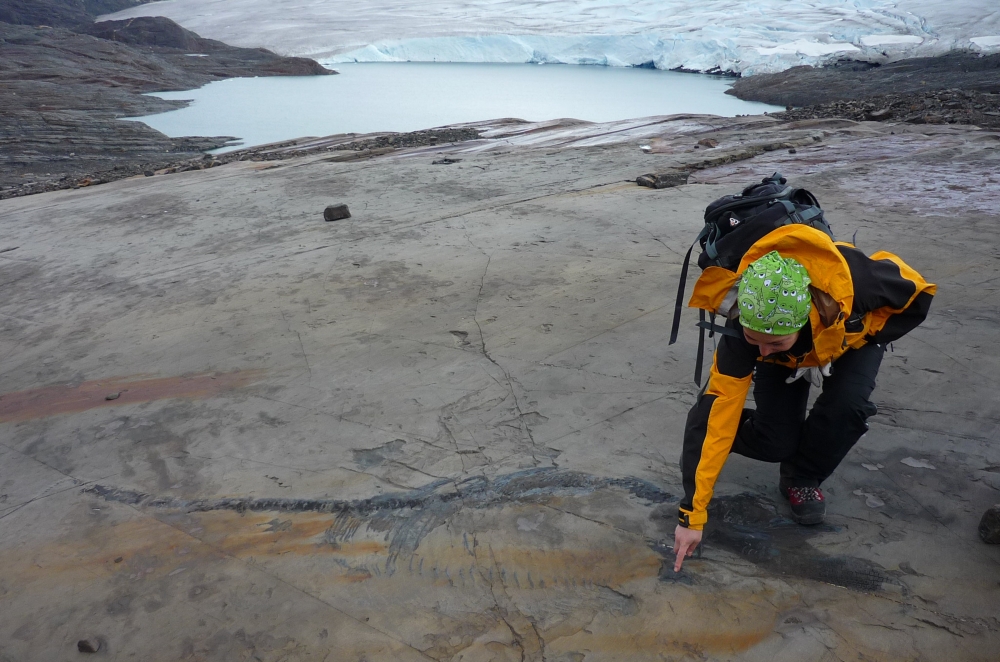





About 131 million years ago, a pregnant ichthyosaur — a dolphin-like reptile of the dinosaur era — swam in seas that are now part of southern Chile. And then she died.
An accomplice in the killing: the breakup of the southern supercontinent of Gondwanaland. South America, once unified with Africa and Antarctica, pulled away, and a new ocean basin called the Roca Verdes opened up.
“One of the hypotheses is that this is actually the opening of the early South Atlantic Ocean,” said Matthew Malkowski, a professor of geological sciences in Texas.
The geological forces that pulled apart the continents also ruptured the Earth’s crust, causing volcanoes and earthquakes, and those earthquakes sometimes set off massive underwater landslides.
One day in the early Cretaceous period, one of those landslides collapsed down a submarine canyon in Roca Verdes, generating turbulent flows of sediment.
“Probably these landslides might have trapped the ichthyosaurs and threw them to the bottom of the canyon and covered them with sediment,” said Judith Pardo-Pérez, an associate professor in Chile. — KENNETH CHANG / NYT
Oman Observer is now on the WhatsApp channel. Click here