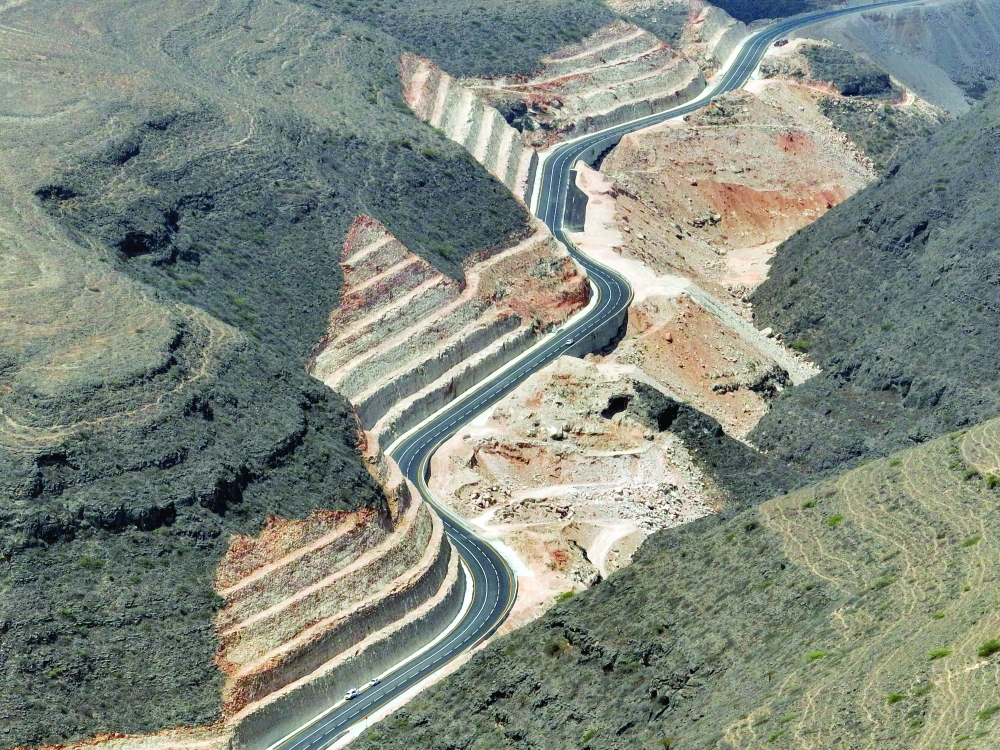





SALALAH: As the annual monsoon transforms southern Oman into a green paradise, the country’s most iconic road — stretching over 1,000 kilometres from the capital Muscat to Salalah — is once again under the spotlight. Known for its engineering excellence and desert vistas, the route is a vital national artery connecting the nation’s northern and southern regions. But with record numbers of travellers using the road during summer, officials are warning that good infrastructure alone cannot prevent road accidents.
Oman is widely recognised for the quality of its road network. In the 2025 World Population Review, the country ranked eighth globally — ahead of France and Japan — and second in the Arab world, scoring 5.96 out of 7 for road infrastructure. These high marks reflect a decade of sustained investment in highways, including the Sultan Taimur bin Faisal Road, Sultan Turki bin Said Road and dual-lane corridors across mountainous terrain.
Still, the journey from Muscat to Salalah, remains challenging. The route spans vast deserts and rugged mountains; and during the Khareef Dhofar Season — when Dhofar Governorate becomes a rare oasis of rain, mist and greenery — traffic volumes surge dramatically.
Ali al Balushi, an operations supervisor at a tour company in Muscat, said his company operates daily trips between Muscat and Salalah during summer. He noted that it is the busiest season of the year and that drivers are required to rest every four hours. He explained that the company uses GPS to monitor driver speeds, but ultimately, accidents occur due to human error and reckless behaviour, not the condition of the roads.
To reduce fatigue-related incidents, the authorities encourage travellers to plan regular stops along the route. The Wilayats of Adam, Haima and Thamrait serve as practical points for refuelling, rest and safety checks before entering the mountain roads leading into Salalah. In response to the growing risks during peak months, the Royal Oman Police and the Ministry of Health have stepped up safety operations this year. These include mobile ambulance units, additional traffic patrols and checkpoint enforcement in areas known for speeding and dangerous overtaking.
The Ministry of Transport, Communications and Information Technology has designated the Sultan Said bin Taimur (Nizwa–Salalah) highway as a strategic national corridor. The road is seen as a vital connector not only for tourism, but also for economic integration between Oman’s northern and southern regions.
To ease pressure on the current road, Oman is undertaking one of the largest highway construction programmes in the region. The centrepiece of this effort is the new Sultan Said bin Taimur (Salalah Highway), which will extend 717 km and become the country’s longest expressway. As of July 2025, 280 km of the new route have been completed, while over 400 km remain under construction. The total value of the project exceeds $671 million.
In parallel, the government is finalising the dualisation of Sultan Said bin Taimur Road, a segment known for long desert stretches and limited overtaking zones. The upgrade is being completed in three phases, covering nearly 400 kilometres and valued at over RO 250 million. The improvements include expanded lanes, roadside lighting, flood drainage systems and improved signage for safer navigation.
Further south, the section between Thamrait and Salalah — a 73-kilometre stretch — is undergoing rehabilitation through funding from the Arab Fund for Economic and Social Development. This project involves constructing a new dual carriageway, reinforcing road surfaces and enhancing roadside safety barriers.
Inside Salalah itself, Dhofar Municipality is moving ahead with a set of urban road projects to accommodate seasonal traffic and long-term growth. These include the dualisation of Sultan Qaboos Road, the construction of the Ittin Tunnel and the redevelopment of several interchanges and feeder roads, including the coastal route to Al Mughsail. The total value of these city infrastructure upgrades exceeds RO 34 million.
Despite all these infrastructure gains, officials continue to stress that the most significant safety factor is still driver behaviour. Oman’s roads are among the world’s best, but every safe arrival still depends on what happens behind the wheel.
Oman Observer is now on the WhatsApp channel. Click here