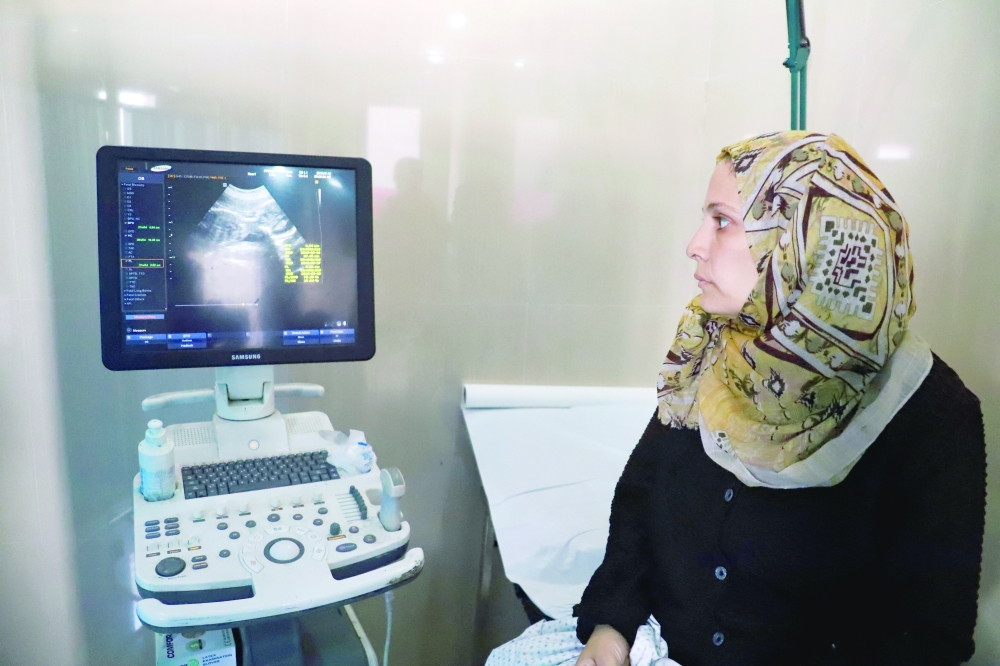





GAZA CITY: Like most women at the Gaza City hospital where she attends her pregnancy check-ups, Fatima Arafa's face looks fatigued, a sign of the malnutrition affecting her due to wartime shortages.
With the war in Gaza now in its 22nd month and Israel only slightly easing an aid blockade of the Palestinian territory, shortages of everything from food to clean water have hit pregnant women particularly hard.
"I am in my sixth month and I can't provide the basic minimum needs to complete this pregnancy," Arafa said before returning to the makeshift camp where she and her family found shelter after being displaced from their home in the north.
"Doctor Said will give me a blood transfusion because there is no nutrition and when I want to eat or buy food to eat, I cannot because there is nothing to eat," the 34-year-old said, her face thin and pale.
Medical charity Doctors Without Borders (MSF) said its teams in Gaza were witnessing "a sharp and unprecedented rise in acute malnutrition", with the number of cases at its Gaza City clinic nearly quadrupling over the past two months.
"Due to widespread malnutrition among pregnant women and poor water and sanitation levels, many babies are being born prematurely. Our neonatal intensive care unit is severely overcrowded, with four to five babies sharing a single incubator," said Joanne Perry, an MSF doctor in Gaza.
Fathi al Dahdouh, an obstetrician at the Al Helou Hospital where Arafa has her check-ups, said that miscarriages had soared since the start of the war.
"There are eight to nine miscarriages per day (in Gaza City), and we do not know whether this is due to the effects of war and explosive materials or due to a lack of nutrition and immunity," he said.
Dahdouh said the war was particularly hard on pregnant women and new mothers.
The UN Population Fund (UNFPA) warned in May that 17,000 pregnant and breastfeeding women in Gaza would require treatment for acute malnutrition over the next 11 months.
The warning came as Israel enforced an aid blockade of Gaza in the hope of forcing Hamas to surrender, only letting aid back in at a trickle in late May.
"They come here suffering from low blood pressure, weakness, fatigue and exhaustion due to the country's situation and the lack of nutrition," Dahdouh said. For Arafa, just getting to her medical appointments is a challenge.
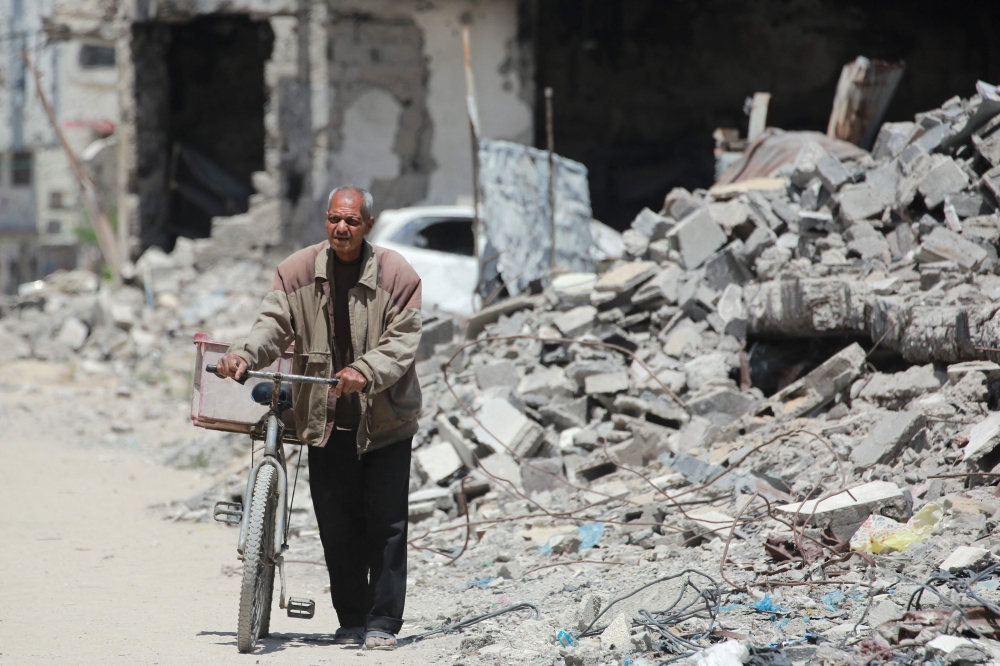
The area around Al Helou Hospital is relatively undamaged by the war but fuel shortages mean Arafa must walk to and from her camp in the searing heat.
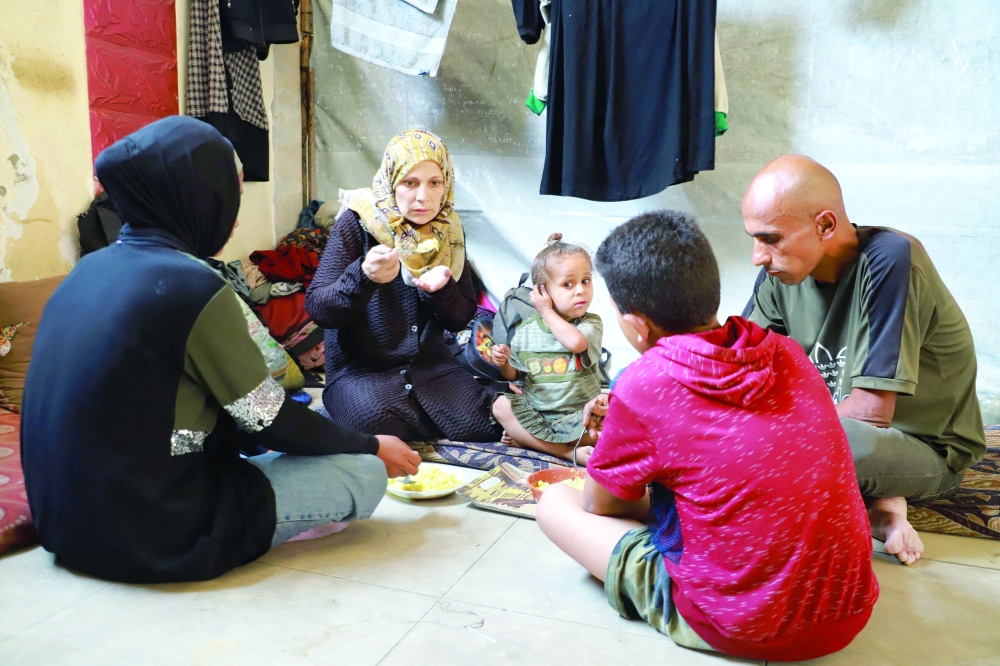
Once at her shelter -- a damaged house with plastic tarpaulins for walls -- Fatima, her husband Zahdi and their four children share a meal provided by a charity. The stew of pasta and lentils -- the only foods available to most in Gaza -- was cooked on a fire lit on the floor tiles of the home for lack of cooking gas.
UN agencies and aid groups say the volume of aid reaching Gaza is still not nearly enough and health workers are working in dire conditions. - AFP
Oman Observer is now on the WhatsApp channel. Click here