




When water interacts with geological formations, several processes occur. Groundwater is formed when rainwater seeps through rock and soil to reach aquifers. This groundwater can seep through rock and gather in specific areas, or it can interact with minerals in rocks, causing chemical changes in geological formations.
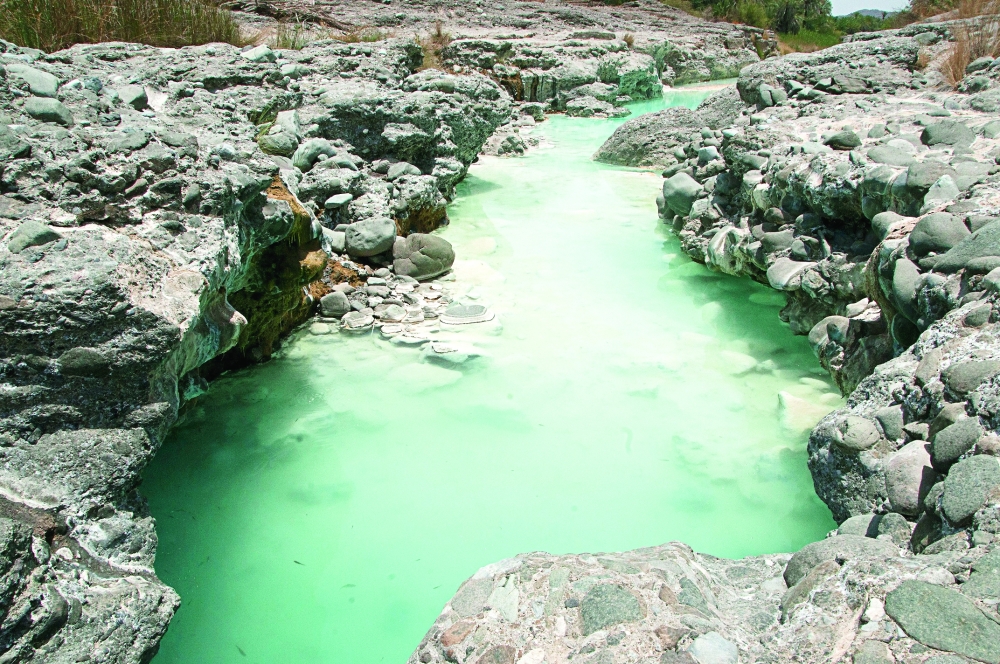
Turquoise waters in valleys are formed as a result of several factors, most notably the interaction of water with rocks containing certain minerals, such as calcite or sulfur.
Tectonic movements and erosion can also play a role in the formation of valleys and the springs that feed them, leading to this unique phenomenon, an Omani geologist told the Observer.
Among the Eastern Hajar Mountains, visitors cannot miss the sulfur springs, whose waters flow between the rocks, forming a magical artistic painting with their surreal colour that tends towards turquoise blue.
Al Damtha sulfur spring is a major tourist attraction, especially as it is located amidst the mountainous heights of Al Rustaq. The water flows continuously, giving it a distinctive turquoise colour, unaffected by climatic conditions. Its water is warm in the winter and moderate during the summer.
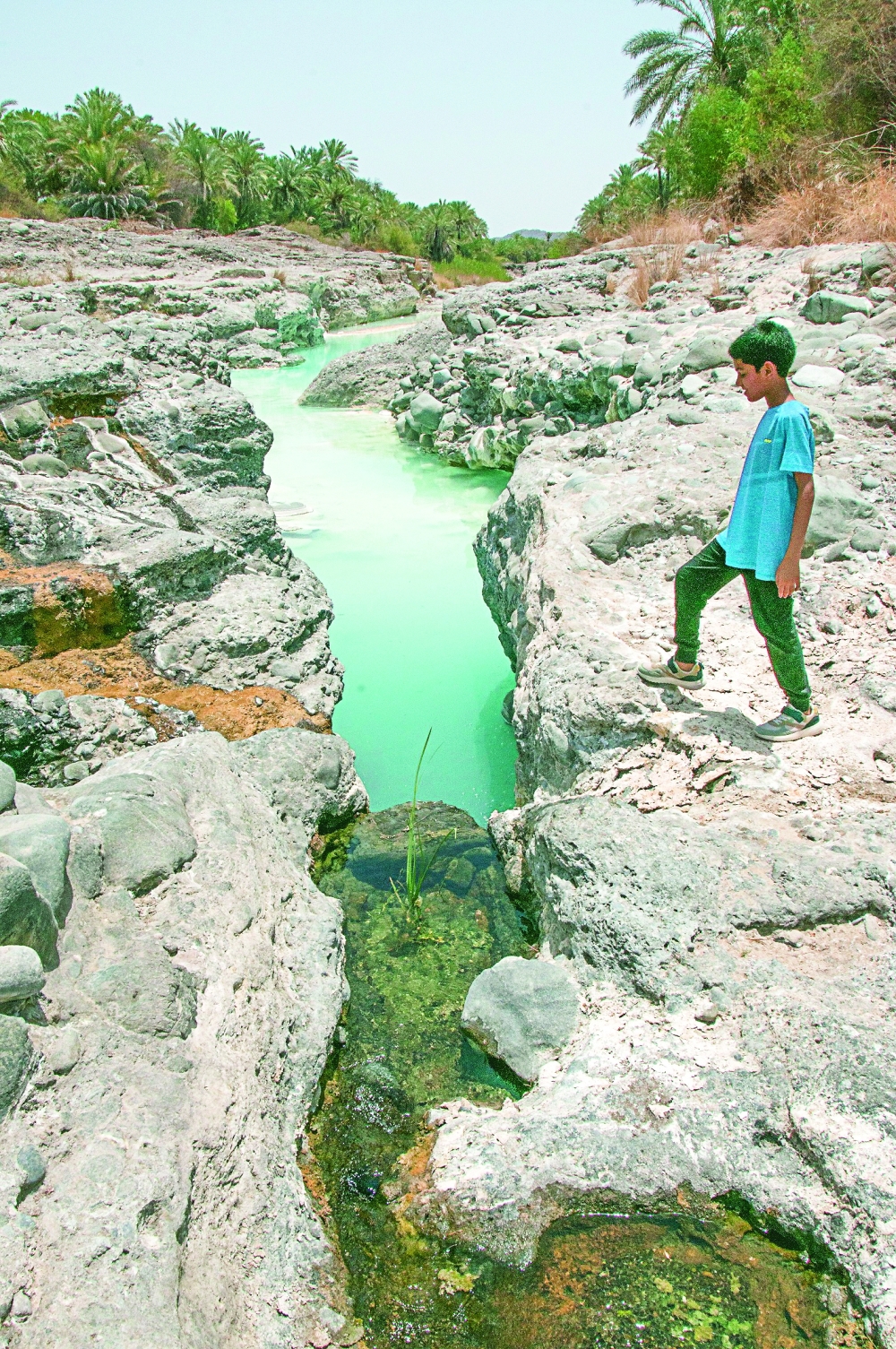
As for the secret of the colour of this water, the geologist adds: “When the water emerges from the spring, it mixes with the rocks, which secrete a white substance on their surface. It is said to be sulfur, causing the water to turn blue."
The beauty of this site is not limited to its turquoise waters. Visitors can also witness exceptional geological formations. Water trickling or flowing between the mountain paths has exposed these paths to natural erosion, resulting in the emergence of these formations along the path that connects this site to the valley.
These rocky environments store water, which can be used to feed groundwater wells. They also serve as water channels (aflaj) that carry water for long distances. Thus, this natural formation contributes to a basic water resource for the agricultural oases surrounding this unique place.
In Oman, sulfur springs are considered one of the most imperative natural treatments for external use through bathing. They treat musculoskeletal, rheumatic and skin diseases.
Sulfur also contains protein, which is a major structural component of the outer layer of human skin. Sulfur is also essential in the formation of the hormone insulin, and helps treat arthritis.
Sulfur is also important in the formation of collagen and is involved in the production of some types of amino acids.
There are many of sulfur water sites in Oman such as; Ain Namah (Wilayat of Adam), Ain Sahban (Wilayat of Suhar), Ain Batt (Wilayat of Ibri) and Ain Hen (Wilayat of Bidbid).
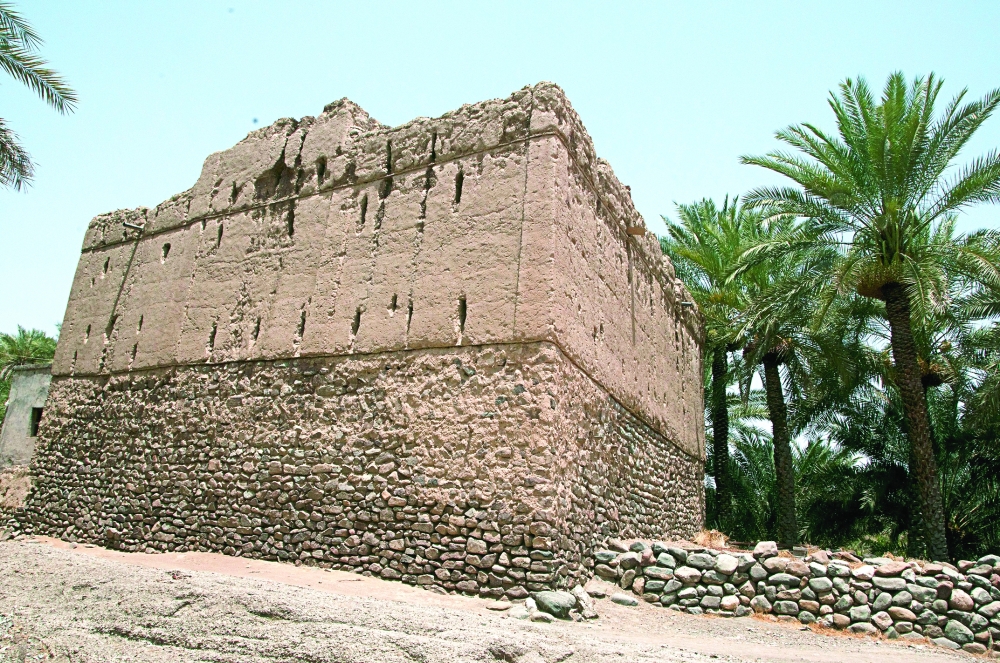
Tourism in the village of Al Damtha is not limited to enjoying its turquoise waters. Tourists can also explore several of the historical monuments that were built near the agricultural oases that surround this site. The road to reach this spot is very easy and does not require a four-wheel drive vehicle.
TEXT & PHOTOS BY YAHYA AL SALMANI
Oman Observer is now on the WhatsApp channel. Click here