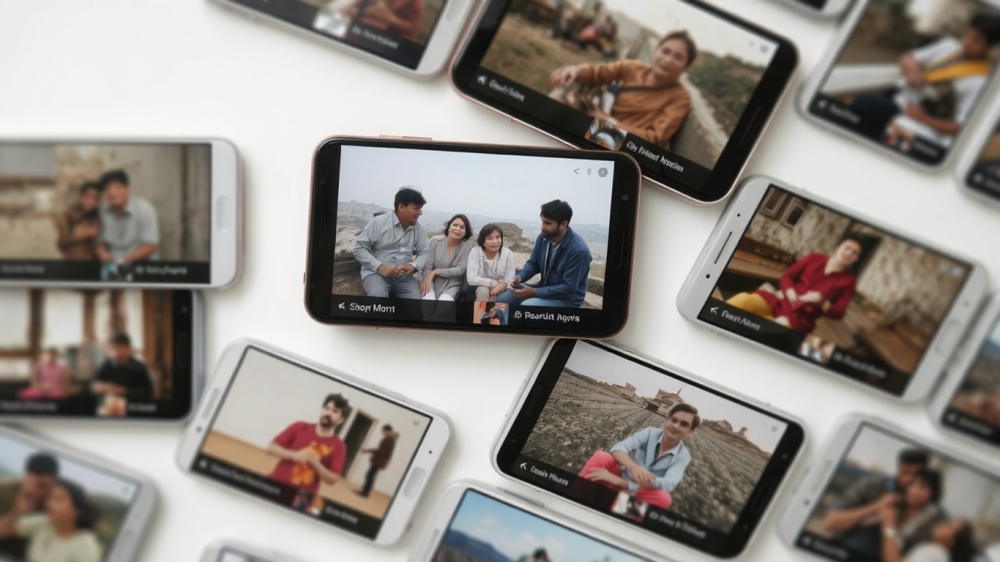





In the age of information overload, brevity is power. The meteoric rise of short-form video platforms—TikTok, Instagram Reels, and YouTube Shorts—has reshaped not only how we consume content but also how we tell stories. Once, a compelling narrative demanded time and attention; now, it must compete for a swipe, a like, and a few precious seconds of someone’s scrolling. This shift has had seismic effects on storytelling, from how creators engage audiences to how legacy institutions like newspapers and broadcasters reconsider their roles in the digital age.
TikTok’s global dominance is supported by figures: as of January 2024, TikTok had over 1.56 billion monthly active users worldwide, according to Statista (2024). The average user spends around 95 minutes a day on the app (DataReportal, 2024), a staggering amount of screen time that has prompted creators to distil their stories into fast, engaging formats. Its success has led Instagram and YouTube to prioritise short-form videos through Reels and Shorts, respectively. YouTube Shorts, for example, exceeded 70 billion daily views by mid-2023 (Google, 2023).
Renowned local influencer Sultan Al Balushi explained, “Social media plays a huge role nowadays; people read less and watch more. There’s a trust that comes from seeing something visually. With platforms like TikTok and Instagram Reels, storytelling needs to be more immediate and relatable. You’re not just telling a story any more; you’re showing it. That shift has changed how we connect with audiences — attention spans are shorter, but the emotional impact can be greater if you get it right.”
In the Gulf, the rise is equally notable. In Oman, TikTok had approximately 1.1 million active users by early 2024, accounting for nearly 20% of the population (DataReportal, Oman 2024). In Saudi Arabia, over 26 million TikTok users have been recorded, with a penetration rate of 73% — making it one of the platform’s strongest markets globally (Statista, 2024). Instagram Reels and YouTube Shorts are also thriving, especially among users aged 18–34, who form the digital core of the GCC’s population.
Short-form video has redefined storytelling. Traditional narrative arcs have been condensed or reimagined, replaced by bursts of mood, visuals, and relatability. A 15-second skit in an Omani dialect or a drone shot of a remote wadi can now convey a richer sense of place than lengthy travel articles. These micro-narratives thrive on aesthetic and emotional resonance, rather than conventional structure.
Equally transformative is who gets to tell the story. In Oman, social creators and a new generation of local influencers have built digital communities showcasing humour, nature, and regional pride, often in both Arabic and English. Their success reflects a wider regional trend, where democratisation of content creation has allowed voices from small towns to reach a global audience without institutional backing.
According to a Statista Global Consumer Survey (2023), more than 50% of Gen Z users in the MENA region prefer discovering content via TikTok or Instagram over traditional media channels. These platforms are becoming entry points not just for entertainment but also for awareness, activism, and community-building. In Oman, initiatives such as turtle conservation, local crafts, and anti-plastic campaigns have gained traction through Reels and Shorts, often reaching audiences that traditional outreach cannot.
Short-form video is particularly suited to our distracted, mobile-first lifestyles. A study by Microsoft Canada suggested that the average human attention span has fallen to around 8 seconds in the digital age (Microsoft, 2015). TikTok’s internal data supports this trend: videos under 30 seconds consistently perform better in terms of completion and sharing (TikTok for Business, 2023).
The format also bridges linguistic and cultural divides. In Oman and the wider Gulf, creators often alternate between Arabic and English, with subtitles making content more inclusive. This fluidity helps local stories resonate globally. For example, traditional Omani music or fashion becomes viral, not just as cultural heritage, but as part of global trend cycles—remixed, duetted, and restaged by users worldwide.
Long-form journalism, however, faces growing challenges. Traditional media outlets are contending with a new wave of content creators who can break down complex stories in under a minute. According to the Reuters Institute Digital News Report (2023), over 60% of users under 35 prefer to consume news via video—especially short formats—rather than lengthy articles or traditional broadcasts. In Oman, this trend is reflected by younger audiences turning more to platforms like TikTok for explanations and Instagram for quick headline updates.
This doesn’t mean long-form journalism is obsolete. Deep investigations, policy analysis, and multi-source reporting still matter — perhaps more than ever. But the path to engaging audiences now often begins on platforms designed for short, visual bursts. Newsrooms are adapting their strategies accordingly. International examples such as The Washington Post’s TikTok account (which now has over 1.6 million followers) demonstrate that it’s possible to tell substantial stories in playful, digestible formats. Similar initiatives are emerging in the Gulf, involving Arabic-language explainers and cross-platform storytelling strategies to reach younger, digital-savvy audiences.
However, short-form content also introduces risks. Misinformation can spread rapidly, exploiting the speed and emotional appeal of these platforms. A landmark MIT study revealed that false news is 70% more likely to be retweeted and spreads six times as fast as truth on social media (Vosoughi et al., Science, 2018). To counter this, Gulf countries have introduced stricter digital regulations. In Oman, Royal Decree 12/2011 on cybercrime (updated in 2018) criminalises the dissemination of false information that could disturb public order, with penalties including fines and imprisonment. The UAE’s Federal Decree Law No. 34 of 2021 further criminalises fake news, imposing up to two years’ imprisonment and fines of AED 100,000, and requiring social media influencers to register with authorities. Saudi Arabia’s Anti-Cybercrime Law enforces similar penalties, with fines reaching SAR 3 million and up to five years’ imprisonment for online misinformation. Kuwait’s Electronic Media Law mandates registration for digital publishers, while Qatar’s Penal Code amendments criminalise spreading false news—both with potential jail terms of up to five years. These laws reflect a regional consensus: viral content must be held accountable.
There’s also the danger of oversimplification. Complex issues—such as labour reforms, climate policies, or foreign relations—are often reduced to punchy soundbites. Moreover, cultural sensitivities need to be considered; missteps can provoke backlash or legal repercussions in tightly knit societies.
Yet, the answer is not to reject short-form storytelling, but to evolve alongside it. The future lies in hybrid formats—TikTok videos that lead into podcasts, Reels that serve as visual abstracts of feature articles, or Shorts that tease full-length documentaries. Skillful producers are learning to connect formats and craft narratives that span multiple platforms, creating a cohesive story ecosystem.
Audiences—especially the youth—are not disengaged; they are simply consuming content in ways that reflect their lifestyles: on the move, socially embedded, and visually oriented. The challenge for storytellers is not whether storytelling still matters, but how quickly they can deliver compelling narratives—and whether those stories leave an impact once the scroll stops.
In conclusion, short-form video has revolutionised storytelling in the Gulf and beyond, matching our increasingly fast-paced and digitally connected lives. While it brings new opportunities for engagement and diversity of voices, it also demands responsibility and innovation. Embracing hybrid storytelling models and upholding journalistic integrity can ensure that the power of storytelling continues to thrive amid the rapid currents of digital change.
Oman Observer is now on the WhatsApp channel. Click here