




In the last two decades, the media landscape has undergone a profound transformation. What was once dominated by traditional TV and radio has given way to a dynamic, fragmented, and highly personalized ecosystem of multi-platform media. This shift has not only changed how people consume content, but also redefined the very nature of media itself—from linear programming and passive consumption to on-demand access and active engagement. The decline of traditional broadcasting and the rise of digital platforms is more than a trend; it is a fundamental reordering of information, entertainment, and culture.
The Erosion of Traditional TV and Radio
Traditional television and radio, for decades the mainstay of global communication and entertainment, are experiencing a slow but steady decline. Several factors have contributed to this erosion: technological advancement, demographic changes, and evolving consumer expectations.
Linear programming, the hallmark of traditional TV and radio, no longer aligns with the needs of modern audiences. Viewers today prefer content on their own schedules, not dictated by a network’s timetable. The era when families gathered at 8 p.m. to watch the nightly news or prime-time dramas has been replaced by binge-watching Netflix, catching up on YouTube playlists, or streaming music on Spotify.
Demographics play a critical role in this shift. Younger generations, particularly Millennials and Gen Z, grew up with the internet and smartphones. They are digital natives, fluent in the use of apps, streaming services, and social media. According to numerous surveys, people under 35 consume far more digital content than traditional broadcasts. Even among older adults, there is growing adoption of digital media platforms.
Advertising revenue, once a reliable stream for TV and radio broadcasters, has followed the audiences. Companies now prefer placing ads on digital platforms like YouTube, Facebook, or Instagram, where targeting is precise and measurable. Traditional media’s broad but vague reach cannot compete with the data-driven marketing strategies of online platforms. The result: declining ad revenues and reduced budgets for traditional broadcasters.
The Rise of Multi-Platform Media
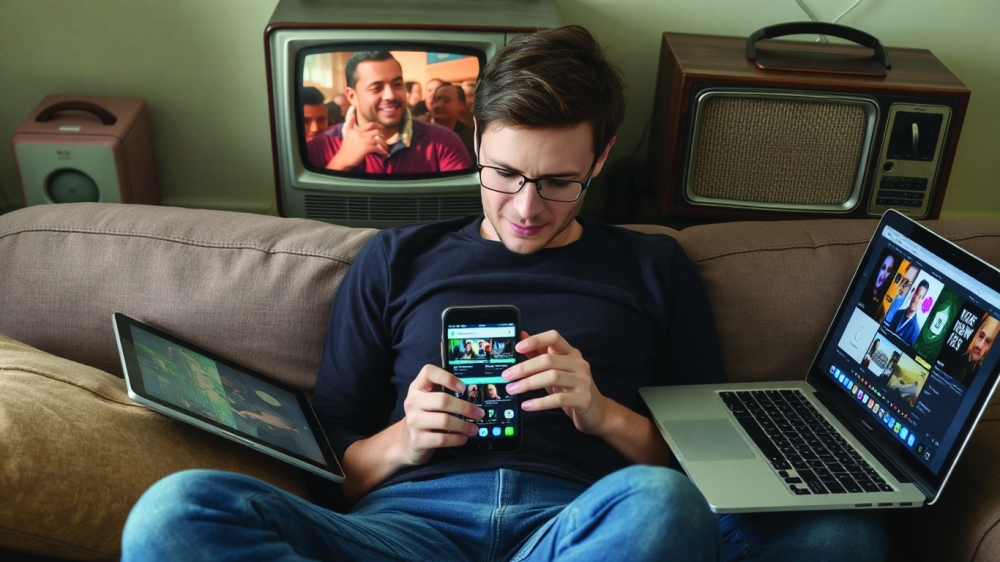
As traditional media wanes, multi-platform media—defined by its accessibility across various digital devices and networks—has emerged as the dominant form of content delivery. This includes social media, streaming services, podcasts, blogs, and online news outlets. Content is no longer confined to one format or device. A single show can live on cable, stream on-demand, be clipped on TikTok, and spark discussions on Reddit.
One of the most significant aspects of multi-platform media is personalization. Algorithms on platforms like YouTube, Netflix, and Spotify recommend content based on user behavior, ensuring a more engaging and relevant experience. This kind of personalization is impossible in traditional formats, which treat all viewers or listeners as a homogeneous mass.
Interactivity is another hallmark of multi-platform media. Audiences are no longer passive recipients of content—they are participants. They comment, share, remix, and even create their own media. Livestreaming platforms like Twitch and TikTok Live offer real-time interaction between creators and audiences, blurring the lines between consumer and producer.
Moreover, the barriers to entry in content creation have drastically lowered. Unlike the expensive, regulated world of TV and radio broadcasting, digital platforms allow almost anyone to become a creator. This democratization of media has led to a proliferation of voices and perspectives, many of which were historically marginalized in traditional media.
The Impact on Culture and Society
The decline of traditional media and the rise of multi-platform systems have far-reaching implications for culture, politics, and identity. On one hand, we now have a richer, more diverse media environment than ever before. Independent journalists, niche content creators, and underrepresented communities have found platforms to share their stories and build audiences.
On the other hand, the fragmentation of media has led to a more polarized society. In the past, traditional media acted as a shared cultural experience—everyone watched the same news, the same shows. Now, people often exist in algorithmic bubbles, where their media diets are tailored to their existing beliefs and preferences. This has raised concerns about echo chambers, misinformation, and the erosion of a common public discourse.
The economic implications are also significant. Traditional media companies have had to adapt or perish. Some have embraced digital transformation, launching their own streaming platforms or integrating social media strategies. Others have struggled to remain relevant, unable to compete with the speed and agility of newer tech-driven platforms.
For creators, the new landscape offers both opportunities and challenges. On one hand, there’s more freedom and fewer gatekeepers. On the other, monetization is complex and often unstable. Algorithms change, platforms rise and fall, and creators are subject to policies they don’t control.
The Hybrid Future: Integration Over Replacement
It would be inaccurate to declare the death of TV and radio outright. Instead, what we’re witnessing is a convergence of old and new media. Traditional broadcasters are increasingly adopting multi-platform strategies: television shows are now live-tweeted, news reports are shared on Instagram Stories, and radio programs are repackaged as podcasts. The distinction between “traditional” and “digital” is becoming increasingly blurred.
Public broadcasters, like the BBC or NPR, have shown how traditional institutions can successfully integrate digital practices. They offer live streams, podcasts, YouTube clips, and social media engagement while maintaining journalistic integrity and public trust.
Similarly, smart TVs and digital radio illustrate the hybrid nature of today’s media consumption. People may still watch linear TV or listen to FM radio, but often through smart devices that offer access to streaming apps and on-demand content. It’s no longer a question of either/or but rather how these formats can coexist and complement each other.
Conclusion
The shift from traditional TV and radio to multi-platform media represents one of the most dramatic transformations in the history of communication. Driven by technological innovation and changing consumer behaviors, the new media ecosystem is defined by personalization, interactivity, and accessibility. While this has led to a democratization of content and a wider array of voices, it has also introduced challenges around fragmentation, misinformation, and sustainability.
As media continues to evolve, the focus should not be on preserving old forms for nostalgia’s sake, but on integrating the best aspects of traditional media—such as trust, editorial standards, and shared cultural moments—with the innovation and inclusivity of digital platforms. The future of media is not in silos, but in synergy. The real question is not whether TV or radio will survive, but how they will adapt—and how we, as a society, will navigate the opportunities and responsibilities of this new media age.
Oman Observer is now on the WhatsApp channel. Click here