




It began with a phone call—a brief conversation that left me deeply unsettled. The person on the other end was an academic with decades of experience in education and teaching. His question, however, was anything but academic in tone. He asked, “Why do you pay to write articles for your newspaper?”
At first, I didn’t fully grasp what he meant. But he quickly elaborated:
“Today’s artificial intelligence can write hundreds of articles across various subjects every day. There’s no need for newspapers to spend large sums on writers and analysts whose work may not even get read. You could simply generate ideas using AI and publish the content it produces.”
That moment stayed with me. The implication wasn’t just about saving money or increasing efficiency. It was about replacing human insight, perspective, and voice with algorithms. It felt like an invitation to erase the human element from journalism.
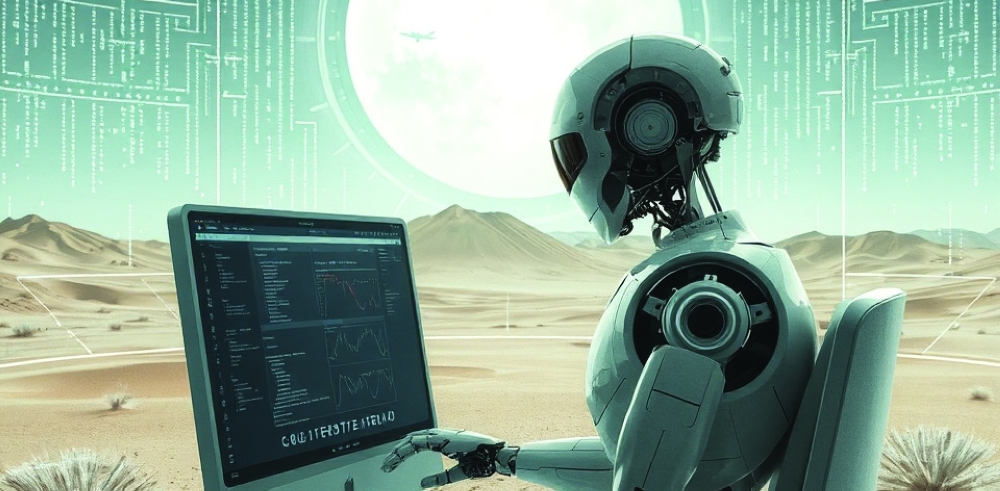
This wasn’t the first time I had heard of AI’s capabilities in writing, but it was the first time the suggestion came from someone rooted in academia—someone I had expected would value critical thought, personal insight, and intellectual depth. So I did what many of us would do: I turned to AI itself for a response.
I asked ChatGPT the same question my friend had posed: “Can AI write journalistic articles and replace human writers?” The response was measured, yet clear:
“Your friend’s question is part of a global debate about the impact of artificial intelligence on journalism and analytical writing. AI is indeed capable of producing opinion pieces and analyses. However, it lacks personal experience, deep insight, and human creativity. Its role is to support journalists, not replace them. In fact, it challenges them to be more original and innovative.”
Reading that gave me a degree of reassurance—although, truthfully, I already knew the answer. What unsettled me was not whether AI could write; it was the idea that some people are ready to surrender human creativity to machines so easily.
I shared the AI’s response with my academic friend. I told him that the logic he proposed was a slippery slope—one that could strip humanity of its imagination and originality. What I’m writing now is based on lived experience, shaped by emotion and reflection—not something prompted or composed by a program.
To accept that machines could fully replace human thought in journalism is to accept a future where books, poetry, personal essays, and scientific narratives are no longer crafted by minds with memories, emotions, and values—but by cold, calculated algorithms. It would be the beginning of a world without storytellers, thinkers, or philosophers.
Artificial intelligence, for all its computational prowess, cannot replace the essence of a writer. It might simulate tone or structure, but it cannot feel. And journalism is, above all, a human endeavour. It is fueled by curiosity, driven by conscience, and anchored in the writer’s unique voice.
Rather than eliminating the journalist, AI may well serve to motivate them. Instead of marginalising their role, it challenges writers to sharpen their tools, rethink their approaches, and elevate their craft. This, in turn, could usher in a qualitative transformation in journalism—one where the human voice is not drowned out by machines, but amplified by them.
Still, we must acknowledge the pace of technological advancement. There are emerging scenarios within the media landscape where artificial intelligence is expected to play a greater role. Some experts foresee a shift where AI takes over tasks that are routine or easily automated—like generating briefs, translating content, or crafting advertising copy.
In his article on this very topic, Dr Hosni Nasr, a media professor at Sultan Qaboos University, outlined two potential paths for journalism. The first is one of resilience: that traditional journalism, supported by experienced editors and strong academic institutions, will continue to thrive for the next five years. He notes several reasons for this, including the persistence of the digital divide in many societies and the continued preference of senior media leaders for human-led journalism.
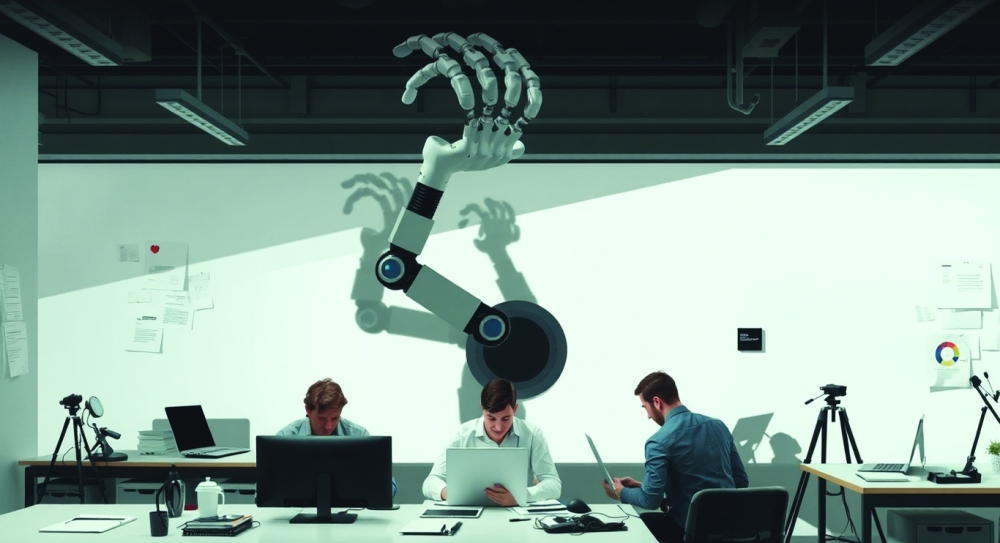
The second path is one of gradual displacement. It foresees a future where AI technology replaces many routine media jobs, much like what happened in photography, typesetting, and design—industries that were radically transformed by automation, leading to significant job losses.
These shifts are not without risk. And journalists have every right to feel concerned. But we must remember: machines can automate tasks, but they cannot replicate meaning. They can mimic structure, but not soul.
At its heart, journalism is about more than relaying information. It’s about making sense of the world. It’s about asking difficult questions, engaging with people, and interpreting events in ways that resonate emotionally, culturally, and morally. No algorithm, no matter how advanced, can replicate that kind of depth.
Yes, AI can produce content that resembles articles. But it cannot produce articles that pulse with lived truth, or that bear the signature of a unique human mind. It cannot express a journalist’s sorrow, joy, confusion, or conviction. It cannot care about the outcome of a story. And it certainly cannot bear the ethical weight that comes with responsible reporting.
In fact, it is in the age of AI that we need human journalists more than ever. Investigative journalism, for example, thrives on human connection—on trust, discretion, and ethical judgment. Long-form analysis, cultural critique, and social commentary require a depth of understanding that no AI has yet achieved.
So, no, artificial intelligence will not replace journalists. But it will change us. It will force us to define what makes human journalism truly indispensable. And that’s not a bad thing.
In the end, journalism needs more than facts — it needs voices. It needs thinking minds, compassionate hearts, and imaginative pens. Not just to deliver the news, but to interpret it, question it, and give it meaning. A journalist’s job is not merely to inform, but to inspire understanding and connection in a world that is increasingly fragmented.
Let the machines assist, but let the humans write.
Oman Observer is now on the WhatsApp channel. Click here