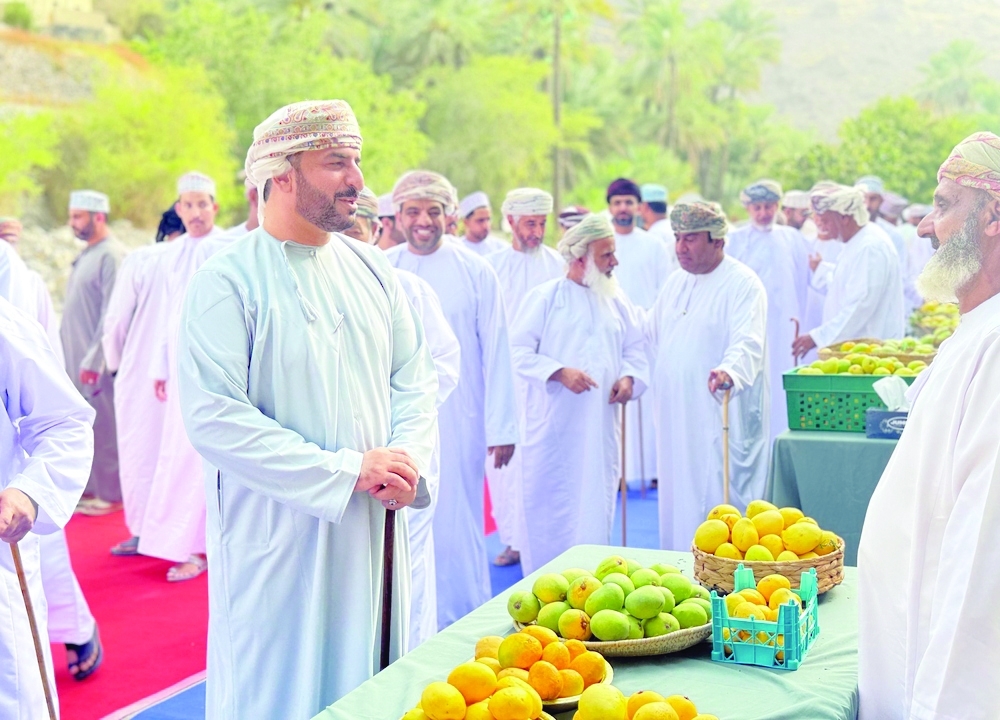





AL AWABI: The first edition of the Al Awabi Mangos Festival concluded in Al Alia village in the Wilayat of Al Awabi, Al Batinah South Governorate, on Saturday.
The festival was organised by the Office of the Governor of Al Batinah South Governorate, in collaboration with several local institutions and farmers.
The festival aimed to highlight the Omani mango tree and promote it as an agricultural heritage that represents an integral part of the village and region’s identity. It also highlighted the agricultural importance and status of the mango tree in the community.
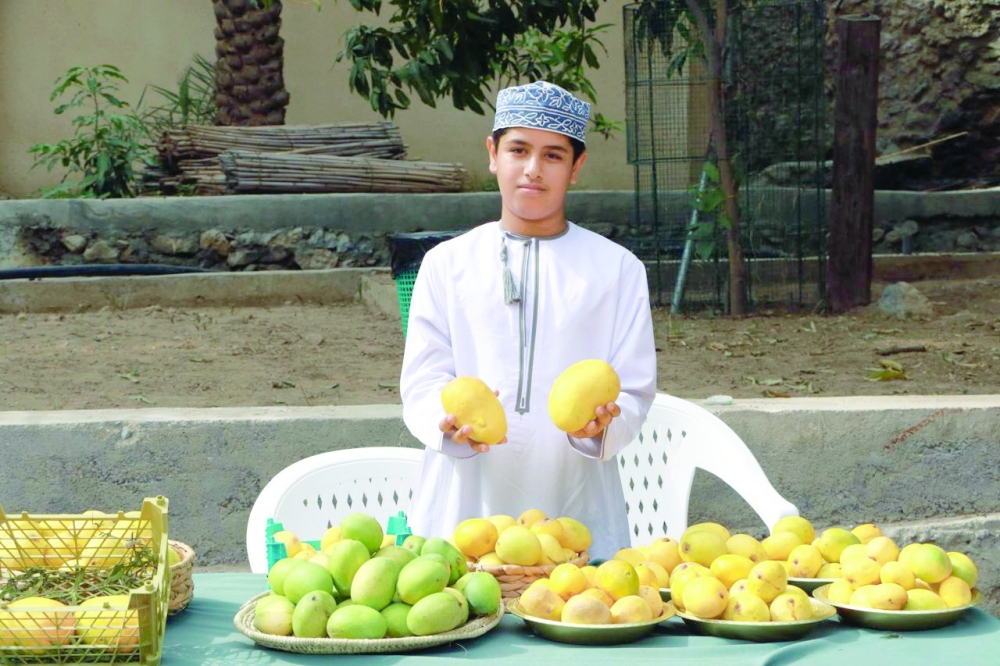
Al Alia village is well-known for its abundant produce of high-quality mango varieties. Mango is a prolific fruit-bearing tree distinguished by its sweet, juicy flesh and rich flavour which placed it among the most-consumed highly-demanded fruits.
The festival included a variety of cultural, agricultural and entertainment activities which appealed to various segments of society. Most notable among these were the market corner, which showcased local agricultural products and traditional handicrafts; the rural entrepreneurship corner, which showcased youth initiatives and projects; the small farmer corner, which taught children the principles and importance of agriculture and the interactive theatre corner, which hosted cultural, artistic and entertainment segments. The festival also included an awareness lecture on mango cultivation and care methods, an experience of picking the fruit directly from the trees, tours to explore the landmarks of Al Alia village and entertainment competitions.
Oman’s commitment to mango cultivation is further reflected in a comprehensive scientific encyclopedia on the mango tree, considered the first of its kind globally. Commissioned in 2005 under the royal directives of the late His Majesty Sultan Qaboos, the encyclopedia took nearly a decade to complete and was launched in 2016 in Arabic, English, French and Spanish, with an electronic version also available for global access.
This encyclopedia documents mango cultivation in 65 countries and serves as a vital scientific reference for protecting Omani mango varieties, combating agricultural pests and mitigating the effects of salinity on production.
Historically, mango cultivation dates back around 6,000 years in South Asia and was introduced to Oman through ancient trade routes during the 10th century AD. Today, mango ranks as the fourth most important fruit crop in the Sultanate of Oman, after date palms, citrus fruits and bananas, with popular local varieties including Al Halkoom and Banana Stick.
By celebrating this beloved fruit, the festival strengthens community ties to agricultural heritage and highlights the importance of conserving rare local varieties for future generations.
TEXT & PHOTOS BY YAHYA AL SALMANI
Oman Observer is now on the WhatsApp channel. Click here