Neither Israeli Prime Minister Benjamin Netanyahu nor US President Donald Trump has shown himself to be a prudent and levelheaded actor on the world stage. Both regularly indulge reckless impulses and approach statecraft as a matter of political opportunism. Nonetheless, the joint military campaign they have launched against Iran is reasoned and reasonable. Israel was justified in attacking Iran’s nuclear installations, and the US was right to join the fight, using its bunker-buster bombs to hit Fordow, as well as two other nuclear facilities.
But now that Israel and the US have demonstrated their overwhelming military power, they should set their sights on a diplomatic, not a military, endgame. Air strikes may be able to take out Iran’s existing nuclear facilities, but they also give Iran an even greater incentive to rebuild those facilities in pursuit of a nuclear deterrent.
Prior to the start of Israel’s military campaign on June 13, Iran had been stockpiling near-weapons-grade uranium. In May, the International Atomic Energy Agency determined that it would take only three weeks for the Fordow plant to turn the current stockpile into enough weapons-grade uranium for nine nuclear weapons. While Iran would need additional time to master the process of building such weapons, the fact that highly enriched uranium has no civilian uses – combined with evidence of Iran’s past efforts to build nuclear weapons – was cause for not just grave concern but military action.
Before Israel’s initial strikes on Iran, this grave concern had led both the Biden and Trump administrations to try to neutralise the looming Iranian nuclear threat at the negotiating table. But it refused to make a deal.
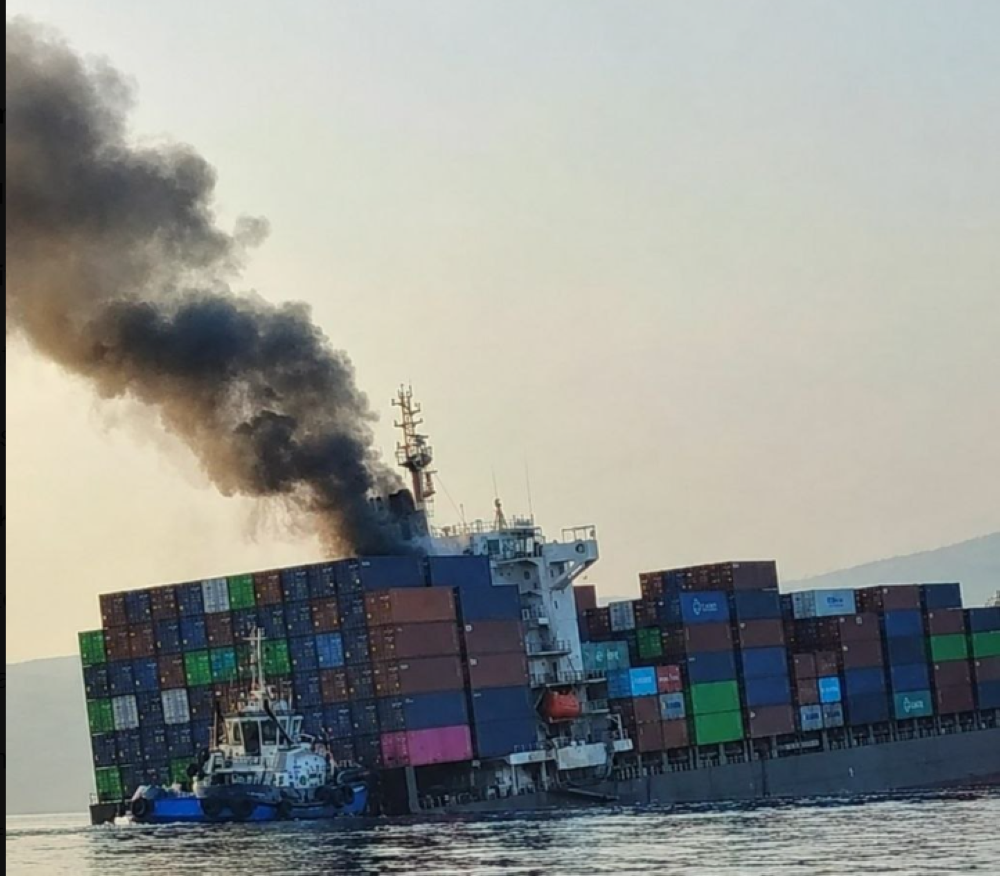
Iran has also been quite transparent about its malign strategic intentions. It has spent years building up its military. Iran’s own military capabilities pose a direct and active threat to US interests in the region — including US bases and troops, international shipping and the flow of oil and gas.
But while Israel and the US have sound reasons for seeking to destroy Iran’s nuclear facilities, military force alone will not bring about a lasting resolution. Iran’s nuclear programme may end up being only partly damaged, and even if it has been set back substantially, it can still be reconstituted, perhaps more stealthily. Moreover, if Iran has no diplomatic off-ramp, and if its regime fears for its survival, it will likely expand the war out of desperation, potentially leading to a region-wide conflict. It is too soon to tell whether Iran’s Monday attack against US bases in the region is more of a symbolic response or a deliberate effort to quickly escalate.
Now that the US has entered the war, it should try again to arrive at a diplomatic endgame. Iran has strong incentives to make a deal and accept stringent constraints on its nuclear programme, as well as intrusive inspections. With Israel and the US effectively controlling the country’s airspace, Iran’s ability to fight back will diminish by the day. Simply put, Iran’s hand is uniquely weak, making this the perfect moment to extract concessions at the negotiating table.
Trump also has strong incentives to return to diplomacy. Although he decided to enter the war, he faces strong pushback from the broad cadre of neo-isolationists in his own political base. Even if Israel wants to continue the campaign (perhaps aiming to bring down the Iranian regime), Trump has no interest in another Middle East quagmire. His game is to show strength, and then to be the dealmaker who brings peace to the Middle East.
Aiming at regime change may be tempting, but taking down the Islamic Republic by force would be a cardinal mistake. It is impossible to predict what kind of government would come next, let alone to contain the regional spillover that might accompany political chaos in Iran. Given the unstable neighbourhood, regime collapse in Iran could easily radiate sectarian and ethnic violence far afield.
The US has already learned this lesson the hard way. Its interventions in Afghanistan, Iraq, Libya and Syria cost trillions of dollars and produced little good. Whatever happens in Iran, one thing is certain: Trump should not, and will not, engage in any nation-building. If Iran falls apart, the Trump administration is certainly not coming to the country’s rescue.
After almost a half-century, the regime may be nearing its end. But if it does fall, change needs to come from within, not be imposed from outside. The best way to facilitate this objective is to end the war at the negotiating table. Then, it would be up to Iran’s citizens to remove a leadership that has failed on every front. This outcome – though far from assured – might then produce a moderate government that could clear the way for the broader regional peace that Trump is so hungry to claim credit for. Project Syndicate, 2025.
By Charles A Kupchan
A Professor at Georgetown University and Senior Fellow at the Council on Foreign Relations, served on the National Security Council under US Presidents Bill Clinton and Barack Obama
Oman Observer is now on the WhatsApp channel. Click here