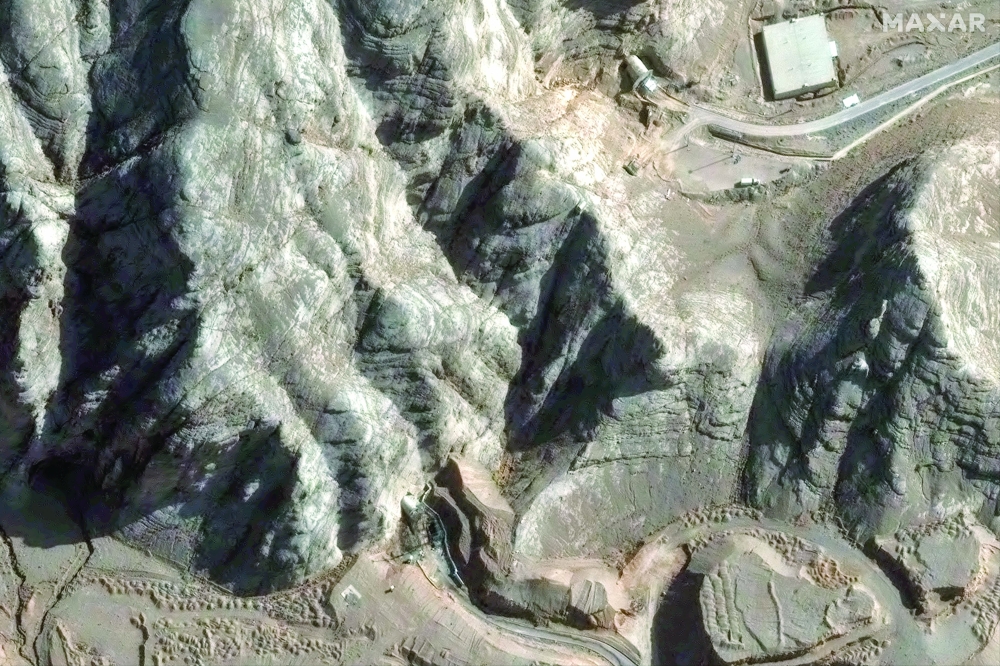





There are so many things to say in the wake of the US bombing of three key Iranian nuclear facilities that it is easy to get lost in the gripping details. So for now, let me try to step back and explore the global, regional and local forces shaping this story. What’s really going on here?
It is a very, very big drama, and it is not confined to the Middle East.
To my mind, Vladimir Putin’s war of Ukraine in 2022, with the sole aim of wiping its democracy off the map and absorbing it into Russia, and the attacks on Israel in 2023 by Hamas and friendly nations in Lebanon, Yemen and Iraq were manifestations of a global struggle between the forces of inclusion and the forces of resistance.
That is a struggle between countries and leaders who see the world and their nations benefiting from more trade, more cooperation against global threats and more decent, if not democratic, governance — versus regimes whose leaders thrive on resisting those trends because conflict enables them to keep their people down, their armies strong and their thieving of their treasuries easy.
The forces of inclusion had steadily been growing stronger. Ukraine in 2022 was getting closer to joining the European Union. This would have been the biggest expansion of a whole and free Europe since the fall of the Berlin Wall in 1989, because it would have added to the West a huge agricultural, technological and military power and left Russia more isolated — and looking more out of step to its own people — than ever.
At the very same time, the Biden administration was making rapid headway on a deal for the US to forge a security alliance with Saudi Arabia. In return, Saudi Arabia would normalise relations with Israel, and Israel would begin talks with the Palestinians on possible statehood. This would have been the biggest expansion of an integrated Middle East since the Camp David peace treaty between Egypt and Israel in 1979.
In short, Ukraine looked poised to join the West, and Israel looked poised to join the East.
So what happened? Putin attacked Ukraine to stop the first movement, and Hamas and Iran and others attacked Israel to stop the second.
As such, my first question in the aftermath of Sunday morning’s strike on Iran is: Does President Trump understand whose side of this global struggle Putin is on? Iran and Russia are close allies for a reason. Iran has been providing Russia with the drones it has used to more effectively kill Ukrainian soldiers and civilians. I do not ask Trump to drop a bomb on Russia, but I do ask him to provide Ukraine with the military, economic and diplomatic support it needs to resist Russia - every bit as much as the US is doing for Israel to defeat Hamas and Iran.
China has always had a foot in each camp. Its economy depends on a healthy and growing world of inclusion, but its political leadership has also maintained strong ties to the world of resistance. So Beijing plays in both leagues - buying oil from Iran but always worried that if Iran got a nuclear bomb, it might one day give a copy to fighters from Xinjiang.
That said, China’s oil purchases from Iran are a crucial part of this story. Those purchases are Tehran’s biggest source of external income. As my colleague Keith Bradsher reported from Shanghai, oil sales to China are today 6 per cent of Iran’s economy and equal to about half of government spending. - The New York Times
Thomas L Friedman
The writer is an American political commentator and author
Oman Observer is now on the WhatsApp channel. Click here