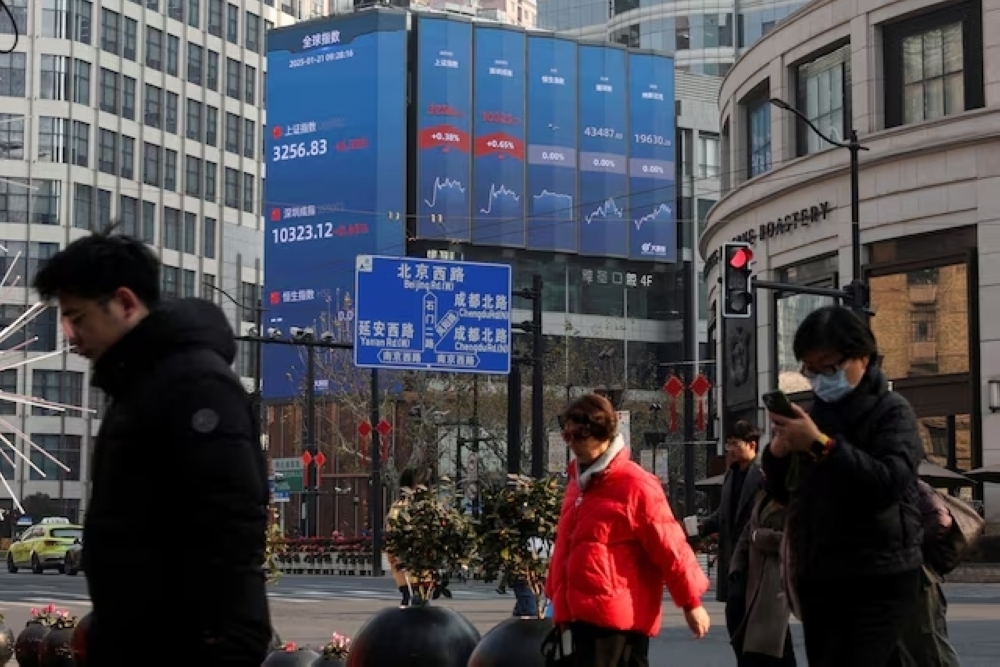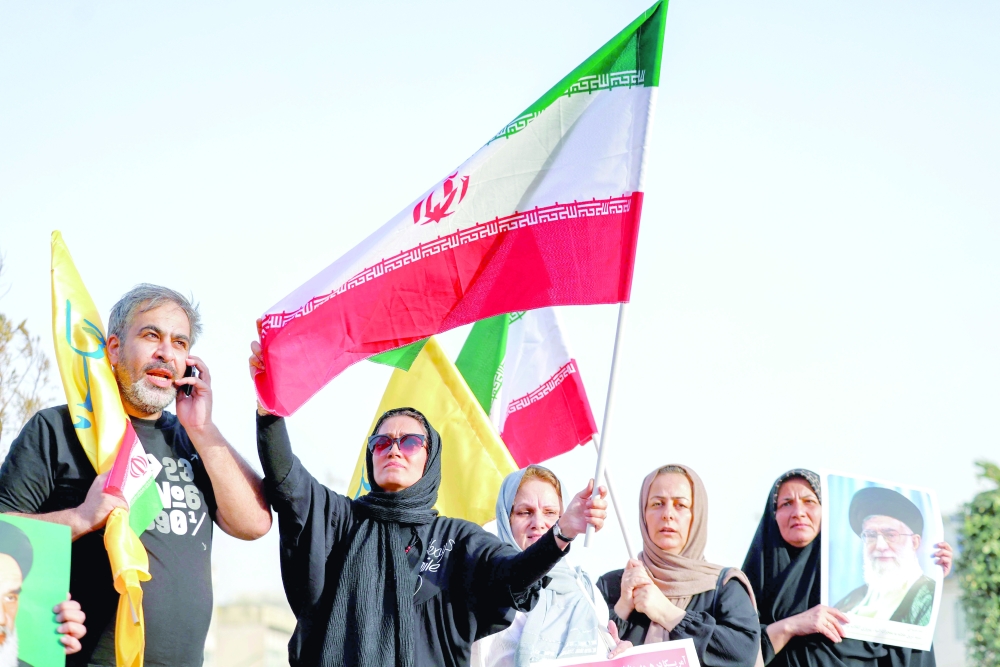





Stock markets ticked higher on Friday while oil headed for its biggest daily drop since April after President Donald Trump pushed back a decision on US military involvement in the Israel-Iran conflict.
Rising risks from the Middle East have loomed large on the world's top indexes again this week.
Europe's main bourses were all between 0.5 per cent-1.4 per cent higher after similar gains across Asia, although it was touch and go whether it would be enough to prevent a second straight weekly loss for MSCI's main world index.
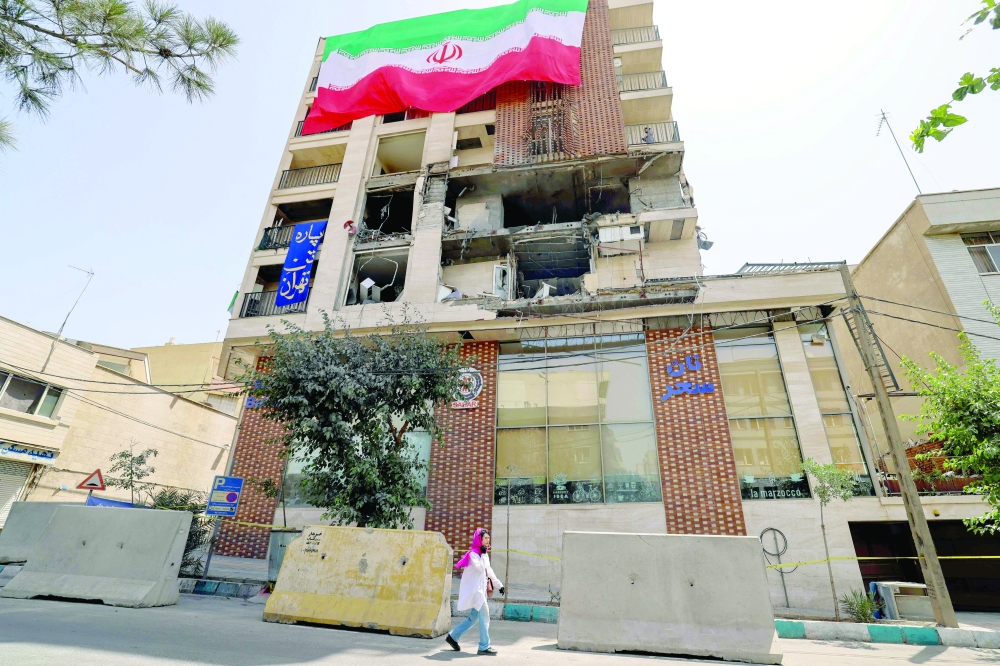
Israel bombed targets in Iran, and Iran fired missiles at Israel overnight as the week-old war continued but Friday's market moves, which also included a modest drop in the dollar, showed an element of relief.
That was largely pinned on Thursday's statement from the White House that Trump will decide in the next two weeks - rather than right away - whether the US will get involved in the war.
European foreign ministers were meeting their Iranian counterpart in Geneva on Friday, seeking a path back to diplomacy over its contested nuclear programme.
The relief the US wasn't charging into the conflict sent oil prices down as low as $76.10 per barrel, although they are still up 4 per cent for the week and 20 per cent for the month.
"Brent crude is down 2.5 per cent today in the clearest sign that fears over an imminent escalation in the Israel/Iran conflict have eased," MUFG strategist Derek Halpenny said.
Gold, another traditional safe-haven play for traders, was also lower on the day and Nasdaq, S&P 500, and Dow futures had all moved into the green as Wall Street prepared to get going again having been closed on Thursday.
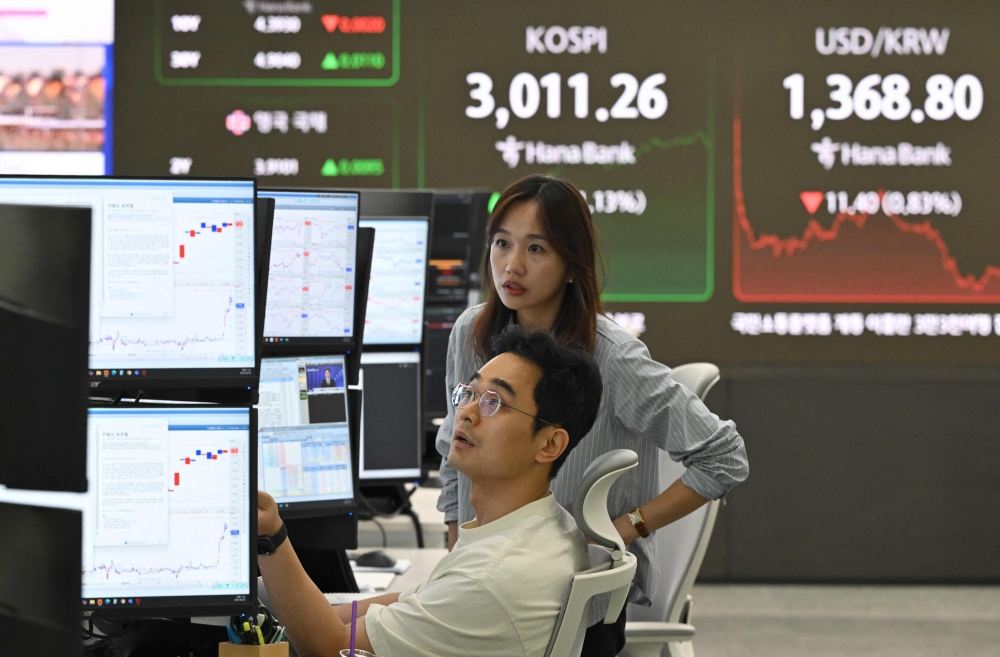
Asian shares had gained 0.5 per cent overnight thanks to a 1.2 per cent jump in Hong Kong's Hang Seng and as newly elected President Lee Jae Myung's stimulus plans saw South Korea's Kospi top 3,000 points for the first time since early 2022.
China's central bank held its benchmark lending rates steady as widely expected in Beijing, while data from Japan showed core inflation there hit a two-year high in May, keeping pressure on the Bank of Japan to resume interest rate hikes.
The dollar was ending an otherwise positive week on a modest downer, with the euro up 0.3 per cent against the US currency at $1.1527 and the pound 0.2 per cent higher at $1.3494.
The US bond market, which was also closed on Thursday, resumed trading with the key 10-year Treasury bond yield flat at 4.39 per cent, while German 10-year yields, which serve as Europe's borrowing benchmark rate, fell 2.5 basis points to 2.49 per cent.
Gold prices eased 0.8 per cent to $3,345 an ounce, leaving them set for a weekly loss of 2.5 per cent.
But the main commodity market focus remained oil. Brent crude futures were last down $2.45, or around 3 per cent, at $76.43 a barrel in London although they were still on track to end the week almost 3 per cent higher.
PVM analyst John Evans said oil producers' "nightmare scenario" was that Iran or its proxies could block the Strait of Hormuz, something which has never happened and through which 20 million barrels are shipped each day.
JP Morgan estimates that amounts to about 20 per cent of all global oil trade and 30 per cent of seaborne oil trade.
"The market is currently assigning a probability below 20 per cent to this happening," JP Morgan's Francesco Arcangeli wrote in a note, estimating thought that a full closure of the Strait could see oil prices surge to $120-$130 a barrel. — Reuters
Oman Observer is now on the WhatsApp channel. Click here