




ISLAMABAD — Until recently, Pakistan’s most powerful man preferred to stay behind the scenes, tightly controlling his public profile and limiting his pronouncements mostly to choreographed addresses at set-piece military events.
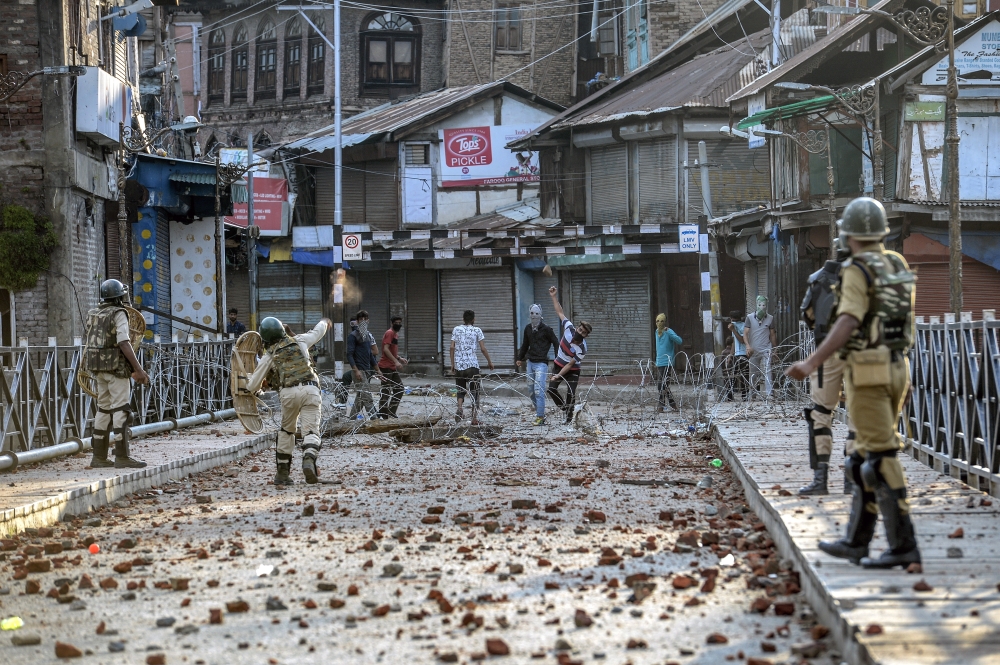
But after the deadly terrorist attack nearly two weeks ago in the Indian-controlled part of Kashmir, Pakistan’s army chief, Gen. Asim Munir, has stepped to the center of sharpening tensions between Pakistan and India.
As pressure has built in India for a forceful response to the attack, which killed more than two dozen tourists near the town of Pahalgam, Munir has increasingly shaped Pakistan’s tone with his tough talk.
On Thursday, standing atop a tank during a military exercise, Munir addressed troops in the field. “Let there be no ambiguity,” he said. “Any military misadventure by India will be met with a swift, resolute and notch-up response.” That was a reference to Pakistan’s vow to match or exceed any Indian strike.
Munir’s comments have been seen in India and Pakistan as reflecting his need to project strength and rally public support after his country has struggled for years with political divisions and economic hardship. Those troubles have dented the steadfast loyalty that Pakistanis had felt for decades toward the military establishment, which has long had a hidden hand in guiding the country’s politics.
But Munir’s response appears to be more than a political calculation. Analysts describe him as a hard-liner on India, with views shaped by his time leading Pakistan’s two premier military intelligence agencies and by
The current face-off is not Munir’s first brush with a regional crisis.
In 2019, when a suicide bombing in Kashmir triggered Indian airstrikes and a brief military escalation, Munir was the leader of Pakistan’s powerful intelligence agency, the Inter-Services Intelligence Directorate, or ISI. His tenure ended just months later when Prime Minister Imran Khan removed him.
Khan would later oppose Munir’s elevation to army chief, and their relationship has remained hostile. After falling out with the military leadership, Khan was ousted in April 2022. Munir assumed his command as army chief seven months later.
For now, diplomatic relations between the two countries remain frozen. Aggressive public messaging, rather than quiet diplomacy, has become the primary channel of communication. In such a climate, the risk of miscalculation is acute.
Zahid Hussain, a political and security analyst in Islamabad, said Pakistan would feel compelled to respond if India launched military strikes.
“The question is whether Modi can choose to stop at this point,” he said. “Even limited Indian strikes could spiral into a broader conflict.”
This article originally appeared in The New York Times.
Oman Observer is now on the WhatsApp channel. Click here