


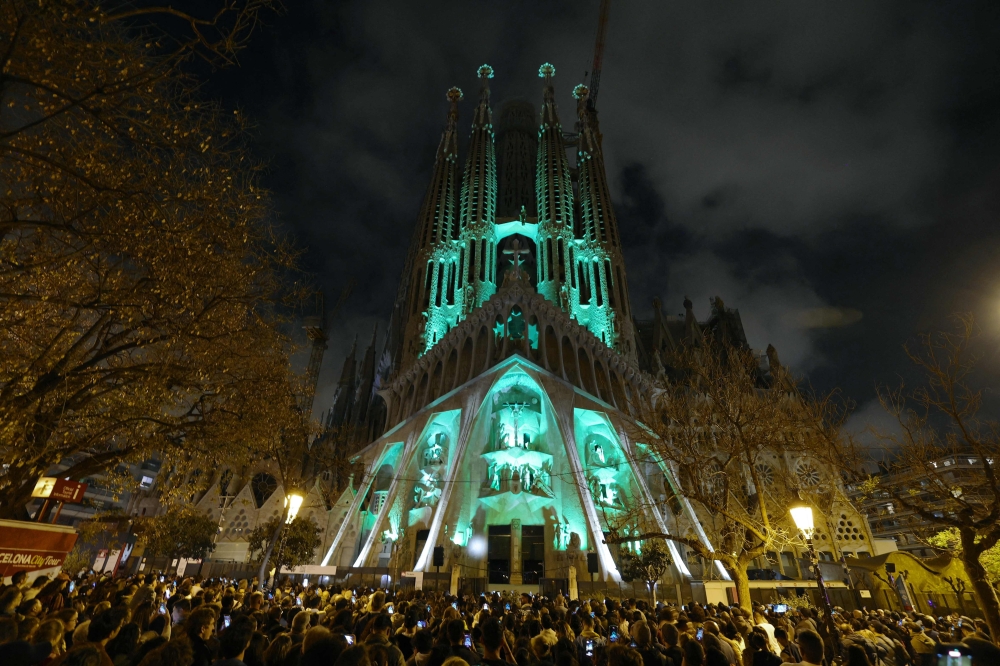





Pope Francis has approved the first step towards sainthood for Antoni Gaudi, the modernist architect behind Barcelona's "Sagrada Familia" basilica, the Vatican said on Monday.
Gaudi was a pious man who worked for more than 40 years on the Sagrada Familia, the largest unfinished Roman Catholic church in the world, a UNESCO world heritage site, and one Europe's biggest tourist draws.
Francis approved a decree recognising Gaudi's "heroic virtues", the Vatican said in a statement.
For him to be beatified, the next step in the process of becoming a saint, a miracle would have to be attributed to Gaudi. After that, a second miracle would be required for him to be declared a saint.
Construction of the Sagrada Familia began in 1882, but the project, known for its soaring Gothic spires, remains unfinished even after Gaudi devoted the last 12 years of his life exclusively to the project.
It was meant to be completed by 2026, the centenary of the death of Gaudi, whom the Vatican's media outlet, Vatican News, has referred to as "God's architect".
The the target date was postponed indefinitely after the COVID-19 pandemic reduced tourist revenues used to fund construction.
Gaudí is celebrated for his unique style that harmoniously blends organic forms with vibrant colors and intricate details. In recognition of his monumental contributions, several of Gaudí’s works have been designated UNESCO World Heritage Sites, solidifying his place as one of the most influential architects in history.
Other than the Sagrada Família, an awe-inspiring basilica that remains under construction more than a century after it was initiated Park Güell, a colorful public park adorned with whimsical structures and vivid mosaics, is another highlight of his legacy. Casa Batlló and Casa Milà (La Pedrera) are further exemplars of Gaudí’s genius, featuring wavy stone façades and ornate wrought-iron balconies that defy conventional architecture. Each of these works reflects his passion for geometry and his deep religious faith, leaving a lasting imprint on the city’s cultural landscape.—Reuters
Oman Observer is now on the WhatsApp channel. Click here


