




Luciano Sampietro lifted a 3-foot aluminium pipe to his lips and blew, sending a blow dart laced with sedatives, muscle relaxers and painkillers towards the world’s largest rodent, lounging near an artificial pond.
The veterinarian’s target, a roughly 110-pound alpha male capybara, was hit in the hind leg. Sampietro fired again and struck a female. Within 15 minutes, workers dressed in the tan outfits of safari guides scooped up the sleeping patients.
But they were too late: The female was already pregnant. So they injected the male with a drug designed to stop him from impregnating any more.
Yes, in the wealthy suburbs of Buenos Aires, they are sterilising the capybaras.
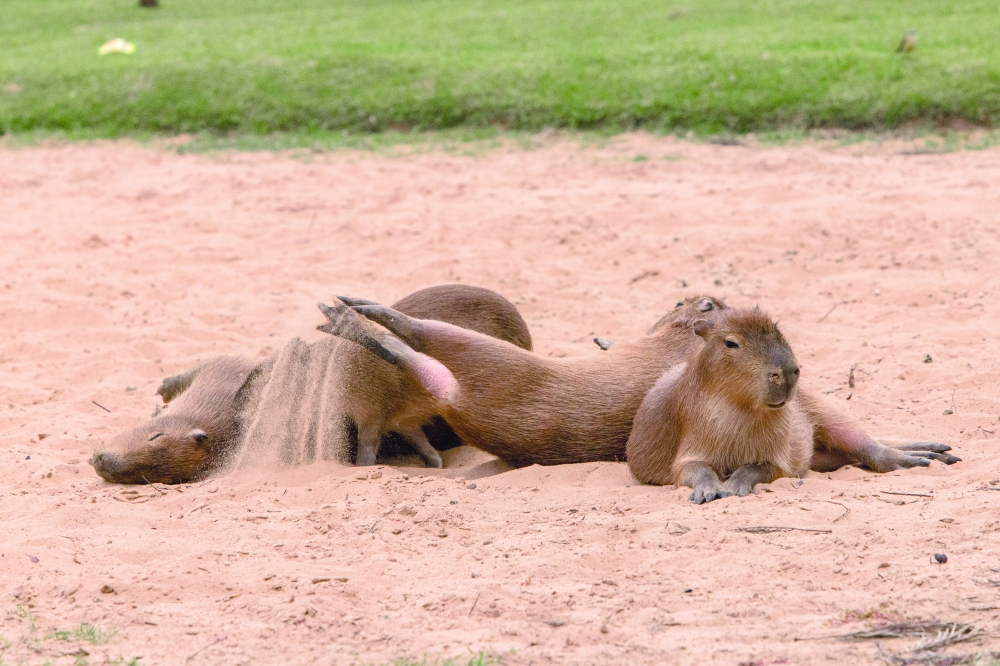
The rotund, laid-back, dog-sized rodents native to South America have recently become a darling of the modern internet. They have catapulted to the top of the unofficial adorable animal rankings via countless videos showing them mellow, plump and perfectly happy to let monkeys and ducks ride on their backs. Their image adorns backpacks and stuffed animals; and in Tokyo, tourists pay premiums to feed them carrots at capybara cafes.
But to some people in one corner of their native land, the cuddly capybara has become a menace.
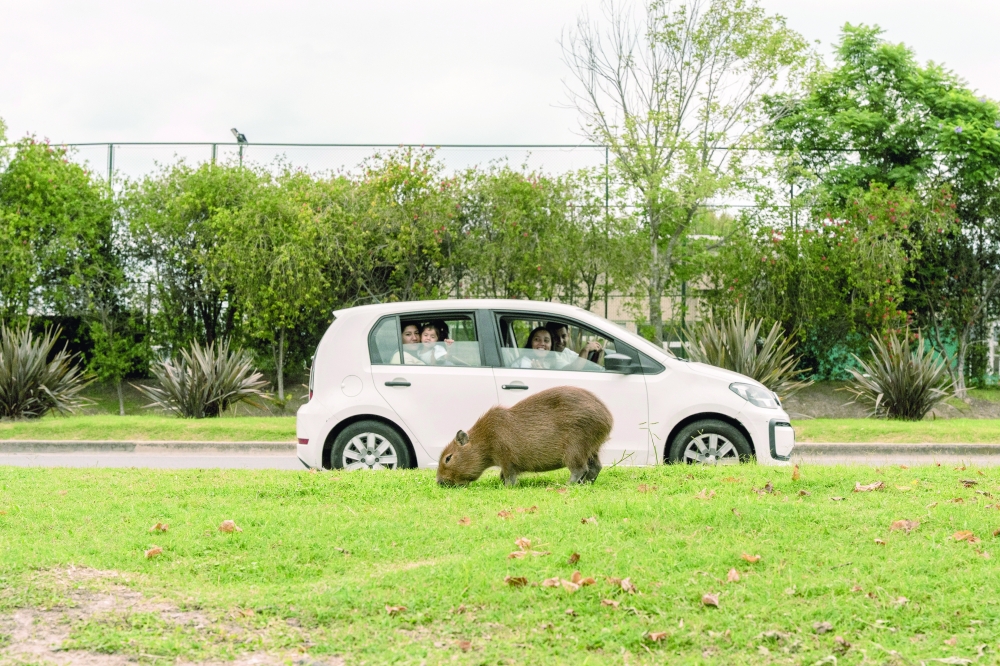
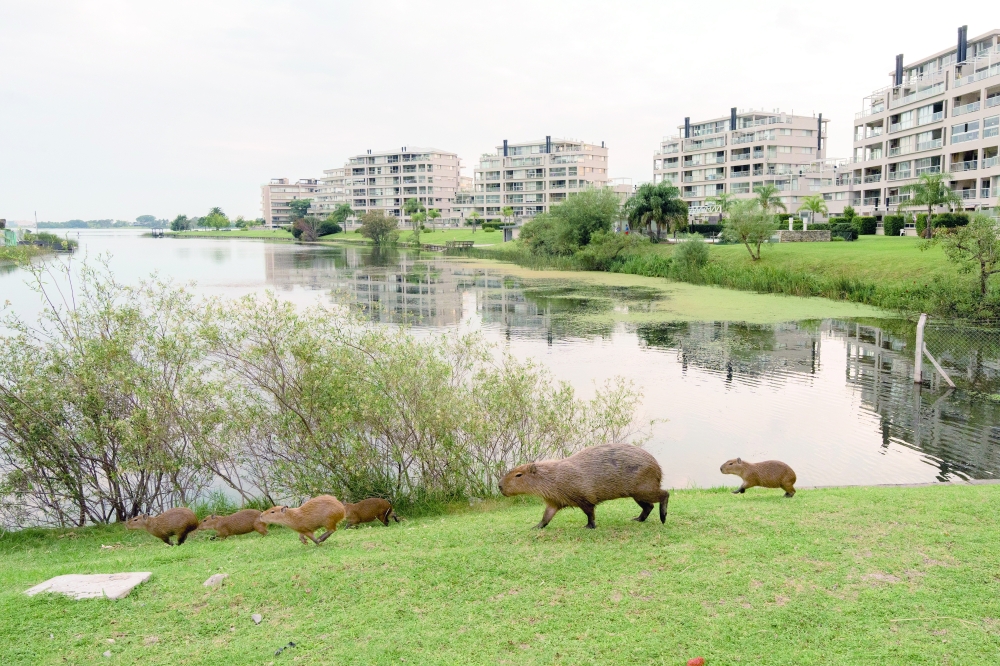
Since the pandemic, 'carpinchos,' as they are known in Argentina, have proliferated in Nordelta, a ritzy, picturesque gated community of 45,000 people north of Buenos Aires. When residents retreated indoors in 2020, the capybaras began to colonise the manicured neighbourhoods, finding green grass, fresh water and no predators, according to biologists hired by the community.
Over the past two years, the biologists estimate Nordelta’s capybara population has tripled to nearly 1,000, posing a tricky test case for the urban coexistence of humans and wildlife.
On a visit last month, capybara families grazed near the tennis courts, dozed on the volleyball courts and waded in the artificial lagoons. Just past a sign warning of crossing capybaras, a family crossed the street in a single-file line, illuminated by waiting headlights.
Sure, most residents admitted, the capybaras are cute. But they also cause traffic accidents, chomp their way through gardens and, on occasion, have attacked some of the community’s smallest dogs.
“It’s a wild animal versus a domesticated dog. I mean, it’s totally different,” said Sampietro, the veterinarian hired to help manage the capybara population. “I’ve had to do necropsies on capybaras and it’s difficult to cut the hide with a knife.”
Pablo Pefaure, one of Nordelta’s 26 neighbourhood representatives, said his neighbours frequently complain to him about the amphibious rodents. “They see them as dangerous, they see them as invasive, they fear for their young children,” he said.
He said that capybaras have sometimes followed his miniature schnauzer, Grumete. “I don’t leave him alone in the garden because I don’t know what might happen,” he said.
His neighbour sitting nearby, Veronica Esposito, did not agree. “No capybara has ever approached my dogs,” she said. “Everyone says they eat the plants. Yes, they do. But the plants grow back,” she added. “I don’t see the problem.”
Esposito is one of a small group of neighbours leading a rebellion against the capybara controls. They have protested in the streets, taken legal action against developers and gathered 25,000 signatures for an online petition to protect the animals. They’ve also attracted 34,000 followers to an Instagram page where they sometimes shame their neighbours, including one who had used a whip to scare capybaras off her dock.
“I believe their adorableness is a strategy of the species itself to survive,” said Silvia Soto, the most vocal neighbour. “Their lovability have conquered us and we’re fighting for them.”
So far, the fight has not worked. Last year, Argentina’s national government began an experiment to perform vasectomies on three capybaras in Nordelta, hoping to track how it affected the males’ standing in their packs. If successful, the practice could be expanded.
In February, the Nordelta organisation told residents in an email that it was moving ahead with a different plan: a “contraceptive vaccination programme,” approved by the local government, to sterilise 250 adult capybaras.
Costanza Falguera, the organisation’s lead biologist, said her team is using a “vaccine” that halts the production of sperm and inhibits ovulation. It requires two injections several months apart, but then might last only for several months, meaning they might have to keep tranquilising the capybaras repeatedly. — The New York Times.
Oman Observer is now on the WhatsApp channel. Click here