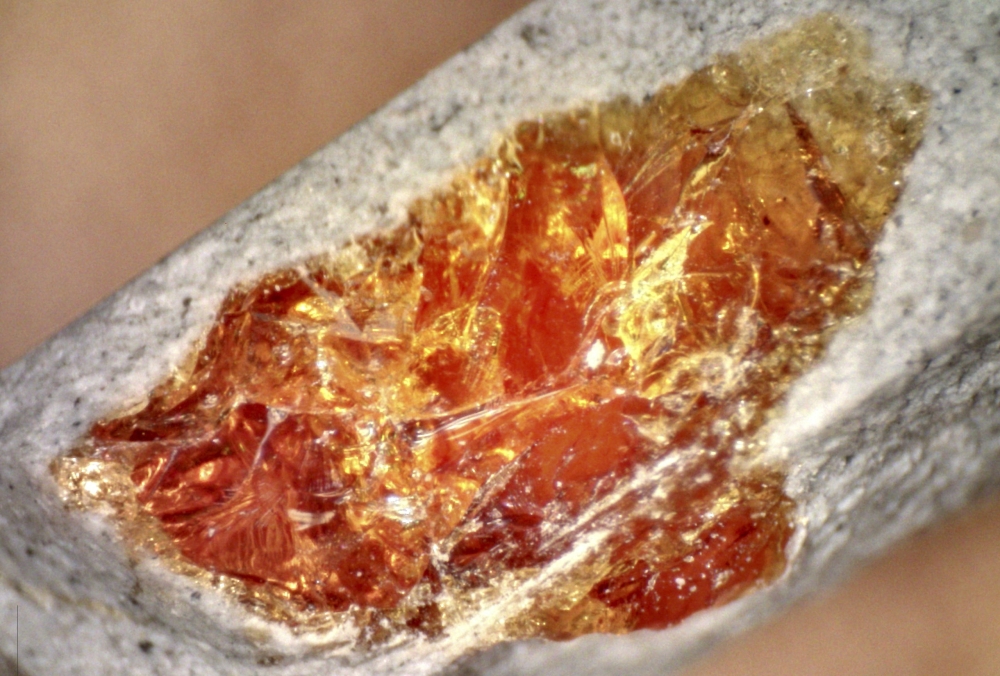





Amber is coveted the world over as both jewelry and a vessel for prehistoric remnants, with rarer specimens preserving ancient water, air bubbles, plants, insects or even birds. Typically, amber forms over millions of years as tree resin fossilizes, but paleontologists have sped that up, creating amberlike fossils from pine resin in 24 hours. The technique could help reveal the biochemistry of amber as it forms, a process that otherwise would remain hidden in the fog of prehistory.
Published in the journal Scientific Reports, the results of the fast-fossilization experiment are akin to a meal made in a pressure cooker. “It’s similar to an Instapot,” said Evan Saitta, a research associate at the Field Museum in Chicago and co-author of the paper. The recipe for synthetic amber started with pine resin from the Chicago Botanic Garden. Saitta and his co-author, Thomas Kaye, an independent paleontologist, placed half-inch sediment disks in which the resin was embedded in a device that Kaye built using a medical pill compressor, air canisters and other parts.
By both heating and pressuring the samples, researchers were trying to simulate diagenesis, the slow chemical transformation required before sediment consolidates into rock. “Diagenesis is the ultimate hurdle you need to pass to become a fossil,” Saitta said. “It’s sort of the final boss.” Some samples were imperfect, but a few echoed amber’s physical properties, such as darkened coloration, fracture lines, dehydration and increased luster.
Looking ahead, experimental fossilization techniques may even allow scientists to explore the fossils of the future, Saitta said. How will Anthropocene life fossilize? What would happen to tissue or bone infused with microplastic or industrial heavy metals? We won’t be here millions of years from now to find out. But with a pressure-cookerlike device, we may get closer. — RICHARD FISHER / NYT
Oman Observer is now on the WhatsApp channel. Click here