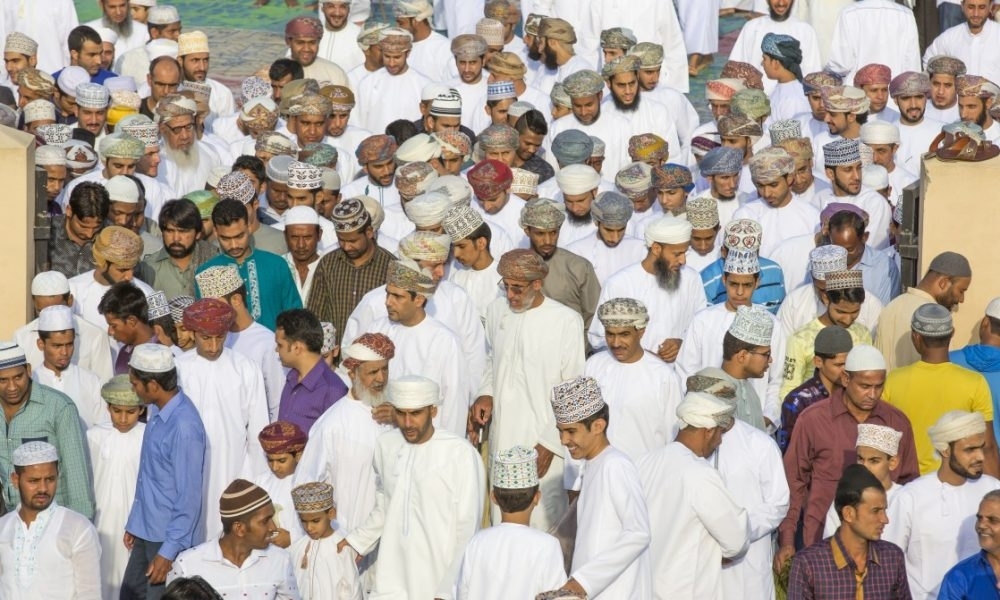





MUSCAT: Oman’s economy is entering a new demographic phase. According to projections by the National Centre for Statistics and Information (NCSI), the Sultanate of Oman’s population is expected to grow from 5.27 million in 2024 to 7.73 million by 2040—an increase of nearly 47 per cent. Behind this figure lies a profound economic question: can the country’s fiscal policies, labour market structure, and urban development trajectory absorb and optimize such growth?
This is not just a population issue—it’s a macroeconomic inflection point that touches productivity, capital investment, infrastructure demand, and long-term sustainability.
DEMOGRAPHICS DRIVING DEMAND-SIDE PRESSURE
By 2040, Oman’s working-age population (15–59) will account for 62 per cent of total citizens, compared to 57 per cent in 2024. Simultaneously, the population of children under 15 will shrink from 37 per cent to 29 per cent, while citizens aged 60+ will double to 9 per cent.
This demographic transition reflects a classic development pattern: declining fertility, increasing longevity, and rising age dependency. It presents both an opportunity—via a larger productive cohort—and a fiscal liability, as ageing will raise demand for pensions, long-term healthcare, and age-related subsidies.
If not accompanied by a commensurate rise in labour productivity, this shift could increase the economic dependency ratio and pressure public spending. Policymakers must therefore pre-emptively restructure social protection systems, retirement planning, and geriatric care funding models.
LABOUR MARKET IMBALANCES
The expatriate population is expected to grow from 2.28 million in 2024 to 3.7 million by 2040—adding more than 1.4 million non-Omanis to the labour force. This growth is modeled around baseline GDP growth aligned with increased value-added from economic activities, particularly in construction, logistics, services, and healthcare.
While foreign labour remains a key input in Oman’s production function, the long-term risk is structural reliance. To meet Vision 2040 employment targets, Omanisation policies must pivot from quantity to quality—emphasizing skills development, vocational training, and private sector competitiveness.
Sectors such as renewable energy, transport logistics, agritech, and digital services present high-growth, low-redundancy opportunities for Omani youth. Strategic investment in these areas will be critical to rebalance the labor market and improve the labour force participation rate.
URBAN ECONOMICS
Over two-thirds of projected population growth will concentrate in Muscat and North Al Batinah. This poses risks of urban congestion, real estate inflation, and regional disparities unless spatial development is urgently recalibrated.
Developing second-tier economic hubs—in governorates like Dhofar, Al Dakhiliyah, or Al Wusta—can improve land use efficiency, reduce logistics costs, and expand access to public services. This aligns with Vision 2040’s goal of balanced geographic development through smart cities, integrated transport corridors, and investment clusters.
Urban policy must integrate these projections to model housing demand, water consumption, and public transport load, especially under scenarios of higher internal migration and shifting labor pools.
FISCAL IMPLICATIONS
A population increase of this scale will place upward pressure on public investment requirements in health, education, and infrastructure. If the government maintains its current spending elasticity, capital budgets may need to expand by up to 40 per cent by 2040 just to maintain service parity.
At the same time, lower birth rates and rising age brackets will reduce the long-term tax base growth, unless labor force expansion is matched with rising real wages and greater female participation.
Embedding demographic projections into medium-term fiscal frameworks (MTFFs) and the national development budget is not a recommendation—it is an economic necessity.
PLANNING BEYOND THE HEADCOUNT
Population projections are not just demographic exercises. They are forward-looking economic indicators that inform how we allocate capital, manage risks, and invest in human development.
If leveraged wisely, Oman’s projected 7.7 million residents by 2040 can represent a productive dividend. But if approached passively, this same growth could evolve into a fiscal and structural burden.
The economic question ahead is not merely how many people Oman will host—but whether we can create an economic model robust and inclusive enough to make their presence a force for national prosperity.
Oman Observer is now on the WhatsApp channel. Click here