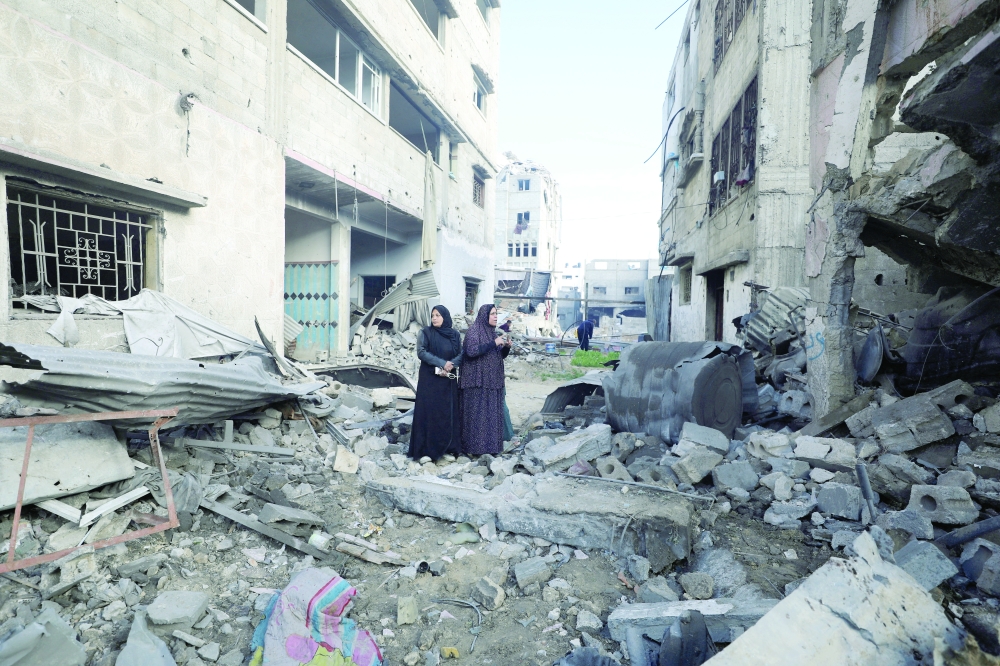





As the Israeli military has expanded its offensive in the Gaza Strip, taking control of more territory in parts of the south and north and issuing new evacuation orders, many people who had only recently returned to their homes have been forcibly displaced once again.
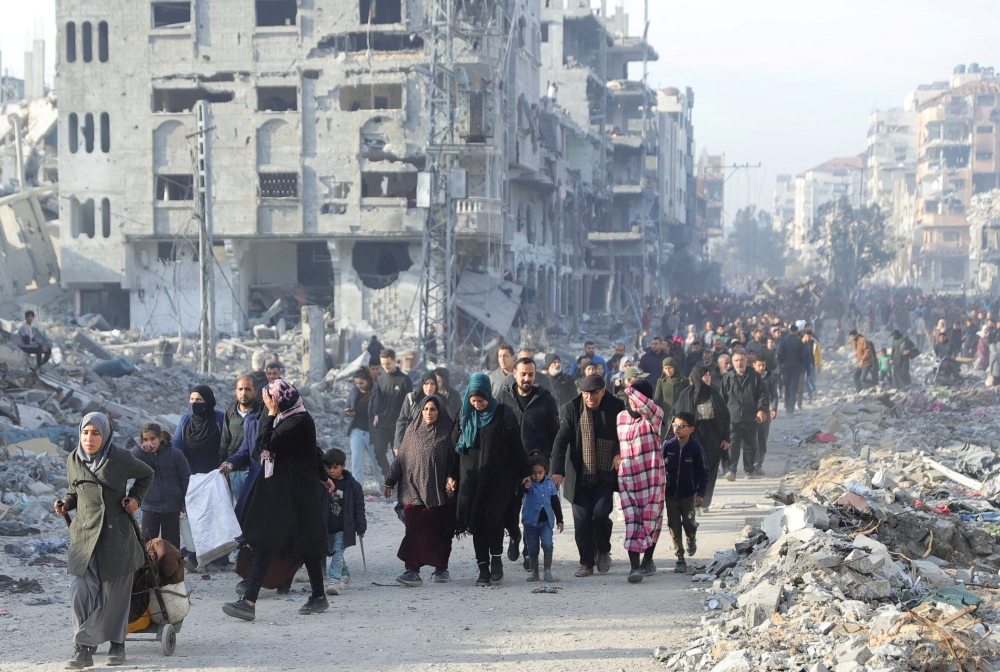
Israel’s drive into the southern city of Rafah pushed thousands of families from the Tal al-Sultan neighborhood, near the border with Egypt, to flee on foot Sunday before Israeli troops completely encircled the area by the afternoon.
For many, the new round of mass displacement brought back painful memories of the earlier days of the war in Gaza. Residents of Tal al-Sultan and nearby areas said they had to walk on a specific route amid bombardment, carrying very few belongings, during the holy month of Ramadan, when Muslims fast during the daytime.
Most of those who fled Sunday walked several miles north to the city of Khan Younis, where they were left without shelter because of a severe shortage of basic necessities and tents, the Rafah local government, which includes Tal al-Sultan, said in a statement.
The Israeli military renewed its offensive in Gaza last week after an impasse in talks to extend a fragile, temporary ceasefire with Hamas that went into effect in mid-January. That truce was intended to be the first of three phases leading to the end of a war that began with the Hamas-led assault on Israel on Oct. 7, 2023, but the second phase has been delayed indefinitely.
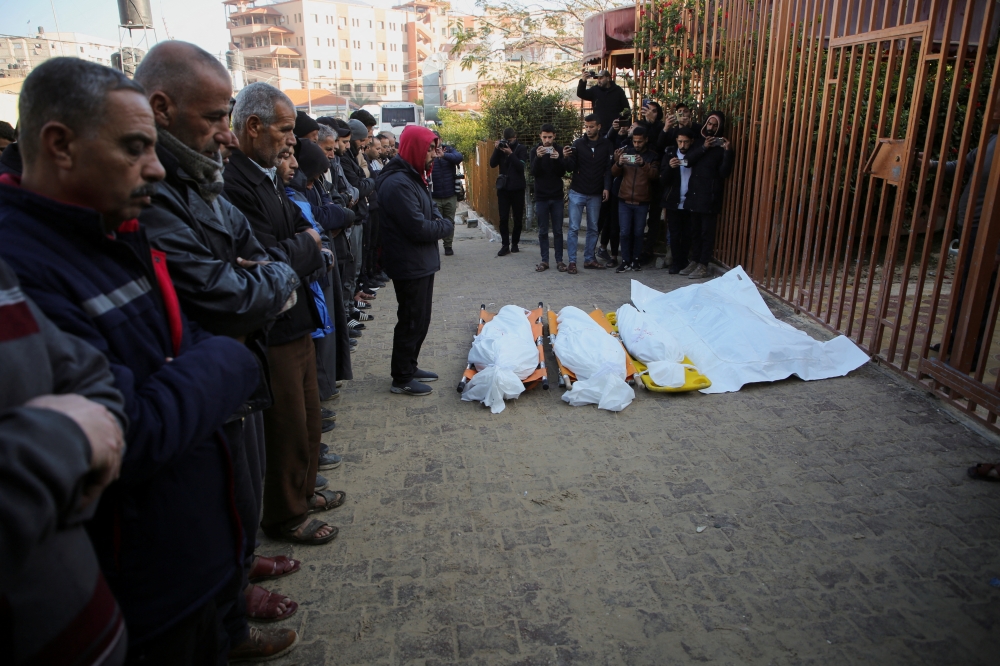
Gaza’s Health Ministry said Monday that 61 people were killed in Israeli bombardments over the past day, a day after it said the death toll in the enclave had surpassed 50,000 since the war began almost 18 months ago. The ministry’s figures do not distinguish between civilians and combatants.
On Monday, Al Jazeera reported that Hussam Shabat, a journalist who contributed to its coverage of the war, was killed in an Israeli airstrike on his car in northern Gaza. At least 208 journalists have been killed in Gaza since the start of the war, according to the Gaza government press office.
Videos circulating online and verified by The New York Times show the lifeless bodies of Shabat and two other men, as well as a donkey that had been pulling a cart, on a dusty road in Beit Lahia, in northern Gaza. Next to them is a car packed with what appear to be bullet or shrapnel holes, with an Al Jazeera emblem and the letters “TV” on the windshield. A man shouts Shabat’s name and shakes his body, trying to get a response, while others carry away a person whose condition is unclear.
The Palestinian civil defense in Gaza said Sunday that Israel’s siege of Tal al-Sultan had endangered the lives of nearly 50,000 people living there, with some either unable or unwilling to flee. Some residents, after months of repeated displacement, had only recently been able to return to their homes, or what was left of them, during the short-lived ceasefire.
“We left with the clothes on our backs under fire and bombardment,” said Mustafa Jabr, 36, after walking for nearly six hours along a sandy route with his family from their home in Tal al-Sultan on Sunday morning. “It was a very surprising and intense attack,” he said from a friend’s house in southern Khan Younis, where the family was now sheltering.
Jabr said that before encircling the neighborhood, Israeli vehicles had been regularly patrolling the area around the Philadelphi corridor, a narrow strip of Gaza along the border with Egypt and one of the main sticking points in the ceasefire talks. But at dawn Sunday, residents were jolted up by “sudden bombardment,” before flyers ordering people to evacuate along a specified route began raining down, he said.
“So we headed north under a hail of tank shelling and quadcopter fire that wounded dozens,” Jabr said. “Many old people were abandoned along the route because they were too weak to keep walking on the sand,” he said, adding, “The scenes I saw on the way were horrific; there were so many children and old people and disabled people.”
Jabr’s family was now among an increasing number of families in Gaza who were once again wondering when they would be able to return to their homes.
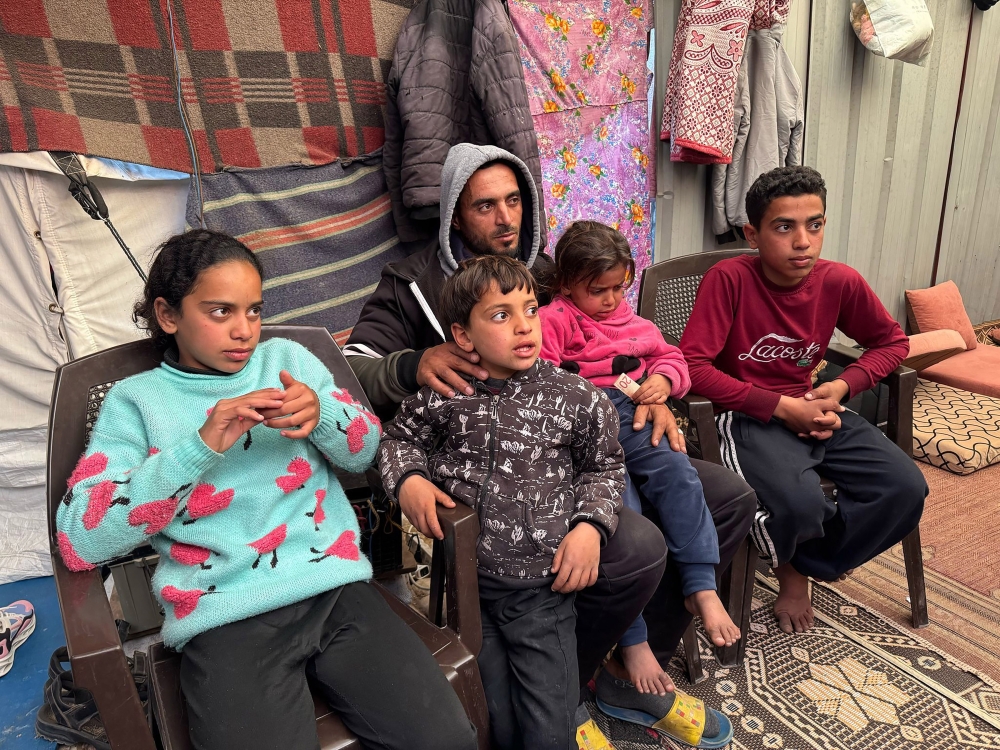
Ahmad and Faten al-Sayyed also fled Sunday, walking with their four children to a relative’s tent in western Khan Younis. They had recently returned to their damaged home in Rafah after nine months of sheltering in a tent in Khan Younis, only to find themselves back in another tent less than a month later.
“I thought the second phase of negotiations would begin while we were back in our home in Rafah,” said Ahmad al-Sayyed said.
Although occasional gunfire was heard in Rafah in recent days, al-Sayyed said that he was shocked when Israeli troops advanced into the area. “We never imagined it would escalate into a full siege and military operation,” he said.
Oman Observer is now on the WhatsApp channel. Click here