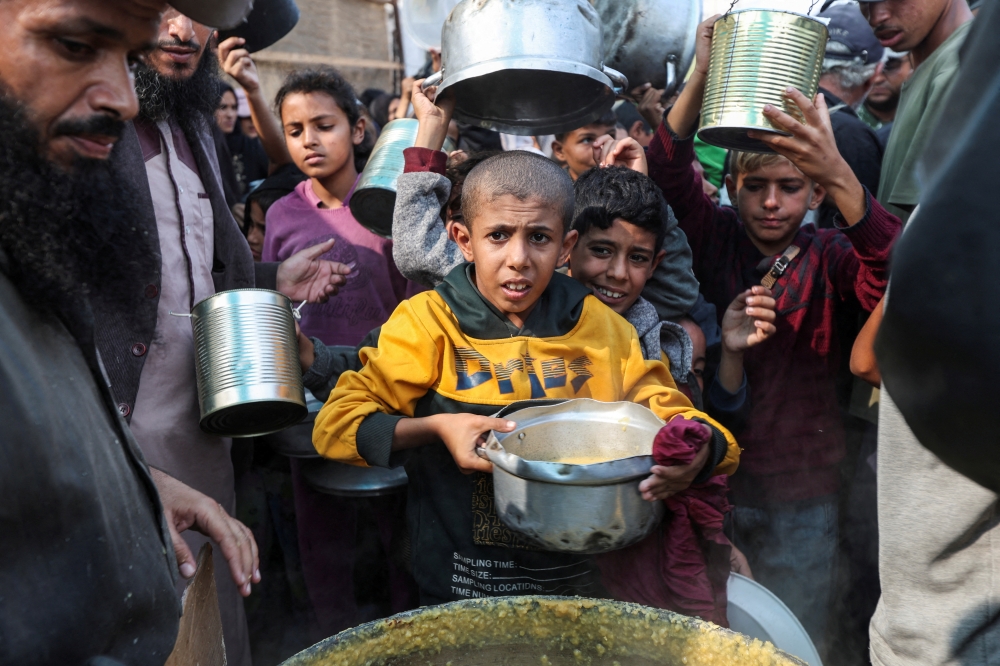
Outside the Zadna Bakery in the central Gaza Strip one recent afternoon, the long lines of people waiting for bread were threatening to dissolve into chaos at any minute. A security guard shouted at the crowds that pushed towards the bakery door to wait their turn. But no one was listening.
Just a few steps away, scalpers were hawking loaves they had gotten earlier that day for three times the original price. The sunset meal that breaks daylong fast during the holy month of Ramadhan was approaching, and across Gaza, bread, water, cooking gas and other basics were hard to come by — once again.
Lines had not been this desperate, nor markets this empty, since before the ceasefire took hold on January 19. The truce had allowed aid to surge into Gaza for the first time after 15 months of conflict during which residents received only a trickle of supplies.
But no aid has gotten in since March 2.
That was the day Israel blocked all goods in a bid to pressure Hamas into accepting an extension of the current ceasefire stage and releasing more hostages sooner, instead of moving to the next phase, which would involve more challenging negotiations to permanently end the war.
Now, the aid cutoff, exacerbated by panic buying and unscrupulous traders who gouge prices, is driving costs to levels that few can afford. Shortages of fresh vegetables and fruit and rising prices are forcing people to once again fall back on canned food such as beans.
Though the canned food provides calories, experts say, people — and children in particular — need a diverse diet that includes fresh foods to stave off malnutrition.
For the first six weeks of the ceasefire, aid workers and traders delivered food for Gaza residents, many still weak from months of malnutrition.
Medical supplies for bombed-out hospitals, plastic pipes to restore water supplies and fuel to power everything also began to flow in.
Data from aid groups and the United Nations showed that children, pregnant women and breastfeeding mothers were eating better. And more centres started offering treatment for malnutrition, the UN said.
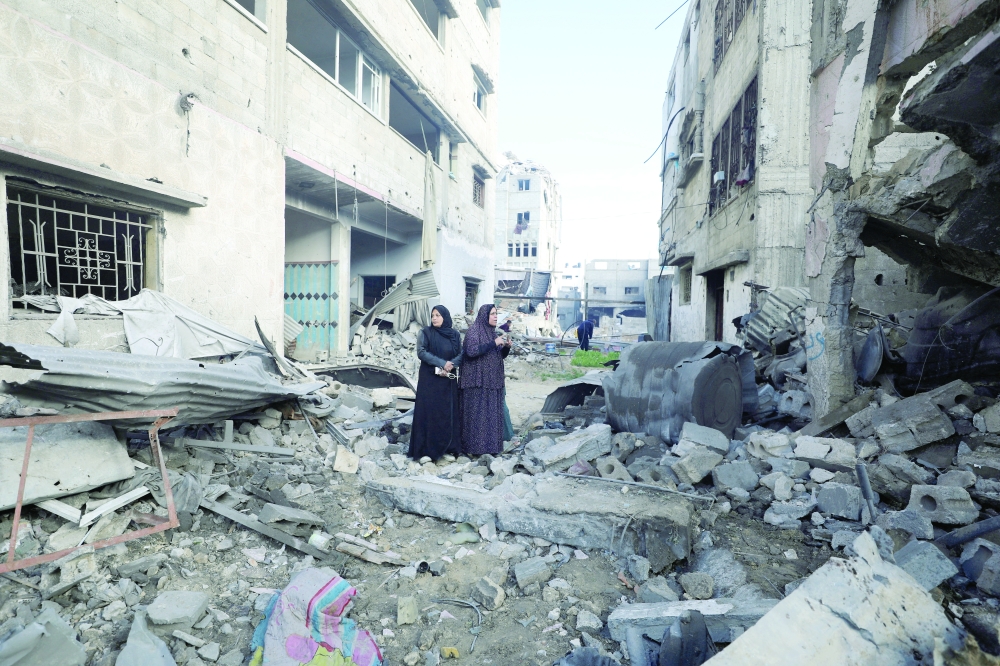
These were only small steps towards relieving the devastation wrought by the war, which destroyed more than half of Gaza’s buildings and put many of its 2 million residents at risk of famine.
Even with the sharp increase in aid after the truce began, Gaza health officials reported that at least six newborns had died from hypothermia in February for lack of warm clothes, blankets, shelter or medical care, a figure cited by the United Nations. The reports could not be independently verified.
Most hospitals remain only partly operational, if at all.
Aid groups, the United Nations and several Western governments have urged Israel to allow shipments to resume, criticising its use of humanitarian relief as a bargaining chip in negotiations and, in some cases, saying that the cutoff violates international law.
Instead, Israel is turning up the pressure.
Last Sunday, it severed electricity supplies to the territory — a move that shuttered most operations at a water desalination plant and deprived about 600,000 people in central Gaza of clean drinking water, according to the United Nations.
The Israeli energy minister has hinted that a water cutoff might be next. Some wells are still functioning in central Gaza, aid officials say, but they supply only brackish water, which poses long-term health risks to those who drink it.
Israel had closed off all other sources of electricity that it used to provide for Gaza, a measure that followed the October 7, 2023, Hamas-led attack on Israel that began the war. That left essential services to run on solar panels or generators, if power was available at all.
Now there is no fuel coming in for anything, including generators, ambulances or cars. - The New York Times
Bilal Shbair
The writer is a journalist, reporter with The New York Times
and
Vivian Yee
The writer is the Cairo bureau chief with The New York Times
Oman Observer is now on the WhatsApp channel. Click here