Oman’s labour market is grappling with significant challenges, particularly the issues of concealed trade and unregulated labour. Concealed trade occurs when businesses are officially registered under Omani citizens but secretly operated by expatriates, while unregulated workers are those employed outside the legal framework, often without contracts or proper protections. These practices do not only hinder job opportunities for Omanis but also disrupt economic stability by fostering unfair competition, reducing tax revenues, and undermining the labour market’s integrity.
To address these concerns, the government has implemented stricter regulations such as the Wage Protection System (WPS) and Omanization, which aims to increase the employment of Omani nationals in the private sector. However, the challenge lies in ensuring that these policies do not negatively impact market flexibility or hinder business competitiveness. The presence of concealed trade and unregulated labour affects the economy in multiple ways: it depresses wages and job quality by allowing businesses to exploit legal loopholes, drives capital flight as informal businesses avoid taxation, and reduces employment prospects for Omanis by making it cheaper to hire expatriates. These concerns were highlighted by the Minister of Labour, who revealed that out of 400,000 registered companies, only 265,000 employ workers, raising alarm over the extent of concealed trade.
In response, the government has taken several corrective measures. The Wage Protection System (WPS), launched in mid-2023, mandates salary payments through banking channels to enhance transparency and curb irregular employment practices. Additionally, authorities have preserved 50,000 to 60,000 Omani jobs between 2021 and 2023 by negotiating with businesses to prevent layoffs. Furthermore, the government continues to absorb between 12,000 and 16,000 employees annually into the public sector, although this is not a sustainable long-term solution. However, while these measures help regulate the market, they also pose challenges for small and medium-sized enterprises (SMEs). Unlike large corporations, SMEs may struggle to comply with stricter regulations, as higher labour costs could lead to financial strain or even business closures. To prevent this, targeted government support in the form of incentives and subsidies will be essential in helping SMEs transition without significant disruptions.
If Oman enforces these labour regulations effectively, the market will experience several shifts. First, wages and working conditions are expected to improve as businesses will need to offer fair pay and better work environments to attract local talent. Second, job competition will increase as informal employment declines, pushing businesses to enhance work conditions to remain competitive. Third, a shift towards private-sector employment will be necessary for Omanization to succeed, as more Omanis will need to see the private sector as a viable career option with competitive salaries and benefits.
While these regulations are necessary to protect the workforce and eliminate concealed trade, excessive intervention could stifle business growth and deter investment. The key to success lies in finding a balance—ensuring that worker protections are enforced while maintaining market flexibility. This requires a combination of regulatory oversight and government support to create a labour market that benefits both businesses and employees.
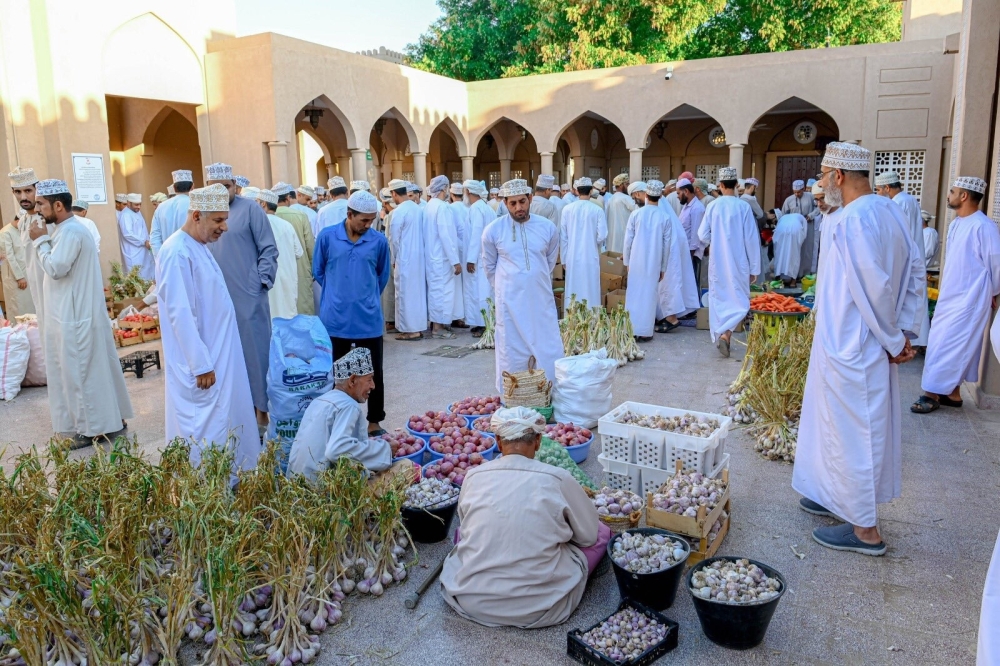
Some experts argue that beyond strict government intervention, market forces should play a crucial role in reshaping the labour market. According to one economic analyst, concealed trade is a phenomenon that exists across the Gulf, and rather than relying on excessive government intervention, allowing natural market competition to take its course would push weaker players out of the market. A practical example is Nizwa, where Omanis dominate the local trade sector because market conditions naturally favour them, making it difficult for expatriates to compete. A similar strategy could be applied to areas like Muttrah Souq, where expatriates currently dominate. Instead of abrupt displacement, the government could introduce measures that naturally shift market control towards Omani traders.
A potential strategy for Muttrah Souq could involve allocating commercial spaces to Omanis under usufruct agreements, ensuring that local traders have access to prime business locations. Additionally, offering temporary incentives such as rent-free spaces and utility exemptions could make it financially viable for Omanis to enter the market. Preserving the traditional souq structure would also be essential to maintaining its heritage while facilitating a gradual market shift. Within two years, these measures could naturally lead to a transition where Omani traders take over the market without forcibly displacing expatriates. Once these local businesses are established, the government could then introduce reasonable rental fees to ensure sustainability.
Ultimately, solving Oman’s labour market challenges requires a practical, multi-layered approach. While government regulations are crucial in curbing concealed trade and protecting workers, market-driven solutions can also play a role in achieving sustainable reforms. A balanced approach—combining enforcement with incentives— will be key in shaping a labour market that is fair, competitive, and sustainable for Oman’s future.
Oman Observer is now on the WhatsApp channel. Click here