In my previous article, I expressed the urgent need to reassess our relationship with technological systems and how we interact with them, given the profound effects they may have, effects that could steer human societies away from a healthy, humane way of life.
In this current article, we continue to explore this digital apprehension that is rapidly emerging and knocking on our doors. We must redefine our human compass according to rational frameworks and ethical principles. Our accumulated knowledge insists that scientific and technological progress embodies humanity’s triumph over ignorance, disease, and poverty. Yet, with this progress, our existential problems multiply in a new guise that threatens our psychological and social stability. This raises questions about the ‘price’ of scientific advancement - despite all its benefits - how can progress have a dark side? And why do we feel lost and anxious as we draw closer to achieving the “technological dream”?
Decades ago, progress was seen as a means of salvation and admirable evolution. People placed their hopes in scientific advancements to solve many problems: to extend life, improve health, and ease labour burdens. Many of these wishes became reality, with increased lifespans, less fatal diseases, and machines taking over arduous tasks. However, on the other hand, scientific progress has widened the psychological and social gap. Happiness levels have declined while depression, anxiety, tension, loss of meaning, and passion have risen. Crime and suicide rates have also increased.
Technology was expected to grant us more time for rest and reflection, yet it has trapped us in an endless cycle of digital addiction, social comparisons, and meaninglessness. Instead of achieving the desired comfort, we have become slaves to smartphones, social media, and constant work. Traditional human societies, built on stable social and cultural systems that provided a sense of identity and belonging, have been dismantled by digital globalisation and technological advancement. This has led individuals to feel isolated and alienated, despite an increased connectivity among human communities due to digital activity and widespread communication platforms. At the same time, these communities have become emotionally fragmented; moral values have eroded, and deep intellectual and cognitive achievements have weakened. Life has turned into an unyielding race of consumption and continuous evolution, causing humanity to lose its most innate question: Why?
I once described the modern human as a “digital human” due to our intense attachment to digital technologies that bring us vast, albeit superficial, knowledge, something that was rare in previous eras. Despite all available technological means, many still feel lost in the maze of life, overwhelmed by its dazzling yet idealistic new realities. Absolute truths seem to have vanished; philosophy has been sidelined by open-source science, and profound existential questions have turned into “non-issues” that fail to captivate our intellect. Worse, people risk losing their sense of self and purpose, how can one understand the physical world when one cannot comprehend oneself?
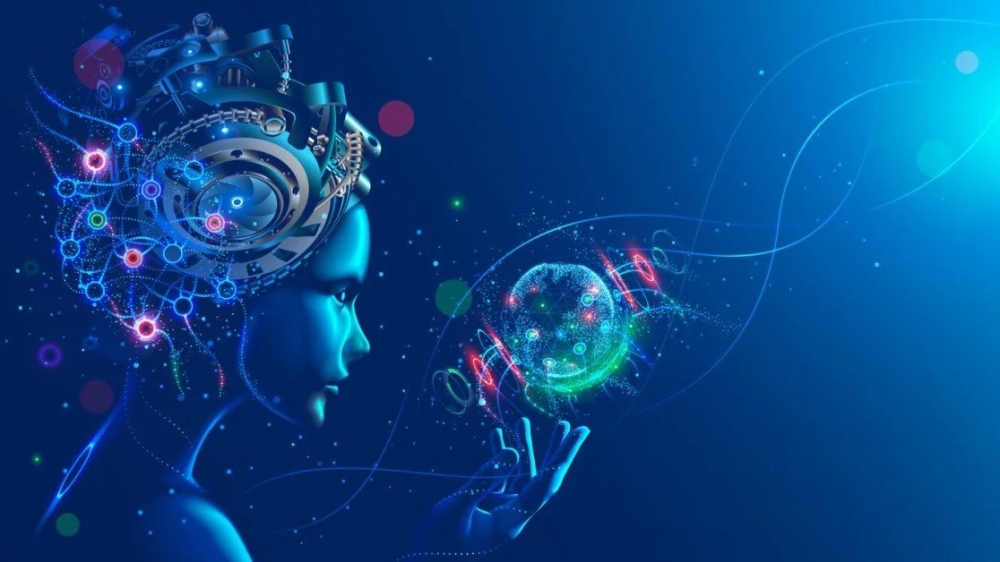
With the advent and rapid development of AI, this paradox has deepened and its solutions have narrowed. Once, humanity was considered the smartest being capable of understanding and solving life’s mysteries without rival, yet now it faces smart artificial entities that surpass human thinking, decision-making, and creativity. This raises an important question: Are we still unique? And will humanity lose its value in a world dominated by smart algorithms? Our current reality forces us to conclude that advancements in AI and its derivatives, such as smart robots and digital communication systems, are not merely scientific achievements but existential challenges that compel us to redefine our understanding of life’s problems. Humanity’s progress was once based on the uniqueness of the human mind and its central role in existence; if we lose that advantage to artificial intelligence, what remains of us? Such questions were once only theoretical, discussed within ancient philosophies, but today they have become practical issues that could determine the fate of societies and individuals. All these reflections on the paradox of scientific progress do not confine the problem solely to progress itself but focus on how we use the accompanying technologies and our ability to balance digital practices with human ones in all their dimensions. Technology should serve humanity, not imprison it in unnatural lifestyles. We need a new philosophy that keeps pace with progress, restoring balance between forgotten spirit and the chaotic, uncontrolled march of science; between materialism and meaning; between artificial intelligence and emotional intelligence.
Success and progress should be redefined not only by economic growth or scientific discoveries but by the inner peace and psychological balance they bring to our lives. We must pause and reflect before every step towards technological evolution, asking ourselves: Does this progress make us happier, or is it an endless, uncertain race? The true paradox lies not in progress itself, but in our inability to use it wisely.
As the German philosopher Martin Heidegger once said, technology is not merely a tool, it is a new way of seeing the world. If we do not control this vision and its paths, we will find ourselves in a technologically advanced world devoid of the spirit and meaning that give purpose to existence and beneficial progress.
Scientific progress has widened the psychological and social gap. Happiness levels have declined while depression, anxiety, tension, loss of meaning, and passion have risen. Crime and suicide rates have also increased
The writer is an academic and researcher
Oman Observer is now on the WhatsApp channel. Click here