The concepts of erasure and exile have become increasingly relevant in today’s world. Historically, such terms have shifted through different phases — once associated with 'the wandering Jew' and later evolving into 'the Arab refugee' amid changing political landscapes.
With Donald Trump’s rise to power, the world witnessed a new form of political theatre, one defined by chaos, impulsive decision-making, and an obsession with rewriting historical and geographical narratives. The question remains: has triviality become the new standard of governance?
Trump’s presidency was marked by erratic disruptions, leaving behind a digital and political disorder that permeated global discourse.
One striking example was the arbitrary renaming of geographical landmarks — such as reports suggesting the Gulf of Mexico had been renamed “Gulf of America". Such manipulations, whether through digital platforms or political declarations, expose a broader phenomenon: the ease with which history can be erased or rewritten at the whim of those in power.
The concept of transformation, particularly the erasure of historical identity, is neither simple nor easily accepted. A place is more than a name on a map; it carries history, memory, culture, and the lives of its people.
To strip it of its identity and impose a new one is an act of profound violence against both its past and future. The same logic applies to individuals forced into exile, compelled to adopt new identities and cultures, often against their will. The Yemeni experience exemplifies this reality, where displacement has become an unfortunate norm, accepted with resignation.
Linguistically, the word 'erasure' is defined as the act of removing traces of something, obliterating its existence. In this context, historical erasure is not just about renaming places; it extends to displacing people and erasing their very presence. This process has been at the heart of the Palestinian struggle since 1948, when over 700,000 Palestinians were expelled from their homeland — a catastrophe known as the Nakba. Since then, the status of the Palestinian exile has remained unresolved, perpetuating a cycle of forced migration and identity loss.
The notion of exile, on the other hand, signifies forced displacement, loss of homeland and the struggle for identity. An exiled person does not simply seek refuge; they are uprooted, severed from their land and history, often with no hope of return. However, in today’s world, the condition of exile has become fraught with political and ideological battles. The current global crisis is not merely about displaced people; it is about the very nature of modernity. If those in power can erase entire communities or nations with a single political decision, what does that mean for those forced into exile?
Erasure is not limited to maps and migration. In the digital age, the power to redefine reality extends to social media, where a single statement, tweet, or artistic expression can provoke intense reactions. Entire societies are mobilised to defend or attack an idea, demonstrating how deeply entrenched identity and historical memory are in political discourse.
But the question remains: does the destruction of an old identity mean it was inherently weak? Or is modernity itself built on a foundation of selective memory and ideological manipulation?
Since the events of October 7, 2023, marked by the escalation in Gaza, the world has undergone significant transformations. The Trumpian approach to politics — marked by impulsive decisions and an indifference to historical continuity — mirrors broader attempts to reshape geopolitical realities. The displacement of Palestinians, the erasure of places from maps, and the imposition of new narratives all serve to construct a supremacist political order that disregards human rights, justice, and the equitable distribution of resources. Instead, it seeks a return to a pre-modern era, where power is dictated by brute force rather than moral or legal principles.
The ongoing crisis in Gaza exemplifies the devastating consequences of this mindset.
According to the Palestinian Government Media Office, the war has led to an unprecedented humanitarian catastrophe. The numbers are staggering: massacres, missing persons and entire families wiped out. Children have perished due to malnutrition, exposure and starvation, while medical personnel, journalists and civil defence workers have been systematically targeted.
Hospitals have been destroyed, educational institutions dismantled and entire residential areas reduced to rubble. The extent of the destruction reveals a calculated effort to erase an entire people — not just from the land, but from history itself.
In the face of such overwhelming violence, humanity is left grappling with fundamental questions about justice, identity and survival. If modernity is built on the ability to erase and rewrite history at will, what safeguards exist against future acts of erasure?
The numbers from Gaza are not just statistics; they represent the lived experiences of those who have been displaced, those who have lost everything, and those who continue to fight for recognition and justice.
Ultimately, the challenge before us is to redefine what it means to be human in an age where entire cultures, histories and populations can be erased with a stroke of a pen.
The pursuit of justice requires more than just resistance to oppression; it demands a reimagining of humanity itself — one that cannot be erased, no matter how powerful the forces seeking its erasure may be.
Translated by Badr al Dhafari
The original version of this article was published in the print edition of Oman Arabic newspaper on February 19
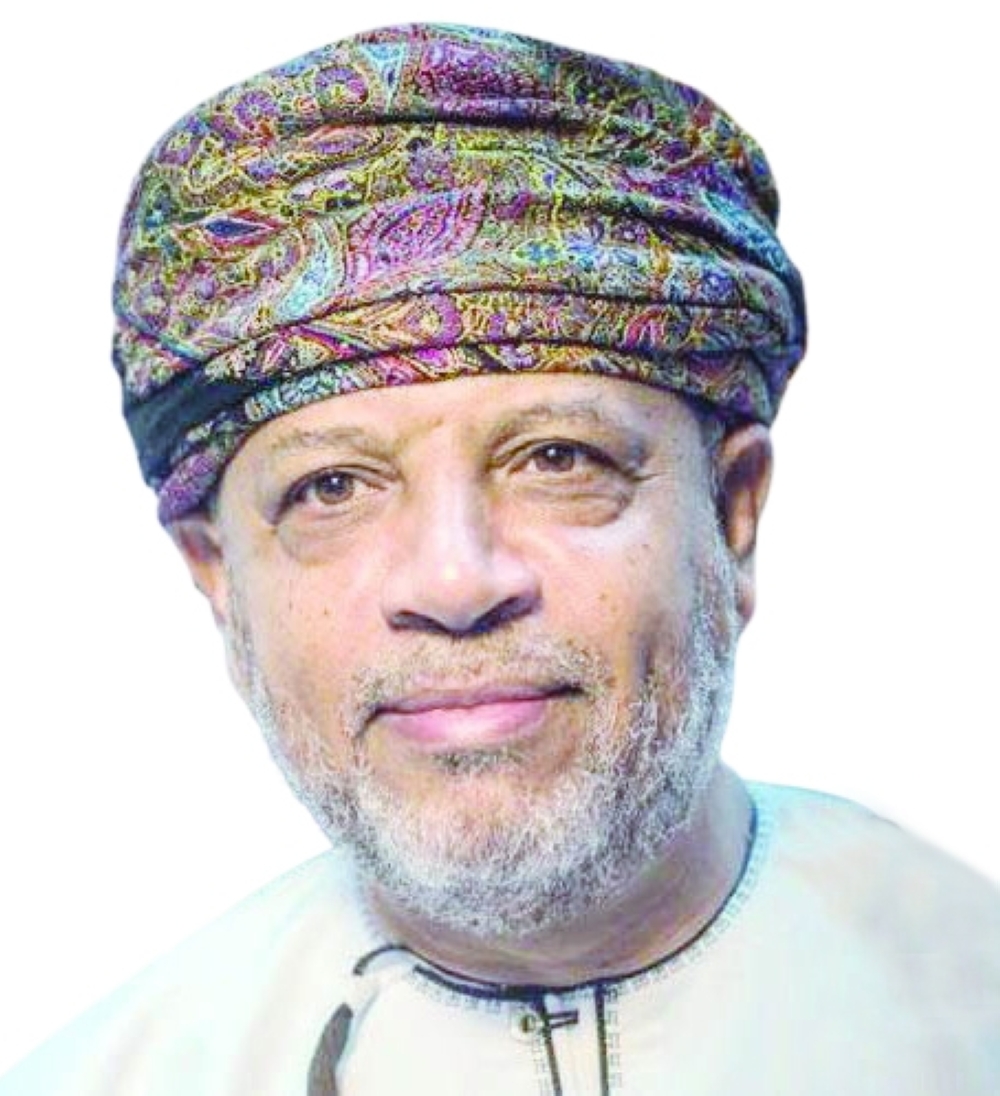
The writer is a playwright and researcher in literature and criticism
Oman Observer is now on the WhatsApp channel. Click here