The inflammatory language of threats, the eye-popping bullish determination to take over Gaza, and the imposition of sanctions and tariffs have put world leaders on edge. Nobody wants to lose face or engage in a confrontation with the President of the United States.
Political polarisation is spreading like wildfire across various issues and geographic locations. In a forceful approach to foreign diplomacy, Trump’s offensives against several global players may speed countries’ search for alternatives while forcing some wish-washed world leaders to take a less unambiguous stance on political matters.
From sending undocumented migrants, or as Trump phrased it, “the worst criminal illegal aliens threatening the American people” to the military prison in Guantanamo Bay, Cuba, Trump’s initiative is a slap in the face of human rights organisations. The expansion of the migrant detention facility in Guantanamo Bay has long been used to house immigrants. The atrocities allegedly committed inside the military prison housing terrorism suspects following the September 11 attacks may (theoretically) be repeated. From the war on terror to the war on migrants!
Within days of Trump’s second term inauguration, regional anxieties were created in Greenland, South Africa, Taiwan, Canada, Brazil, Europe, and the Middle East. The uproar provides an ideal situation for changes to be implemented away from public scrutiny, such as a new US sovereign wealth fund that is expected to be operating within a year and is modelled on the experiences of Arab Gulf wealth investment funds. One of the questions is how the entity would be funded and what kind of relationships or ties it would have with the Arab Gulf governments.
Trump’s coercive disposition jeopardises conventional business models in terms of security, economics, politics, and ideology, as well as the potential collapse of international organisations. The Gulf countries and Latin America are strengthening their trade and investment connections in areas such as food security, agriculture, energy, mining, and infrastructure. Saudi Arabia and the United Arab Emirates have extended their ties with Brazil ranging from fertilizer to minerals, from exploration to commerce.
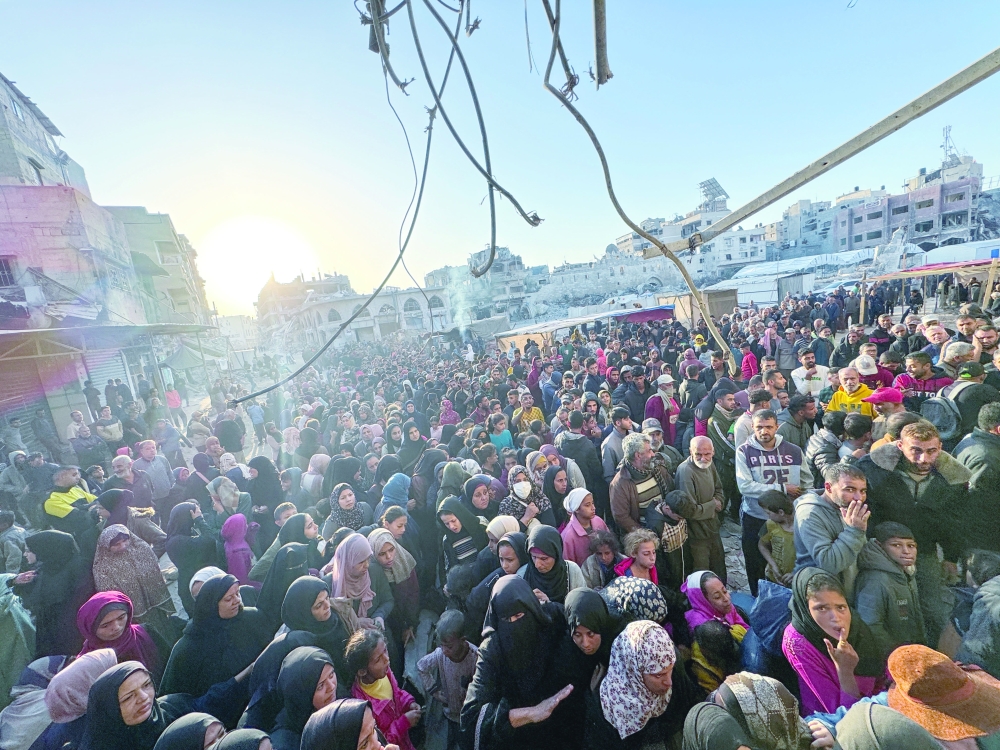
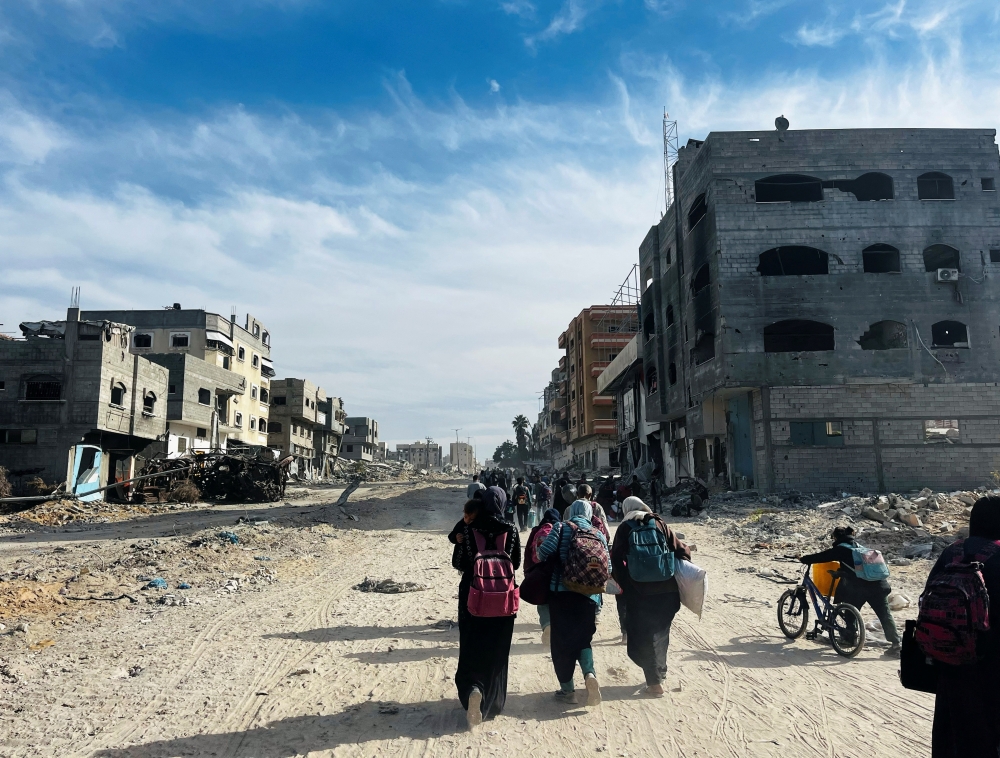
Trump’s inclination to mix business and politics has kept him in close contact with Arab Gulf leaders throughout his four-year absence from the White House. It remains to be seen whether regional leaders will align with his approach to ‘taking Gaza’ and minimise Trump’s disregard for human rights, notably the displacement of Palestinians while turning a blind eye to the establishment of a Palestinian state. Trump aims for the highest bidder, and Saudi Arabia is the true prize: the Israeli–Saudi normalisation.
In August 2024, during his presidential campaign, Trump remarked that Israel is a ‘little spot compared to giant land masses’ in the Middle East, implying that Israel should be expanded, which is a continuation of the Trump administration’s “Deal of the Century” announced in January 2020. The plan envisions more than $50 billion in international investment, Israel’s annexation of areas of the West Bank and their renaming of Judea and Samaria, Palestinian relocation, and no refugee right of return.
The weakening of the world order is allowing other actors, such as Iran, Russia, and China, to grow their influence in the region and elsewhere. Gulf governments are also embracing a new role as political and economic power brokers, and they may come under significant pressure to choose sides.
Since the early 1930s, the United States has been a strategic partner for Gulf countries. Oil has been the primary link, in addition to American companies’ support for infrastructure development and oil exploration, and the Gulf’s reliance on the US for military support, weapons, and security.
In the current changing context, the Gulf states need to calibrate their navigation between superpower adversaries. They must balance their national security interests and their partnerships. Expect lots of walks on eggshells.
The writer is journalist, academic and researcher in media studies
Oman Observer is now on the WhatsApp channel. Click here