Steven Erlanger
The writer is the chief diplomatic correspondent, covering Europe.
David E. Sanger
The writer is the White House and National Security Correspondent for The New York Times.
Vice-President JD Vance urged European leaders to end the isolation of far-right parties across the continent, an extraordinary embrace of a once-fringe political movement with which the Trump administration shares a common approach on migration, identity and internet speech. The address stunned and silenced hundreds of attendees at the Munich Security Conference, a forum where top-level politicians, diplomats and analysts had gathered expecting to hear President Donald Trump’s plans for ending the war in Ukraine and Europe’s defence against a rising Russian threat.
The vice-president singled out his German hosts, telling them to drop their objections to working with a party that has often revelled in banned Nazi slogans and has been shunned from government as a result. He did not mention the party, the Alternative for Germany, or AfD, by name, but he directly referred to the long-standing agreement by mainstream German politicians to freeze out the group, parts of which have been formally classified as extremist by German intelligence.
“There is no room for firewalls,” Vance said, bringing some gasps in the hall. He punctuated the message by meeting on Friday with Alice Weidel, the AfD’s candidate for chancellor in this month’s election, as well as other German leaders. Altogether, it was an unusual intervention in the domestic politics of a democratic American ally. The vice-president offered what may be a preview under Trump of a redefinition of a trans-Atlantic relationship built on postwar bonds of stability between allied governments. Vance aggressively challenged the diplomats in the hall in Munich, telling them that their biggest security threat was not from China or Russia, but “the enemy within”.
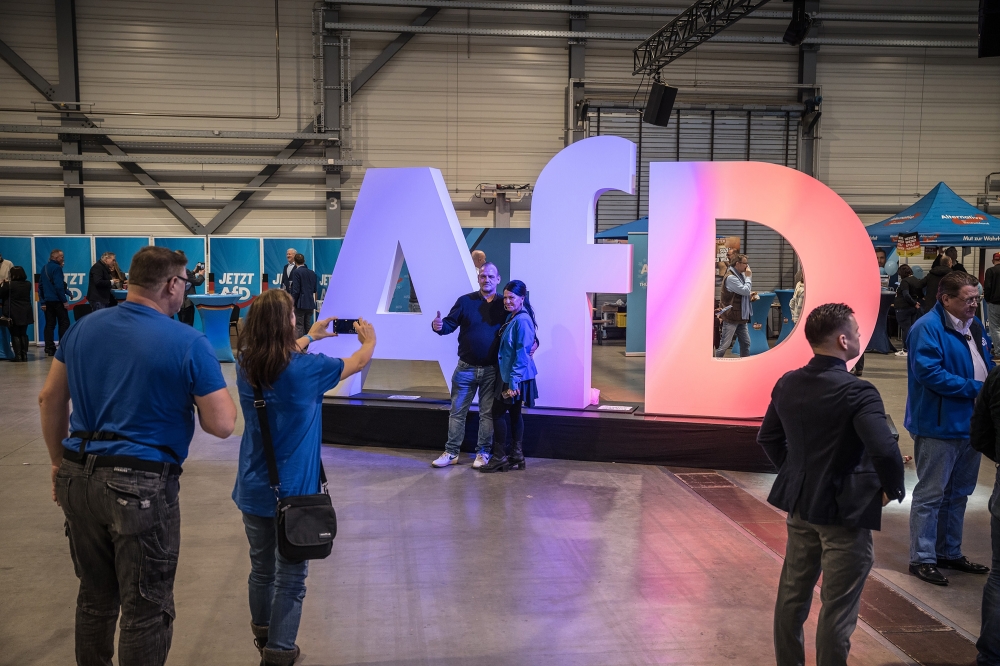
Vance’s remarks echoed those of hard-right leaders across Europe and the anti-establishment messages that Russia has pumped onto social media in an effort to destabilise democratic politics in America and Europe. Trump, speaking to reporters in the Oval Office on Friday, called it “a very brilliant speech.” “I heard his speech, and he talked about freedom of speech,” Trump said. “And I think it’s true in Europe; it’s losing. They’re losing their wonderful right of freedom of speech. I see it. I mean, I thought he made a very good speech, actually, a very brilliant speech.” Vance is the second figure in the Trump administration to try to chip away at the efforts to isolate the far right before the German elections on Feb. 23 by attempting to stigmatise the AfD.
Vance’s remarks drew a furious response from German leaders across most party lines. They immediately rejected Vance’s suggestion that they should drop their firewall against the AfD, pointing to past comments by the party’s members in support of the National Socialists, or Nazis. Boris Pistorius, the German defence minister and a member of the governing Social Democrats, deviated from his planned speech on Friday afternoon to rebuke Vance. “If I understood him correctly, he is comparing parts of Europe with authoritarian regimes — this is not acceptable,” Pistorius said, drawing sustained applause. “This is not the Europe, not the democracy, where I live.” Thomas Silberhorn, a member of Germany Parliament for the Christian Social Union, the Bavarian sister party of the Christian Democrats, said: “This is our business. My message to the US administration is: German extremists who explicitly refer to National Socialism — part of the AfD — are clearly anti the US that liberated us from National Socialism.”
In his speech, Vance seemed to lump those restrictions into a long list of what he called European deviations from democratic values and attacks on free speech. Those failures, Vance said, included efforts to restrict misinformation and other content on social media, and laws against abortion protests that he said unfairly silenced Christians. “If you are running in fear of your own voters,” Vance said, “there is nothing America can do for you.” European intelligence agencies have raised alarms about what they consider to be a systematic effort by Russia at mass disinformation and propaganda, often by using fake social media accounts to sow division and doubt about democratic systems.
Vance ridiculed and diminished that threat. “It looks more and more like old entrenched interests hiding behind ugly Soviet-era words like misinformation and disinformation, who simply don’t like the idea that somebody with an alternative viewpoint might express a different opinion, or, God forbid, vote a different way, or, even worse, win an election,” he told a largely stony audience. He also poured scorn on the decision in “remote Romania,” as he called it, to cancel a presidential election because of clear evidence of Russian manipulation of the political campaign. “If your democracy can be destroyed with a few hundred thousand dollars of digital advertising from a foreign country, then it wasn’t very strong to begin with,” he said.
Oman Observer is now on the WhatsApp channel. Click here