




WASHINGTON — President Donald Trump said Monday that he could cut aid to Jordan and Egypt if they refused his demand to permanently take in most Palestinians from the Gaza Strip, substantially increasing the pressure on key allies in the region to back his audacious proposal to relocate the entire population of the territory to redevelop it.
The president also said from the White House that if Hamas did not release all the remaining Israeli hostages by “noon on Saturday,” the ceasefire agreement with Israel should be canceled.
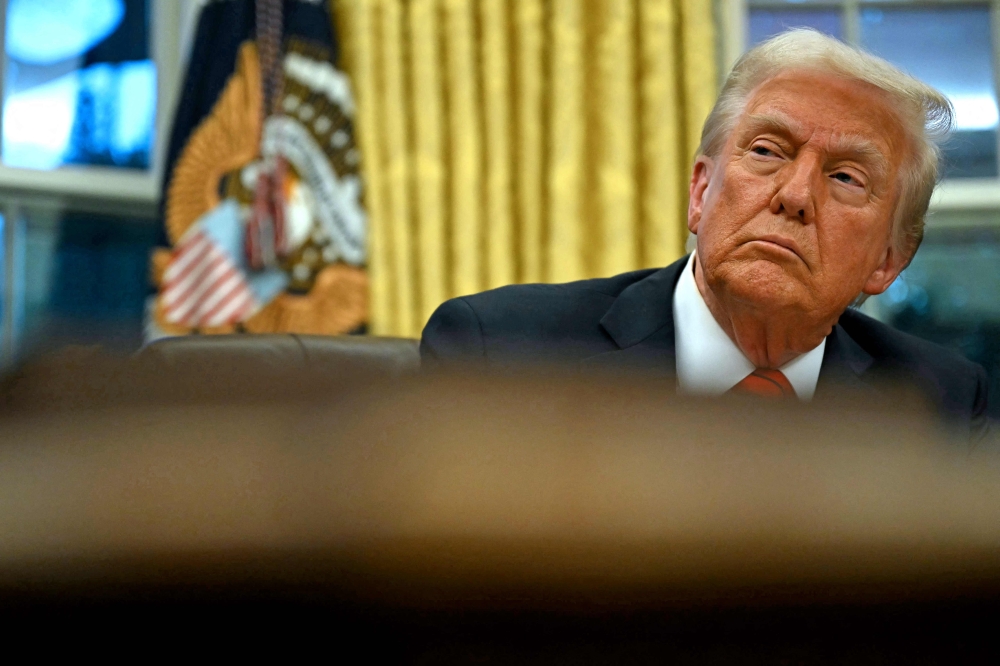
“All hell is going to break out,” Trump said to reporters in the Oval Office, while acknowledging that the choice over ending the ceasefire ultimately fell to Israel.
Jordan and Egypt, both major recipients of U.S. military and economic aid, have rejected any suggestion that Palestinians be relocated to their countries. But Trump said Monday that the assistance could be in jeopardy.
“If they don’t agree, I would conceivably withhold aid,” he told reporters in response to a question a day before a meeting with King Abdullah II of Jordan.
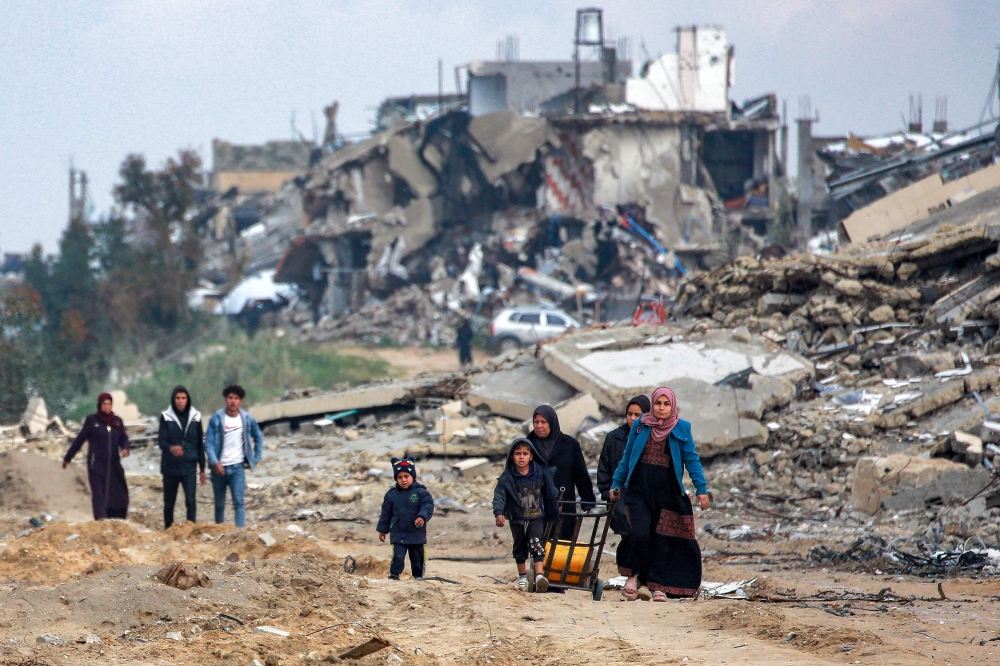
Trump expanded on the idea of forced displacement of roughly 2 million Palestinians, a move that some scholars have said would amount to a war crime and ethnic cleansing. In an interview with Fox News broadcast Monday, Trump said he did not envision Palestinians who left Gaza to make way for the redevelopment plan ever returning.
Asked in the interview whether the Palestinians would eventually “have the right to return” to Gaza after his proposed construction projects had been completed, the president said, “No, they wouldn’t.”
As for where they might go, he said: “I think I could make a deal with Jordan. I think I could make a deal with Egypt.”
Trump’s proposal has sent shock waves throughout the Middle East and is sure to dominate the meeting with the Jordanian leader during an especially volatile time in the region.
Trump’s remarks about the relocation plan have turned up the pressure on King Abdullah, who would likely be engulfed in his domestic crisis if Palestinians were forced into Jordan. More than half of Jordan’s population is estimated to be Palestinian; the nation is already unsettled by tensions between citizens of Palestinian descent and those who are not, analysts say.
“What Mr. Trump has done is put the future of the Kingdom of Jordan on the line,” said Khalil Jahshan, the executive director of the Arab Center Washington D.C. “The strongest political movement in Jordan does not accept the idea that Jordan is Palestine.”
Before meeting with Trump at the White House, King Abdullah was scheduled to meet with Steven Witkoff, Trump’s envoy to the Middle East. He was also scheduled to meet with Secretary of State Marco Rubio and Mike Waltz, Trump’s national security adviser.
That the president is willing to apply pressure on key allies in the region also indicates that he has little intention of backing away from his fast-hardening ideas about U.S. ownership of the war-torn territory and the displacement of Palestinians.
In the interview with Bret Baier of Fox News, Trump provided his most extensive comments on how he envisions moving the population of Gaza to Jordan, Egypt, and other nations in the region.
“We’ll build safe communities a little bit away from where they are where all of this danger is,” he said. “In the meantime, I would own this. Think of it as a real estate development for the future. It would be a beautiful piece of land.”
Once moved out, he said, Palestinians “would have much better housing” than they have in Gaza and would not need to return.
“I’m talking about building a permanent place for them,” Trump said.
Trump’s proposal was not vetted by the president’s top advisers before he unveiled it last week, and some White House officials had sought to soften it, insisting that he had not committed to using U.S. troops to clear the territory and that any relocation of Palestinians would be temporary.
But Trump has repeatedly returned to the idea, saying that other nations in the region would pay for it, that Israel’s military would provide security, and that he believed it was feasible to move Gaza’s population elsewhere.
Carrying out such a proposal is strongly opposed by Egypt as well as by Jordan. Cairo has pushed back on accepting Palestinian refugees out of security concerns. .
The Jordanian king could try to make the case that the forced displacement of Palestinians would destabilize the Middle East region and complicate the United States’ efforts to get Saudi Arabia to join Trump’s 2020 Abraham Accords, which established formal ties between Israel and four Arab countries.
But Jordan, like Egypt, is also among the top recipients of U.S. military aid, providing Trump leverage in his dialogue with King Abdullah.
Even before the meeting, Trump’s doubling down on his proposal meant that the king was in for a challenging visit to Washington.
This article originally appeared in The New York Times.
Oman Observer is now on the WhatsApp channel. Click here