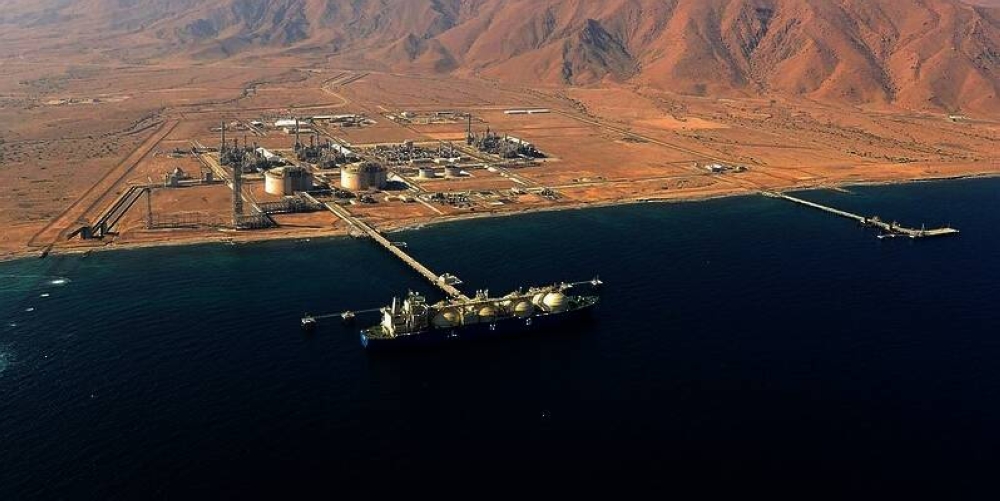
At a newly built dock along Germany’s Elbe River, tankers from the United States unload liquefied natural gas to fuel factories and homes. In central Spain, a forest of wind turbines planted atop mountains helps power the energy grid. In French government buildings, thermostats have been lowered in winter to save electricity.
In the three years since Russia’s invasion of Ukraine ignited an energy crisis across Europe, the continent has transformed how it generates and stores power. Russian natural gas, long Europe’s energy lifeline, has been replaced with other sources, notably liquefied natural gas from the United States. Wind and solar power generation has leaped around 50% since 2021. New nuclear power plants are being planned across the continent.
But Europe’s energy security remains fragile. The region produces far less natural gas than it consumes and is still largely dependent on other countries, especially the United States, to help keep the lights on. Natural gas, which drives the price of electricity, is roughly four times as expensive as in the United States. High energy costs have strained households and forced factories to close, weakening Europe’s economy.
The 2022 invasion of Ukraine revealed Europe’s dependence on energy from Russia, especially natural gas, which accounts for around 20% of Europe’s energy consumption.
“The energy appeared cheap, but it exposed us to blackmail,” Ursula von der Leyen, president of the European Commission, the European Union’s executive arm, told the World Economic Forum last month.
Prices soared in 2022 on worries that Russia would completely cut off gas flows into Europe as well as other factors. Countries banded together to share fuel and other energy sources, and build or modify infrastructure to transport it. These efforts are forecast to have reduced Europe’s reliance on Russian gas to 8% of supplies in 2025, from 35% in 2021, according to Anna Galtsova, an analyst at S&P Global Commodity Insights, a research firm.
Norway is now the largest supplier of gas, mainly through a web of pipelines. But Russia has become a large supplier of liquefied natural gas, second only to the United States in 2024.
And Europe has become better at directing the energy to where it is needed, creating “a tremendous amount of flexibility that Europe didn’t have on the eve of the war,” said Anatol Feygin, chief commercial officer at Cheniere Energy, a large American LNG exporter.
Helping that pivot were programs that encouraged households and government buildings to lower thermostats to 19 degrees Celsius (66 degrees Fahrenheit). Factories across Europe also curbed production to avoid blistering energy bills. Other initiatives, like having stores shut off lights early in the evening, have been rolled out.
Europe built more renewable energy projects to help bridge the gap. Before Russia’s invasion, around one-third of Europe’s power generation came from renewable energy, propelled by a buildup of wind and solar power. In 2024, wind and solar farms generated more electrical power than fossil fuels for the first time, according to S&P Global Commodity Insights.
“That is a big change, and that speaks to the additional policy push to get alternative sources of energy into the system,” said Tim Gould, chief energy economist at the International Energy Agency in Paris.
The largest alternative to gas piped in from Russia by far has been liquefied natural gas, but it is a relatively expensive option. With gas vital for industry, heating and power generation, the shift away from Russian supplies has been difficult.
Europe is at the mercy of global markets, bidding against the likes of China and South Korea for liquefied natural gas. Prices have recently soared to the highest level in a year, hurting businesses and adding to a cost-of-living crisis in Europe.
The largest source of liquefied natural gas has been the United States, mostly terminals from the Gulf Coast, which provide nearly half of Europe’s supply. Europe has seen a boom in setting up terminals to receive LNG, especially in Germany, which had none before the energy crisis.
During a cold snap in January, several American tankers carrying liquefied natural gas to Asia changed course for Europe, where they could make a bigger profit, said Natasha Fielding, head of European gas pricing at Argus Media, a London research firm.
“Europe has made really remarkable strides,” said David L. Goldwyn, who was a State Department energy envoy during the Clinton and Obama administrations. “But when the weather turns cold and competition from Asia for LNG increases, the situation looks more challenging.” — The New York Times
The author covers energy and business as well as environmental issues for The New York Times from London.
Oman Observer is now on the WhatsApp channel. Click here