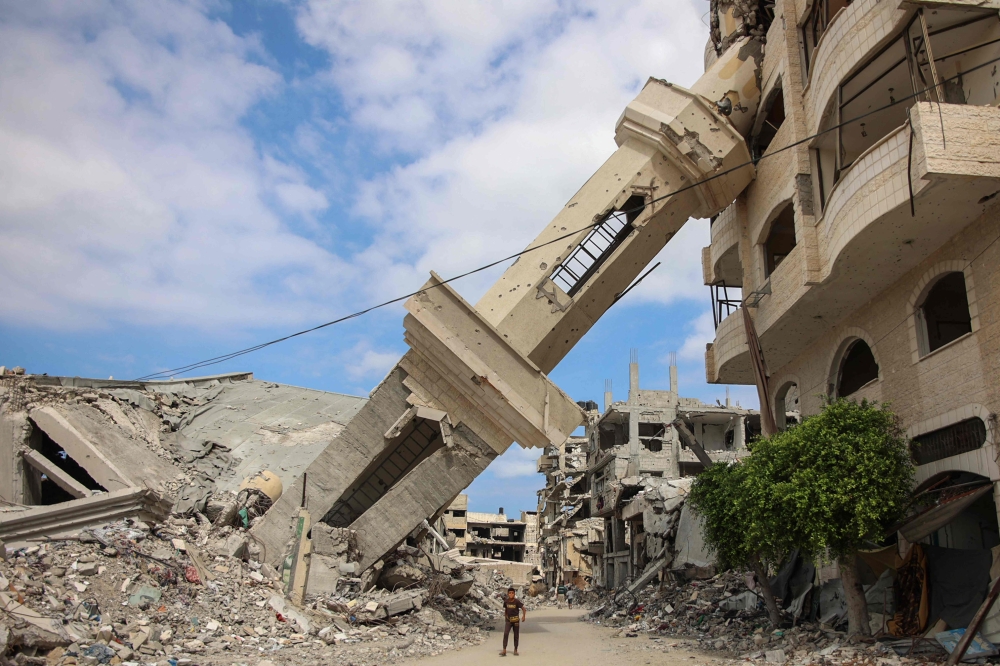





A shift in the fundamental thinking about the environment’s sustainability is the need of the hour before it becomes too late. It has become an order the day receiving dreadful news about environmental degradation such as melting glaciers, rising sea level, rising temperature, growing greenhouse gas emission, deforestation, increasing pollution, cyclone, flood, wildfire, volcanoes, drought, and changes in the eccentricity, obliquity and precession of the earth.
A recent research study shows that the earth is tilted by 31.5 inches in less than two decades due to groundwater pumping. The study concludes that the tilt of the earth has a significant impact on earth’s rotation and sea-level rise.
At a conference of the parties to the United Nations Framework Convention on Climate Change (COP29), the UN’s annual climate summit held in November says if emissions don’t stop increasing, society could face a disastrous sea-level rise of one metre, coupled with the collapse of a system of ocean currents crucial to the planet, by 2100.
In 2024 the global average temperature reached 1.5 degrees Celsius above the preindustrial level for the first time, temporarily breaching the long-term limit that countries agreed to strive for in the Paris Agreement. As per UN environment programme report one million of the world’s estimated 8 million species of plants and animals are threatened with extinction and 75 per cent of the Earth’s land surface has been significantly altered by human actions, including 85 per cent of wetland areas.
The report states that around 3.2 billion people, or 40 per cent of the global population, are adversely affected by land degradation and approximately 100-300 million people are at increased risk of floods and hurricanes because of coastal habitat loss. The list of research findings will go on permeating to vast sections of the environmental dimensions. It is perplexing to know the monetary costs of such environmental damage. For example, US has sustained 400 weather and climate disasters since 1980 and its total cost exceeds $2.785 trillion!
It is important that we realise the environment retaliates in its own way when adverse parameters discussed above surpass the threshold limits. The consequences may be uncontrollable and irreparable. If we don’t understand the inbuilt nature of the environment, it will lead to weak sustainability.
It believes that the focus should be on sustaining only the human species and it stems primarily from the Western economic viewpoint. It fails to understand that nature bounces back for the actions taken against it. The natural environment is regarded as a resource and human beings think they have the absolute liberty to exploit nature at whims and fancies when environmental sustainability is weak.
It is better, we wake up before nature penalises harshly, and the environment becomes worthless to live for human beings. Strong sustainability insists on the need for harmony with the natural world. It is not just humans who exist in this planet, but also all other species that exist. This requires us to sustain the environment for all species including human beings. If we realise that other existing species have equal rights like human beings, it is a strong sustainability. The proponents of deep ecologists hold the philosophy of strong sustainability where they assert that human beings have no greater rights to resources or life than other species.
Human beings do not have the right to subjugate environmental systems. They have rights just like any other species in the universe. This is because threats caused by environmental damage by human beings are beyond repair.
It has become a common practice across the globe to spend a portion of GDP or budget for environmental sustainability as per the accords. However, it must not be forgotten that curing the environment by spoiling it is like falling into a vicious circle. The clean environment is bliss bestowed by nature. We are spoiling it and trying to fix it by spending money. Time has come to constructively argue not for strong sustainability, but for super strong sustainability. Environmental degradation is a global crisis, not a regional or local problem.
Oman Observer is now on the WhatsApp channel. Click here