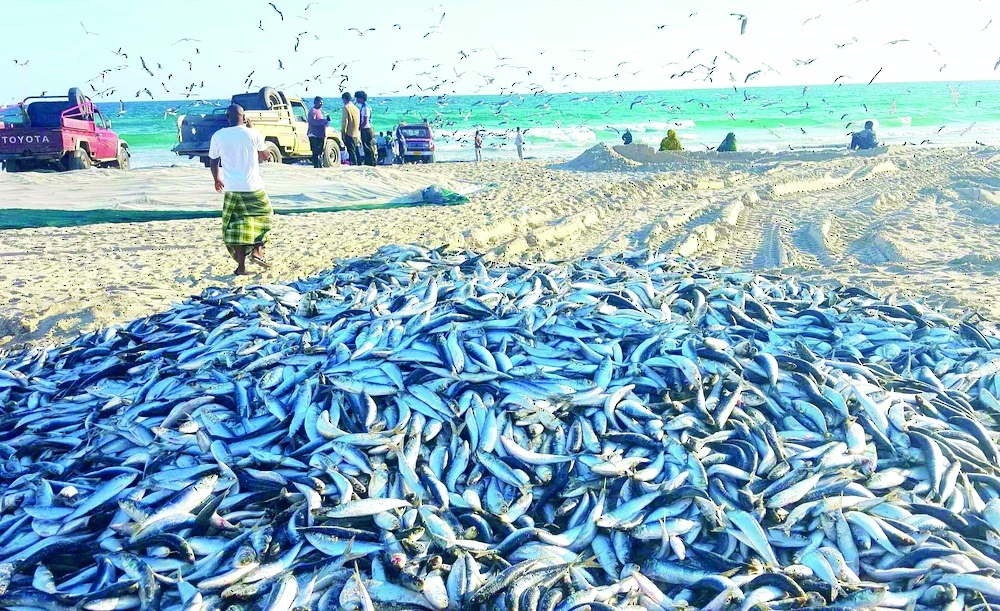





SALALAH: Sardine fishing, a deeply rooted tradition in Dhofar Governorate, serves as both a cultural heritage and a critical economic resource for local fishermen. The fishing season, locally known as 'Al Dawaghi', spans from October to April, painting a vivid tableau of community spirit as fishermen gather on the shores overlooking the Arabian Sea. Accompanied by traditional songs and arts, they look forward to a prosperous harvest along the region’s scenic coasts.
Fishermen in Dhofar employ age-old techniques, utilising specialised fishing nets called 'Al Jarif'. They work in groups known as 'Al Daghiya', with each group led by an owner who oversees the entire fishing operation.
Salem bin Said al Baraka, a seasoned fisherman from Dhofar, reminisces about the evolution of the trade. Decades ago, ropes known as 'Saifa' were used, while today, nets called 'Greef' dominate the practice. These nets, meticulously prepared during the fall, span approximately 100 metres in length and 50 metres in width. Salem highlights the meticulous preparation preceding the season, including assembling and repairing equipment, which demands coordinated efforts and significant investment from the owners.
The coastal waters of Dhofar are known for hosting a distinctive variety of sardines, referred to locally as 'Eid Al Ula', which migrate from the east to the south, passing through coastal areas from Al Shuwaimiyah to Dhalkout.
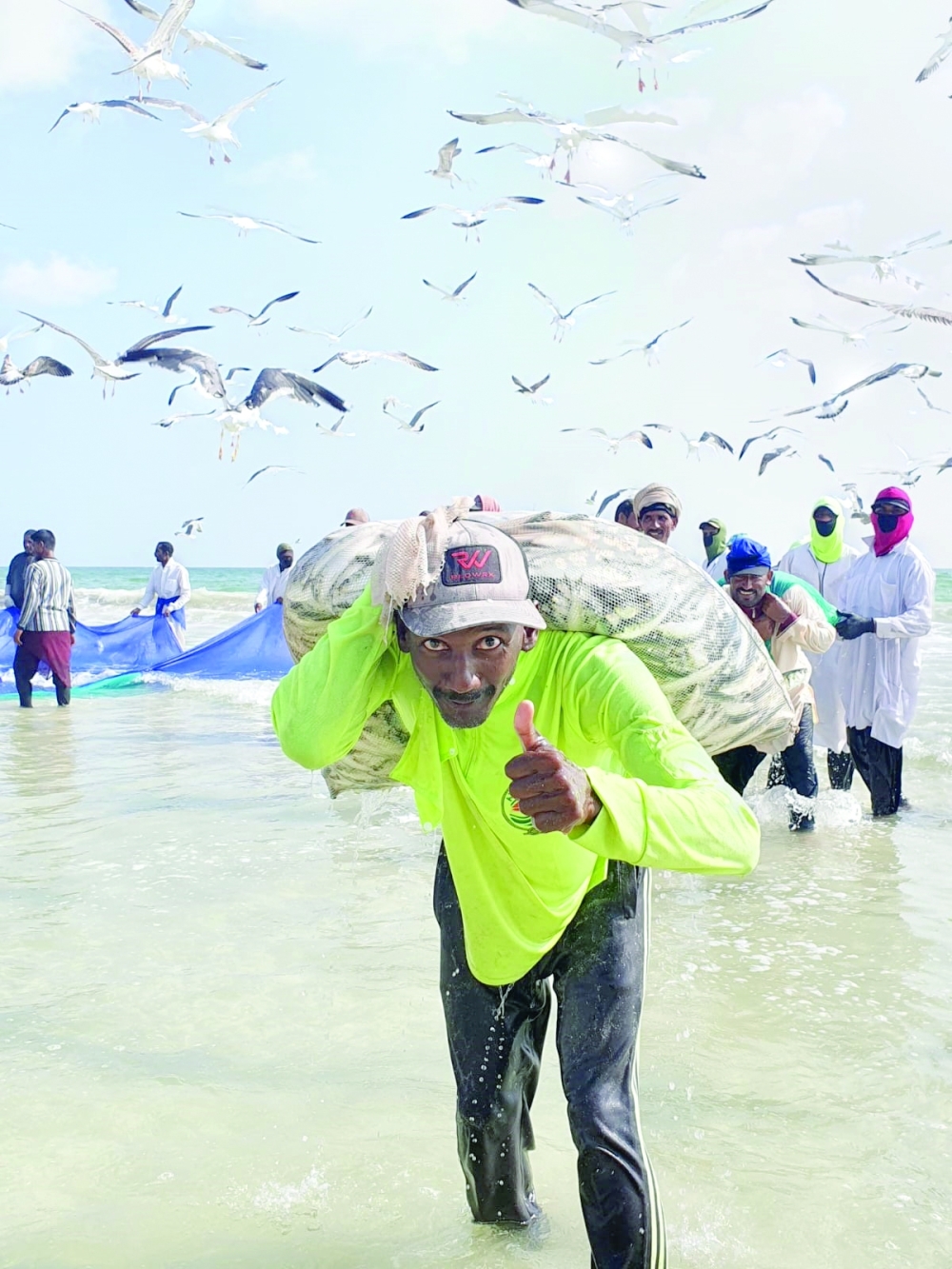
For young fishermen like Hani bin Salem Batmira, this season is a vital economic opportunity, despite challenges such as rough waves that follow the autumn period. The abundant sardine catch significantly contributes to the livelihoods of the fishermen, with a portion sold in local markets and another processed for export. Additionally, sardines are dried for use as animal feed or organic fertiliser, as per agreements between fishermen and traders.
According to the General Directorate of Agricultural Wealth, Fisheries and Water Resources in Dhofar, sardine production surged in 2023, reaching 49,651 tonnes — a remarkable 133 per cent increase from the previous year’s 21,290 tonnes.
This cultural and economic hallmark underscores the enduring legacy and adaptability of Dhofar’s fishing communities as they continue to thrive amidst changing times. - ONA
Oman Observer is now on the WhatsApp channel. Click here