
Tuesday, April 14, 2026 | Shawwal 25, 1447 H
clear sky
weather
OMAN
22°C / 22°C
EDITOR IN CHIEF- ABDULLAH BIN SALIM AL SHUEILI
x
Digital transformation key to Oman's emergence as logistic hub
Crude demand to see biggest quarterly drop since Covid: IAE
Pakistan proposes new US-Iran talks on Thursday: Reports
Conflict will impact Oman's airlines, but need to ensure top-notch service: Minister
US begins Iran port blockade, oil prices ease
IEA chief warns of tougher month for energy markets
US details bounds of Hormuz blockade as two ships turn around
US, Iran leave door open to dialogue after tense talks

Peru scientists unveil crocodile fossil up to 12 million years old

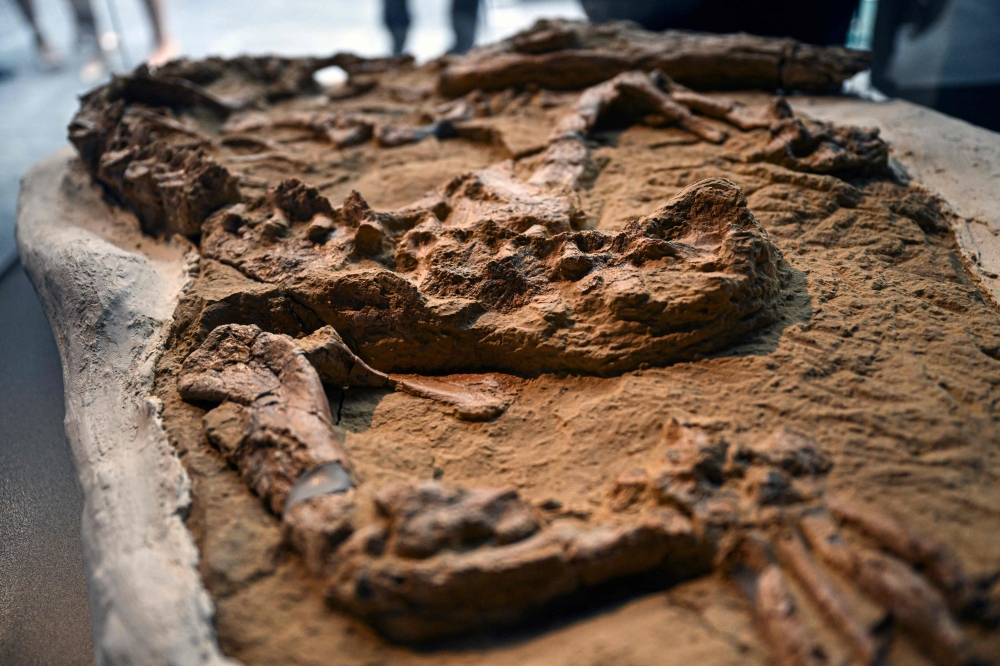
A 10-million-year-old fossil of a juvenile Cenozoic crocodile of the genus Piscogavialis is unveiled in Lima on November 27, 2024. The Geological, Mining, and Metallurgical Institute of Peru (Ingemmet) presented the articulated and almost complete skeleton of a juvenile fossil gavial discovered in Ocucaje, Ica, in southern Peru. (Photo by Ernesto BENAVIDES / AFP)
minus
plus

Paleontologists unveiled on Wednesday the fossil of a young marine crocodile dating back 10 to 12 million years that was discovered in a Peruvian desert.


The fossil of the gharial -- or fish-eating -- crocodile, around three meters long (nearly 10 feet), was discovered late 2023 in perfect condition in Peru's Ocucaje desert, around 350 kilometers (190 miles) south of the capital Lima.


"This is the first time we found a juvenile of this species, that is to say, it had not reached its maximum size yet. It died before that," vertebrate paleontologist Mario Gamarra told a news conference.


The skull and jaws of these specimens differed from that of today's crocodiles and alligators, according to Gamarra, who headed the reconstruction of the fossil.


"They had an elongated snout and their diet was entirely piscivorous, feeding on fish," said Gamarra.


"The closest current relative to this crocodile would be the Indian gharial," he added.


The discovery was made jointly by Peru's Geological, Mining and Metallurgical Institute and the La Union school.


Peru's Ocucaje desert is rich in fossils, such as four-legged dwarf whales, dolphins, sharks and other species from the Miocene period -- between 5 and 23 million years ago -- that were previously discovered there. —AFP


SHARE ARTICLE
arrow up
home icon