Michael Mindlin
The author is a venture-capital and growth-equity investor focusing on energy and enterprise software.
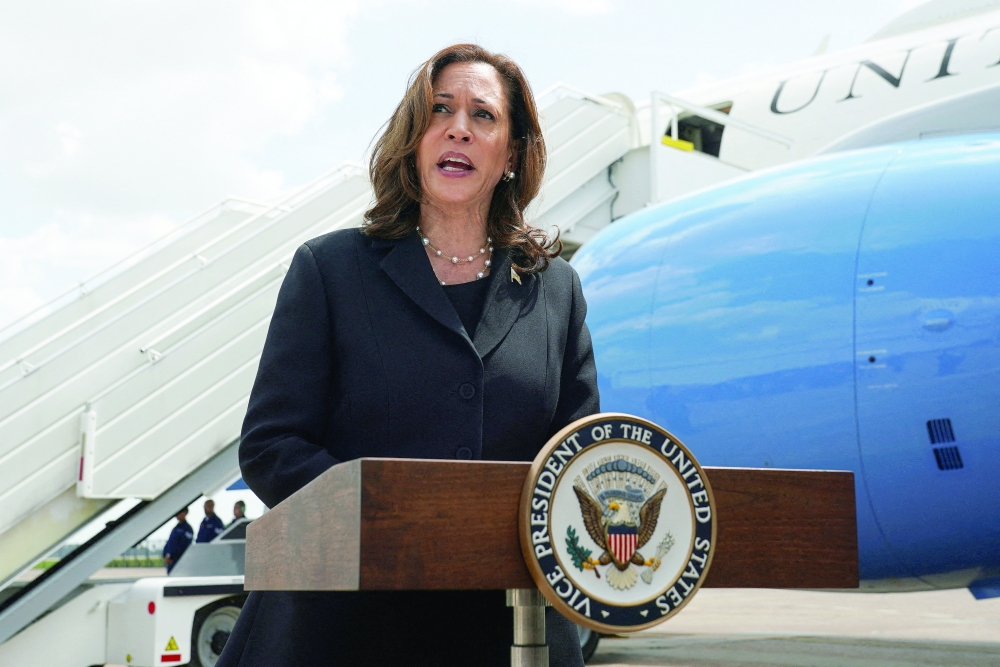
Globalisation is on its deathbed, which is reflected in the bipartisan disdain for free trade in the United States. Both former president Donald Trump and Vice-President Kamala Harris have seemed tariff-happy in the run-up to the presidential election.
This backlash poses more danger to the rest of the world than it does to America. After the 2008 global financial crisis, the US economy staged a remarkable rebound starting in 2016. Following that year’s fractious election battle between Trump and Hillary Clinton, the US outpaced other Group of 7 countries in growth, productivity and stock-market returns.
Compared to its partners, America looks more vibrant and better equipped — with its enormous internal market of 340 million people — to weather the trade storm. Exports account for just 11 per cent of US gross domestic product, but nearly 50 per cent of German gross domestic product. While China vacuumed up factory jobs in the 1990s, thanks to its massive low-cost labour force, executives across the US are now finding that the country’s harsh regime and rising wages have sullied the “Made in China” brand.
At the same time, America’s vast energy resources and innovation centres in Silicon Valley, Austin and Raleigh-Durham are reinvigorating the “Made in the USA” option.
History puts things in perspective. By the summer of 1944, an Allied victory in World War II was looking more certain: American, British and Canadian troops were storming Normandy’s beaches, while the Pacific Fleet had clawed back nearly all the territory seized by Japan. So, what shape would the world take once the smoke cleared?
The US bestowed an enormous post-war gift upon allies and former enemies alike by promoting free trade. Although America had the military firepower and the manufacturing muscle to assert imperial dominance, it chose economic openness instead.
The US government convened finance ministers at Bretton Woods to devise new rules for the international monetary system and flung open its borders to imports, allowing American consumers to buy Sony pocket radios, Volkswagen Beetles, and much more. (Of course, the US also imposed some protectionist measures.)
Why did America choose this route? Two words: Cold War. The US government, with its eye on the next conflict, began playing economic chess while the Soviets were still figuring out how to set up the board. Capitalism had turned into a team sport, and the US had to recruit more players.
This policy bucked recent history. The US could have reverted to the protectionism of the 1930 Smoot-Hawley Tariff Act, which had raised average tariffs on more than 20,000 goods by 60 per cent, cutting imports by two-thirds. Instead, something remarkable happened. The navy deployed more than 6,700 vessels to ensure the safety of shipping lanes, and globalisation was reborn.
Countries could now focus on producing goods that aligned with their comparative advantage and access products that were unavailable domestically. Soon the Germans, the Japanese, and later the South Koreans were experiencing economic miracles.
As a result, the world became fabulously wealthy. Global GDP soared from around $1 trillion in 1960 to more than $100 trillion in 2022, while global extreme poverty fell from 54 per cent to under 10 per cent, and life expectancy surged from 50 to 73 years.
But three and a half decades after the Cold War’s end, Pax Americana has lost its lustre. The navy has shrunk to just 296 ships, and once-great cities like St Louis and Baltimore have withered after manufacturing industries decamped to China and Mexico.
In the eyes of populist politicians and struggling voters, globalisation seems more like a Trojan horse than a pillar of American national security. That is largely because of the rise of China, which is perceived as globalisation’s biggest beneficiary.
But the prophecy that the Chinese economy would eclipse that of the US has not come to pass. In fact, China’s labour costs have increased fivefold since the early 1990s, and the country now faces a demographic collapse.
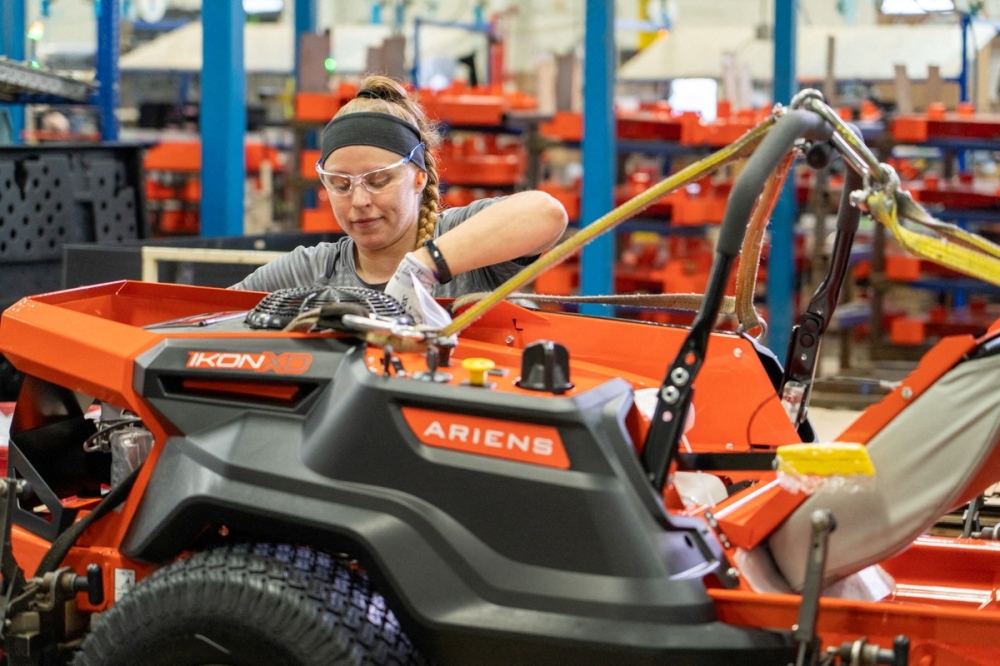
America, on the other hand, is enjoying a resurgence. With the Covid-19 pandemic exposing the fragility of supply chains, industrial-construction spending in the US doubled from 2020 to 2022, and again from 2022 to 2024. Phoenix, Arizona, and Columbus, Ohio, are becoming semiconductor-manufacturing hubs, while even Detroit is rumbling again.
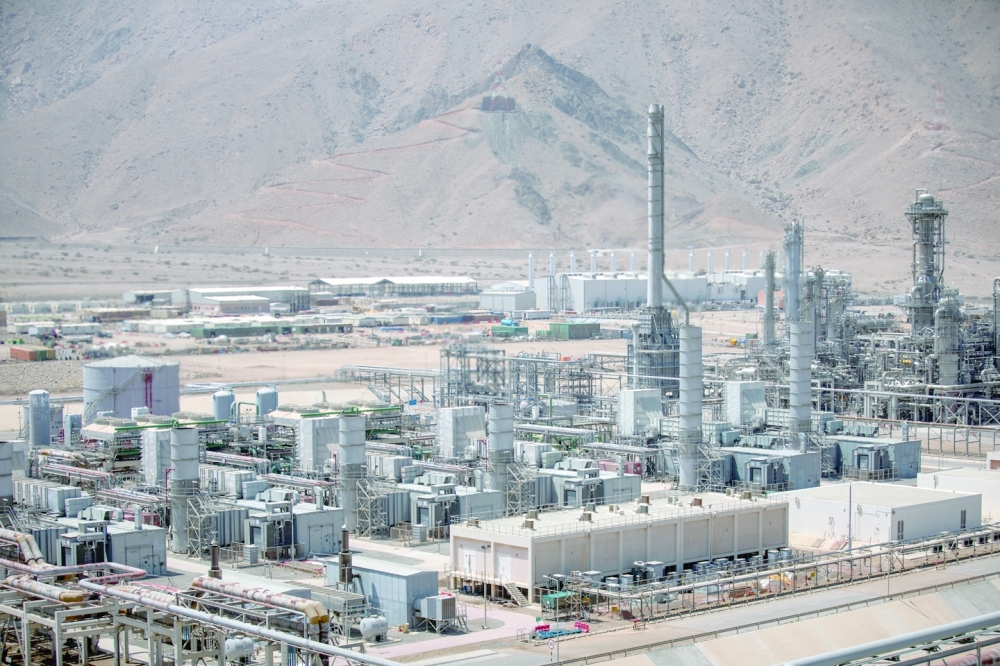
Low energy costs, owing to the shale revolution, and advanced industrial technology have remade the US economy — an outcome few could have predicted at the turn of the century.
Today’s investors are understandably jittery, given recession fears, volatile markets, liquidity challenges, and wars in Ukraine and the Middle East. But as the 21st-century economic story unfolds, America is not just stealing the show; it is writing the script. We might be in for one hell of a performance.
Copyright: Project Syndicate, 2024
Oman Observer is now on the WhatsApp channel. Click here