




Astronomers have identified many planets orbiting distant stars using sophisticated observatories. But there’s something they have yet to spot with any certainty: moons around those worlds.
Now a recent discovery around a Saturn-size planet 635 light-years from Earth offers one of the best potential clues that exomoons orbit exoplanets out there in the Milky Way.
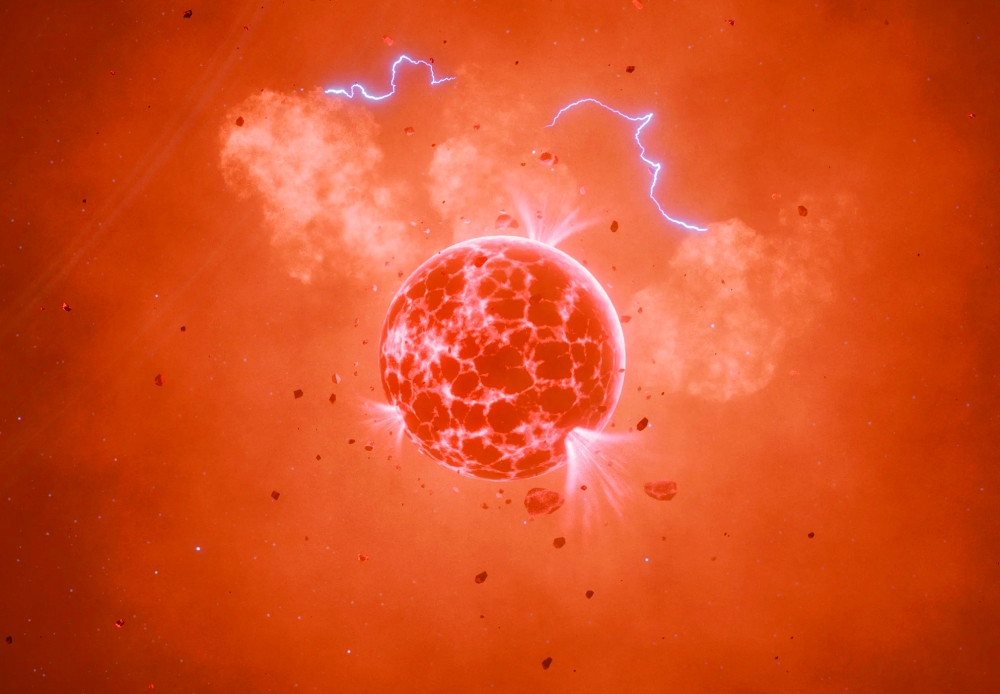
And this possible moon, as described by scientists, is putting on an explosive show, blasting volcanic matter and noxious gases that then drift off into its stellar neighborhood like a comet’s serpentine tail.
The possible evidence of an erupting satellite was described in The Astrophysical Journal Letters. Astronomers have observed a puffy planet named WASP-49 b for years, but the new paper argues that a sodium cloud whizzing around it does not come from the planet. It might be created by a hypervolcanic companion moon spewing 220,000 pounds of the material every second.
The abundance of moons in our own solar system implies that exomoons certainly exist. But as they are so tiny, researchers have been conjuring up ways to indirectly detect them. Searches in recent years have identified several promising candidates, and the cloud around WASP-49 b offers the latest strong prospect — a satellite that may resemble Io, the moon of Jupiter that is the most volcanically active world in our solar system. — ROBIN GEORGE ANDREWS / NYT
Oman Observer is now on the WhatsApp channel. Click here