In a world often overwhelmed by oppression, certain voices rise above, speaking fearlessly for truth and justice.
One such voice is Arundhati Roy, the celebrated Indian author, whose relentless defiance of injustice has garnered her international admiration. Her recent recognition, the 2024 PEN Pinter Prize, honours her for her literary courage and moral clarity.
Awarded annually to writers whose works display exceptional bravery, this prestigious prize highlights Roy’s role in addressing global issues through her intellectual and creative prowess.
The award citation praised her ‘extraordinary ability to tell stories of injustice with intelligence and beauty,’ describing her as a voice that transcends India’s borders to reach global audiences.
In keeping with the tradition of the PEN Pinter Prize, Roy was given the opportunity to share the award with another activist. She chose Egyptian political prisoner Alaa Abdel Fattah, currently serving a prison sentence, as her co-recipient.
During the ceremony at the British Library in London on October 10, Roy also announced that she would donate her share of the prize money to the Palestine Children’s Relief Fund, underscoring her dedication to the Palestinian cause and her commitment to global human rights.
Roy is perhaps best known for her Booker Prize-winning novel, The God of Small Things (1997), but she has also made a name for herself as a fierce activist. She has never hesitated to speak out against injustice, and her outspoken criticism of government policies — especially those related to human rights and environmental issues — has made her a target for controversy.
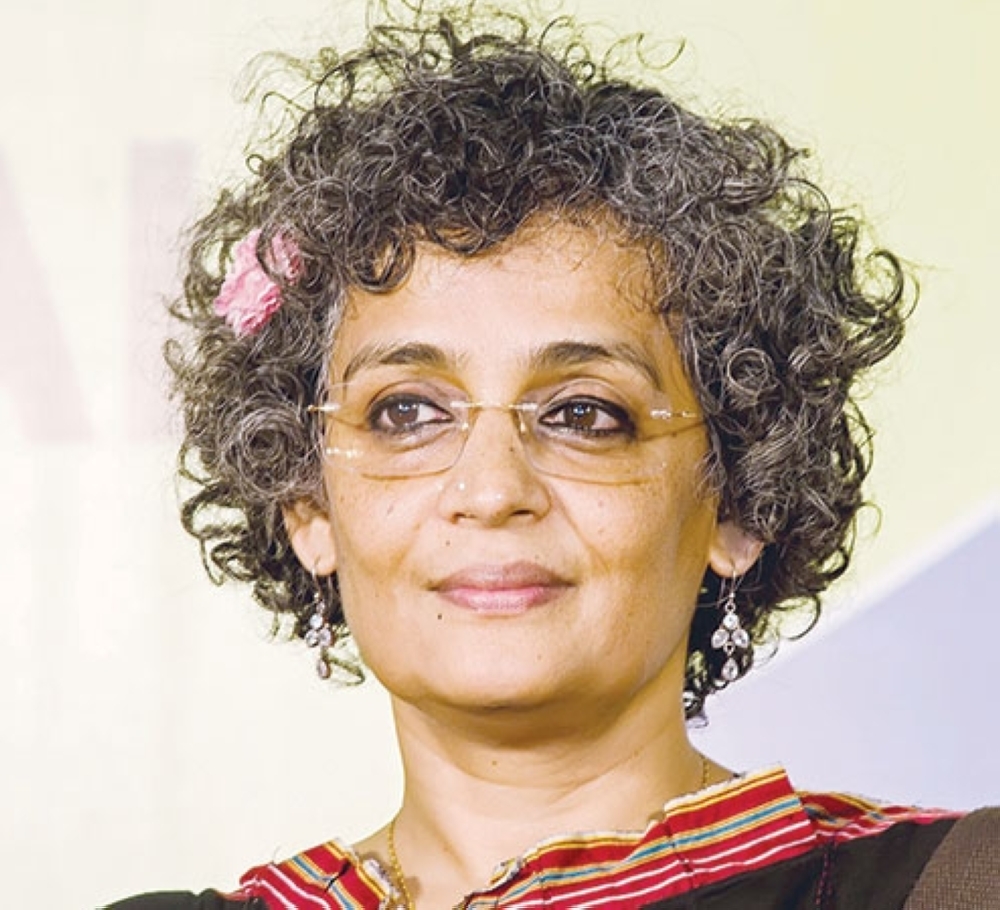
Despite the risks and challenges she faces, Roy remains unwavering in her pursuit of justice. She stands as a champion for the oppressed, advocating for human rights regardless of nationality, race, or religion. Her pen is her weapon, and she wields it with courage, refusing to back down in the face of criticism or danger.
One of the most prominent examples of Roy’s fearless activism is her stance on the Israel-Palestine conflict. Her statement, “Palestine will be free,” resonated with many, further cementing her reputation as a defender of the Palestinian cause. Roy has long-viewed Gaza as the ‘moral compass of the world’ and has publicly condemned Israel’s actions, labelling them as acts of occupation, apartheid, and genocide.
Roy’s critiques extend beyond Israel and India; she has been a vocal critic of American foreign policy, particularly regarding its wars in the Middle East. She was one of the few prominent voices to condemn the US invasions of Afghanistan and Iraq.
In a 2001 article for The Guardian, she described the US military actions as acts of terrorism rather than self-defence. She exposed the hypocrisy of US President George W Bush and British Prime Minister Tony Blair, who launched airstrikes in the name of peace, all while claiming to be leaders of peaceful nations. Roy’s rejection of such narratives has made her one of the most outspoken critics of Western interventionism.
What sets Roy apart is her steadfastness in the face of global injustice, even as some voices within the Arab world side with the Israeli occupation. Paradoxically, some Arab commentators have been more vocal in supporting Israel than Zionist voices themselves. Yet, amid this noise, Roy’s unwavering defence of the oppressed, especially the Palestinians, stands out. Her title as a “fighter” is well earned — not because she engages in physical battles, but because of her relentless moral struggle for human freedom.
Roy’s activism offers a powerful lesson to those who claim to champion justice while sowing division and discord. True activism, as Roy has shown, transcends boundaries of nationality, race, and religion.
It is about standing for the freedom of all people — whether they are Palestinians, Guantanamo detainees, or the disappeared in Syria, Libya, or Egypt. Through her fearless advocacy, Roy reminds the world that even in times of oppression, there are still free people willing to speak truth to power.
Translated by Badr al Dhafari
The original version of this article was published in the print edition of Oman Arabic newspaper on October 21, 2024
Oman Observer is now on the WhatsApp channel. Click here