Laura N. Pérez Sánchez
On sun-drenched days in 2022, cryptocurrency entrepreneur Brock Pierce liked to take his friends sailing to the island of Vieques, about 75 miles from his home in Puerto Rico. Pierce wanted to show off a property that he described as “the most important passion in my life”: a once-glamorous beachside resort that he had recently bought for more than $15 million.
In its heyday, the resort, a W Hotel, boasted a 6,000-square-foot spa, restaurants run by a Michelin-starred chef and sweeping views of the ocean; it was a key source of tourism jobs in Vieques. Then, in 2017, the hotel was damaged by Hurricane Maria, forcing it to close. Pierce planned to reopen it, using his crypto riches to revitalize both the glistening property and the local economy.
A former child actor, Pierce knew how to put on a show. On the trips to Vieques, he would anchor his Italian-made yacht at a local harbor, then lead his guests to the gates of the shuttered W, along a stretch of beach where wild horses roamed.
“This was my massive personal bet,” Pierce said recently. “This was where my heart was.” But Pierce’s display of opulence was something of an illusion. Like many other grandiose projects that he has started in Puerto Rico, the hotel’s revival is now mired in unpaid bills and legal quarrels. Last fall, Pierce lost the W in a dispute with another investor. The hotel is still closed, its windows smashed and its floors covered in mold and horse dung. A $17,000 lounge chair is collecting dust in the empty atrium.
When he moved to Puerto Rico in 2017, Pierce, an investor in a range of experimental crypto ventures, made headline-grabbing promises to revive the local economy, with the help of a tech-bro brain trust. Best known for his role in the creation of tether, one of the world’s most popular digital currencies, Pierce led a wave of industry migrants to Puerto Rico, many of whom started buying land and trumpeting a project they called Puertopia — the transformation of the US territory into a hub for crypto investors and technology startups.
Puerto Rico was a convenient place to cash in on crypto profits. In 2012, the local government passed legislation to turn the archipelago into a tax haven for wealthy transplants. Under a law now known as Act 60, people who move there can apply for a benefit that allows them to pay nothing in capital gains taxes. The measure was aimed at increasing investment in the Puerto Rican economy, which has struggled to overcome two decades of financial crisis.
But Pierce’s vision of a crypto-fueled economic turnaround has yet to materialize, according to hundreds of pages of court records and interviews with more than two dozen people familiar with his efforts in Puerto Rico. His business partners have turned on him, and some colleagues say he is running out of cash. There is no clear evidence that the arrival of tech entrepreneurs has helped the local economy. Instead, the Act 60 arrivals have become symbols of a new era of exploitation.
With the arrival of Pierce and other wealthy newcomers, Puerto Ricans observed a new rupture, as housing prices surged, especially in coastal towns, displacing local families. On a stretch of wall outside the W, a group of local artists has painted a mural that shows Pierce, dressed in a crimson tunic, holding a sign shaped like the bitcoin logo. “Colonialismo,” the caption reads.
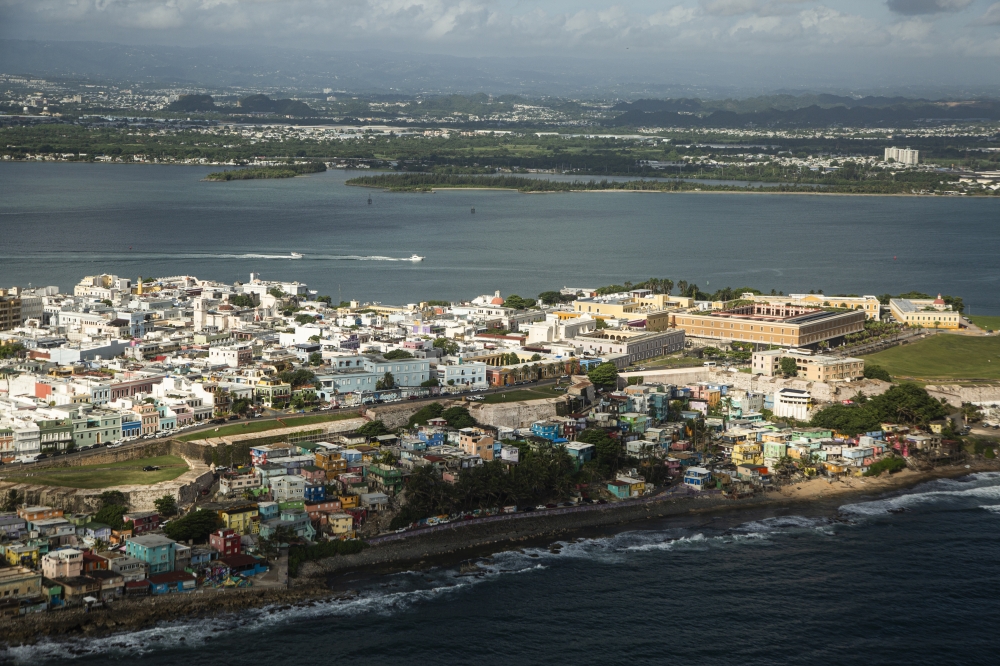
On a recent Friday evening in Old San Juan, Pierce, 43, settled down for a cup of coffee at the Monastery, a masonic lodge-turned-hotel that has served as an unofficial home base for crypto migrants in Puerto Rico. He wore a wide-brimmed orange hat and an oversize white T-shirt, emblazoned with the words “bruised never broken.” With a sweeping gesture, he pointed out the window, which overlooks a bustling cobblestone thoroughfare called Calle del Cristo.
“This is some of the first colonial Spanish conquistador infrastructure that was developed,” he explained. “The first formal road with bricks in all of the Western Hemisphere.” Now, the view belongs to Pierce: He bought the Monastery in 2018 for $4.8 million.
Pierce arrived in Puerto Rico with an eclectic resume: The son of a homebuilder and a church officer in Minnesota, he was a child actor who had a short-lived career in the “Mighty Ducks” movies and starred in a film called “First Kid” with comedian Sinbad. As an adult, he became an early investor in several prominent crypto projects, ultimately achieving a net worth estimated at $700 million to $1 billion.
After Act 60 passed, arrivals from the United States became a visible presence in restaurants and nightclubs throughout Puerto Rico. Pierce was easily one of the most recognizable. He could often be spotted walking the streets of Old San Juan — a short, energetic man in a T-shirt and leather vest, a chain dangling from his neck.
Pierce bought two houses in a gated community in Dorado, a wealthy enclave where he settled with his partner, an entrepreneur named Crystal Rose, and his mother, Lynette Calabro. Pierce hobnobbed with local politicians and hosted extravagant parties, where the guests sometimes took drugs, according to two people who attended the events. — The New York Times
Oman Observer is now on the WhatsApp channel. Click here