




NEW YORK — Some restaurants are born when a young worker begins to feel more at home waiting tables or frying onions than any other place. Others start with dreams of stardom. Then there are restaurants that are opened by people who had no thought of cooking and serving food until the place they lived was taken over by men with guns.
Ala Al-Samawi, an owner and manager of a new restaurant in Brooklyn called Yemenat, was the creative director of his own design studio in Yemen’s capital, Sanaa, when the Houthi rebels seized control in 2014. The next year, when general chaos turned to personal threats, he left his home and family, carrying what he could fit in a backpack. Getting to New York City took three years, including a long period when the Trump administration banned refugees from Yemen.
In Brooklyn, al-Samawi found two other Yemenis who had also been driven from the country by the Houthis. As exiles often do, they cooked for one another and talked about how much they missed the flavors of home. They kept circling around the idea of starting a restaurant. None of the three had any relevant background, but they hired two experienced Yemeni chefs and built a roster of dishes from all over their country.
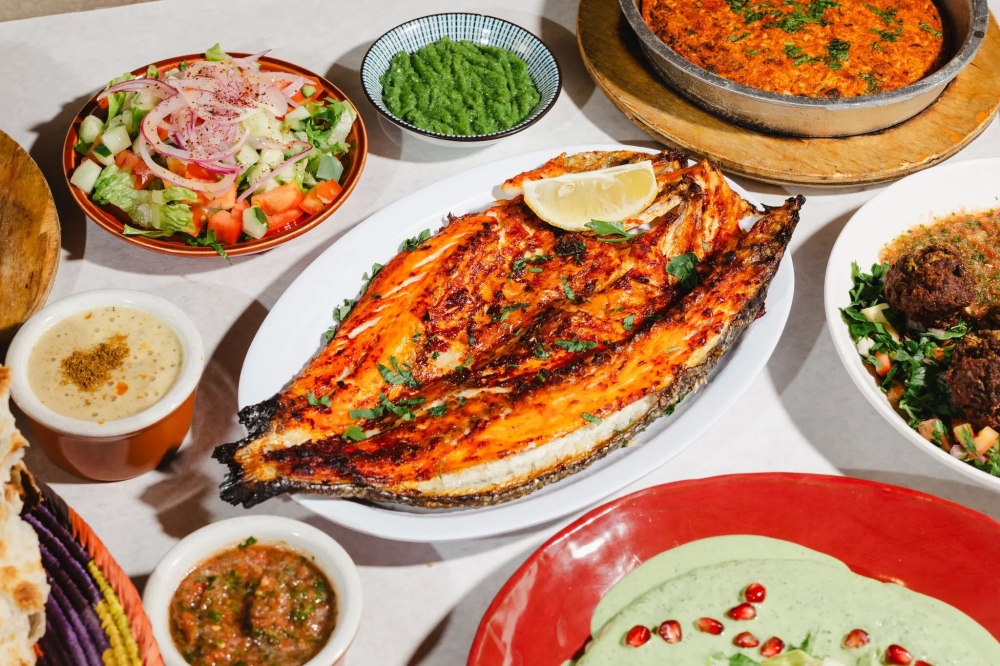
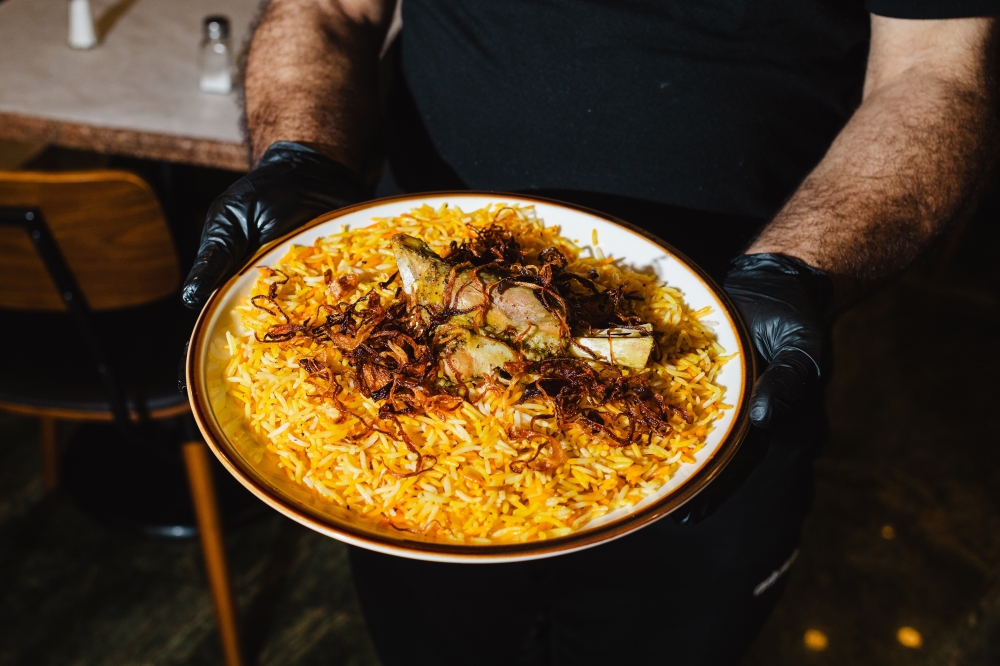
They opened Yemenat earlier this year in Bay Ridge, Brooklyn. A slideshow of items from the menu flashes on two big screens at the far end of the dining room. There is lamb haneeth, baked to its melting point in a low oven, and other classic dishes that are served in most of the Yemeni restaurants of Bay Ridge and Atlantic Avenue in Brooklyn, Hylan Boulevard in Staten Island and White Plains Road in the Bronx. Other things are not so easily found, like shafoot, an appetizer made by soaking a soft, spongy bread called lahoh in a pool of pea-green herbed yogurt sauce.
Each time I showed up, I would study the menu, stare at the slideshow and order. No matter how big the table I’d been given, it was never enough. For this, I blame the rashoosh. Baked in a clay oven, brushed with clarified butter and speckled with black nigella seeds, rashoosh is a layered flatbread about the size of a medium pizza. If you want a fork, you may have to ask for one, because most diners at Yemenat scoop up their meals with pieces of rashoosh pinched in the right hand. Every third item on the menu seems to be served with a steaming-hot wheel of it, and it can stack up like flapjacks at a pancake breakfast.
It’s good to arrive hungry. The menu has a way of making many of the dishes sound nearly identical, but in fact the techniques vary almost as much as the spices that Yemenat’s kitchen uses so expressively. It’s possible to have three or four stews in front of you and never feel any sense of redundancy.
Both the beef fahsa (“a traditional Yemeni beef stew”) and beef saltah (“a thick, flavorful stew”) are served hissing and bubbling in a blackened stone pot. Both are seasoned with hawaij, the blend of coriander, cumin and other spices that Yemeni cooks will mix to their own preferences and add to rice, coffee and just about everything else. Both are topped with a foamy, pale-green drift of fenugreek foam.
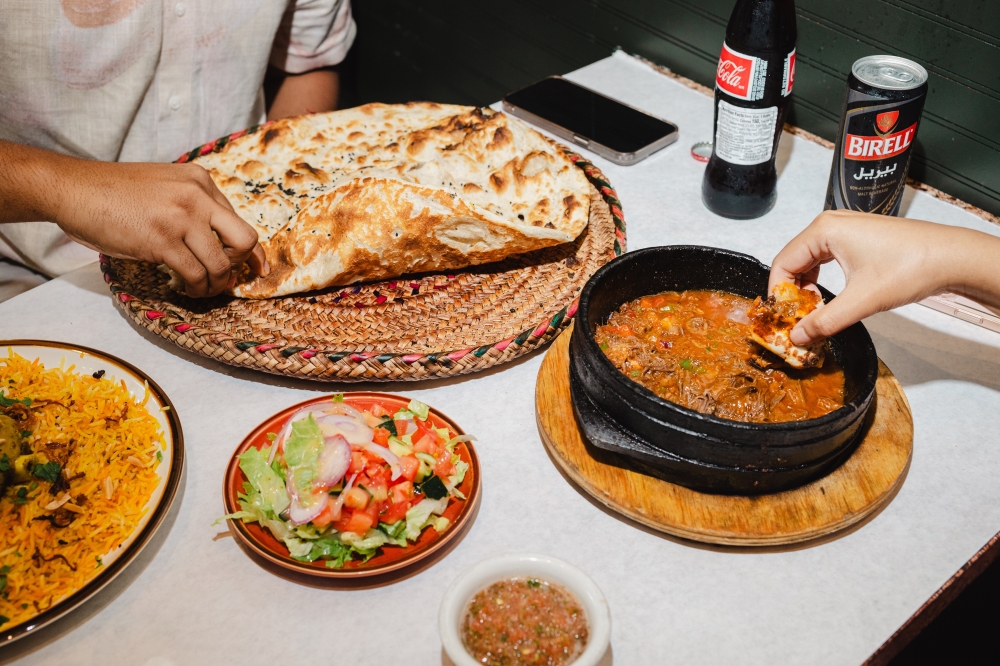
You would never mistake one for the other, though. The meat in the fahsa is stewed until it can be torn into long tender shreds. The meat in saltah is ground and simmered. Most of its flavor comes from vegetables — tomatoes, onions, bell peppers and potatoes. The fahsa doesn’t have them but gets its own dose of extra spices, cinnamon and cloves and others that weave around the hawaij to create an aromatic layering you don’t necessarily expect to find in a pile of meat that looks like Cuban ropa vieja.
Then there is the aqdah lamb (“tender lamb shreds”). Aqdah is not a stew. It’s more like a hash, the lamb and vegetables all fried together and pressed into a big, delicious brown lump. Putting an order of aqdah on the table alongside platters of saltah and fahsa would not be overkill. But there are other factors to take into account.
The shakshoka Adani is one such factor. The menu describes it as an omelet, but it is more of a scramble cooked with spiced tomatoes and onions. It would be a wonderful light supper, and one day I may have the restraint to order it all by itself.
The muva fish is another such factor. A dish from the Red Sea coast, muva fish at Yemenat is butterflied branzino roasted in the clay oven. Before cooking, the fish is painted with a brick-red paste made from dried chiles, which provides a low, steady heat. You can make it hotter with cheese sahaweq, a purée of fresh tomatoes, green herbs and feta cheese spiked with bird’s-eye chiles. The flavor — salty, creamy, herbaceous — is exceptional, especially when spread over flakes of muva fish held in a torn piece of rashoosh.
Yemenat serves more seafood than many other local Yemeni restaurants. Some of its seafood dishes are not, in fact, from Yemen. Al-Samawi and his partners took over the lease from an Egyptian seafood-and-steak restaurant, and kept some fried seafood, an Egyptian-style grilled fish and some excellent renditions of tangy, tomato-based Egyptian tagine, made with shrimp and squid.
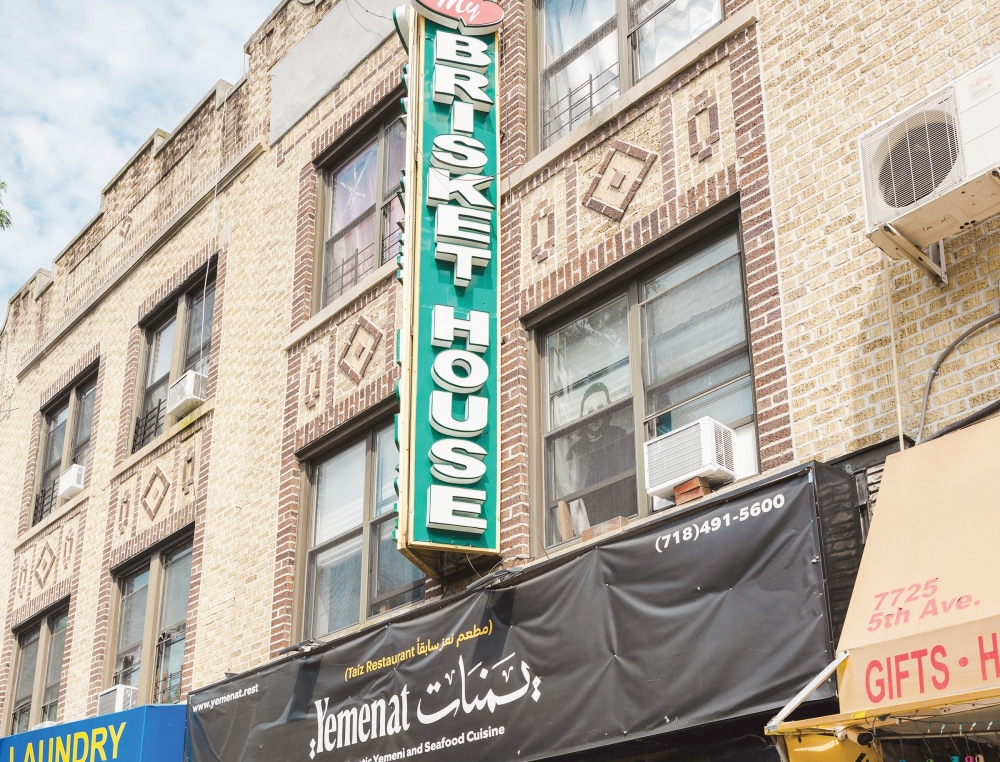
Before the Egyptian restaurant, the address was home to My Brisket House, an offshoot of David’s Brisket House in Bedford-Stuyvesant. David’s is a former Jewish sandwich shop that is now a halal sandwich shop owned by two men from Yemen.
A huge vertical sign for My Brisket House still hangs above Yemenat’s entrance. There is no brisket on the menu.
For dessert, there is more rashoosh. Massoub is a kind of banana pudding sweetened with honey and layered over shreds of the bread. Areeka is almost the same dessert made with dates instead of bananas. They are both very good. Even more impressive is the bent assahn, a bread made from a dozen or more thinly pressed layers brushed with clarified butter. Nigella seeds freckle the top. Honey is poured over it just before it comes to the table.
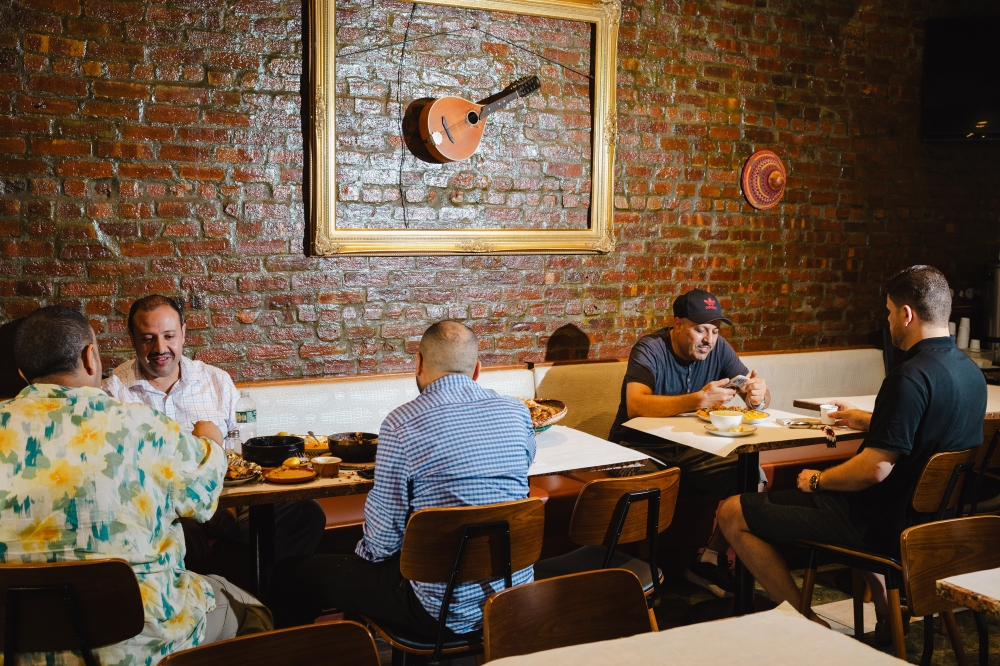
As you linger over a wedge of bent assahn, as you drink a cup of sweet, cardamom-scented black tea that you got from an urn in the back of the restaurant, and as you listen to the traditional Yemeni music playing just below the conversational hum, you might think about the palimpsest of cuisines you can find at Yemenat.
You might think about the forces that pushed the Jewish brisket makers out of Europe, and the Egyptian seafood cooks out of Egypt, and the Yemeni haneeth roasters out of Yemen. You might think about the city that gave them all a fresh start, this place of noise and pressure and chaos that was still less chaotic than the places they came from. — NYT
Oman Observer is now on the WhatsApp channel. Click here