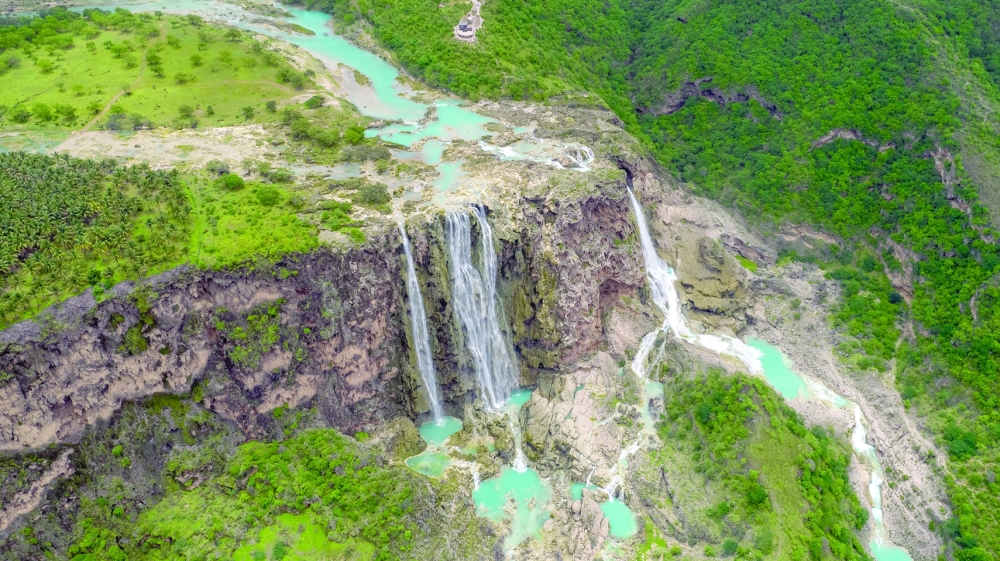





Muscat: Khareef in Dhofar and summer solstice in the rest of Oman will fall on Friday. Summer solstice marks the astronomical beginning of summer, which will last 93 days, 15 hours and 52 minutes, according to the Oman Astronomical Society.
Even before the onset of summer, high temperatures have been baking Oman for the last several weeks with Liwa touching a record-breaking 49.2 degrees Celsius in the last 24 hours, as per Oman Meteorology weather charts. Suhar, Shinas and Fahud recorded 48.9ºC followed by Al Sinainah at 48.7ºC, Hamra ad Duru, Sur and Qurayat at 48.5ºC. Lowest temperatures were recorded in Dhalkout (22.9ºC), Qairoon Hirit (23.8ºC), Saiq (24.6ºC), Shaleem (25.4ºC) Al Ashkharah (25.8ºC), Al Mazyouna (26.3ºC), Thamrait (26.4ºC) and Duqm (26.5ºC). In Dhofar, the temperature is hovering around 33ºC but it is expected to come down with drizzle and mist enveloping the governorate over the next 90 days.
Ibrahim bin Mohammed al Mahrouqi, Vice-Chairman of the Oman Astronomical Society, said that this year’s summer solstice will occur at 12:50 am. The sun will rise at 5:21 am and set at 06:57 pm, covering most of the regions of the Northern Hemisphere, which include Europe, Asia, North America and the Arctic.
He added that the daylight in Muscat will last 13 hours, 35 minutes and 51 seconds, making it the longest day of the year at night and the shortest during the day in most regions of its southern half, which include Australia, half of Africa, South America and Antarctica, noting that the summer solstice is the first day of summer in the northern hemisphere and first day winter in the southern hemisphere.
He pointed out that these solstices and equinoxes are not necessarily related to temperatures, because astronomically, the summer solstice means that the sun is perpendicular to the Tropic of Cancer. Thus the temperature is high with heatwaves.
Al Mahrouqi said summer coincides with khareef in Dhofar and and the zero shadow days in areas located on the Tropic of Cancer (Al Amerat, Fanja, Wadi Al Maawil, Al Rustaq and Ibri). On these days, the sun rises from the farthest point to the northeast and sets at the furthest point to the northwest. The nights are shorter and the days are longer. Then the daylight hours begin to decrease until night and day are equal, which is called the autumnal equinox that falls on September 22.
Oman Observer is now on the WhatsApp channel. Click here