




When Edwin Drake drilled the first crude oil well in Pennsylvania,1859, little did he know just how significant it would become. It was only after the first gas powered automobile, patented by Carl Benz in 1886, only after Henry Ford's first car in 1896, only after Ford’s ‘Model T,’ in 1908 making it affordable to the masses, did we begin to realise just how valuable this fuel was.
Fast forward a half-century later and there were 500 million vehicles on the road. By the year 2000, automotive numbers were in the billions, and growing fast.
But behind the scenes of these growing numbers, people were beginning to realize something else: The world was getting warmer, and this wasn’t part of the plan.
The negative impact of carbon emissions and its implications were increasingly being realized, along with the urgency of changing it to reduce our carbon footprint. From the first World Climate Conference in 1979 to the impactful UN Climate Change Conference (COP21) in 2016 establishing the Paris Agreement, countries were now encouraged to set carbon neutrality goals and embrace the daunting net-zero targets that are so familiar to us today.
Across the world targets were set to support this shift to a less pollutive option than fossil fuels for transportation. From the UK’s ban on new gasoline and diesel vehicles from 2030, India’s ban on the sale of new fossil fuel vehicles by 2030, Canada’s plan to phase out the sale of gas powered cars by 2035, and Oman’s plan to reach 79% electrification of vehicles on the road by 2035, it is now evident that our values are changing.
While fuel allowed us to travel far with its energy-dense, ease of storage and transportation characteristics, what we want now are cleaner, greener, more eco-friendly options.
The spotlight was initially on the rechargeable lithium-battery, first demonstrated in 1976 by Stanley Whittingham and his colleagues at Exxon. The advent of lithium-ion batteries allows us to store energy like never before. Gaining momentum in the 90s with mobile phones and laptops, to become an increasingly interesting alternative to fossil fuel burning automobiles.
While the extraction of lithium-ion still contributes to carbon emissions, it is good enough for now, helping slow down our carbon footprint as we continue to build and improve upon a more solid infrastructure for the carbon neutral future we really want.
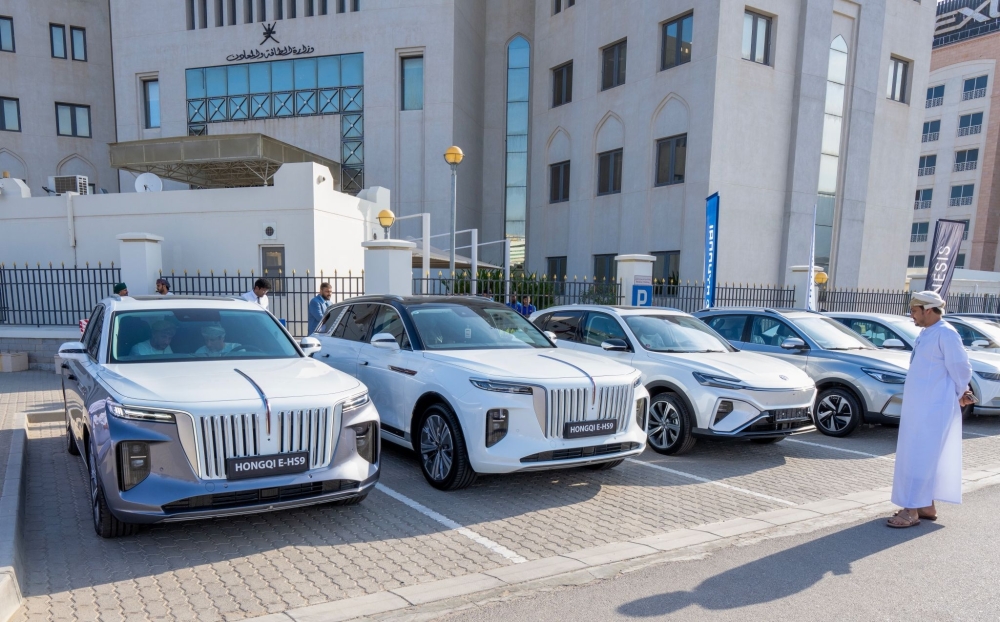
Today, the rise of electrification is evident in the many EV’s we see on the roads and the increasing ease of finding public charging stations. With advancing technology and infrastructure, decreasing production costs alongside governments’ net-zero targets and its supportive subsidies, it is no wonder that we see this sharp and continuing rise in their numbers as EVs become more accessible and convenient to the public.
From 26 million EVs estimated to be on the roads globally in 2022, rising to over 40 million in 2023, we are excited to witness this shift in the landscape of the automotive industry firsthand. The impact is, after all, truly electrifying.
Oman Observer is now on the WhatsApp channel. Click here