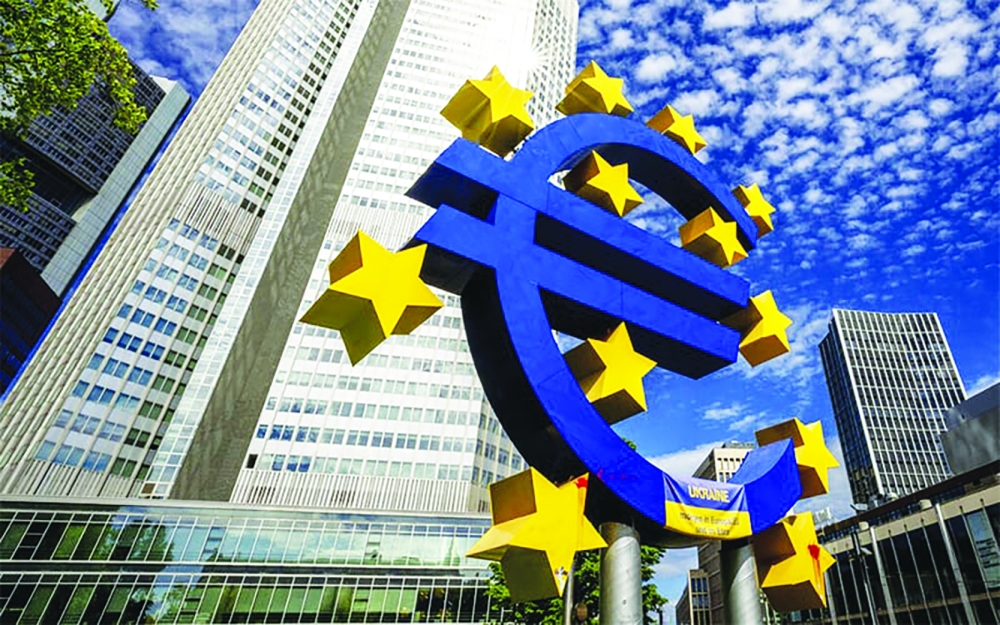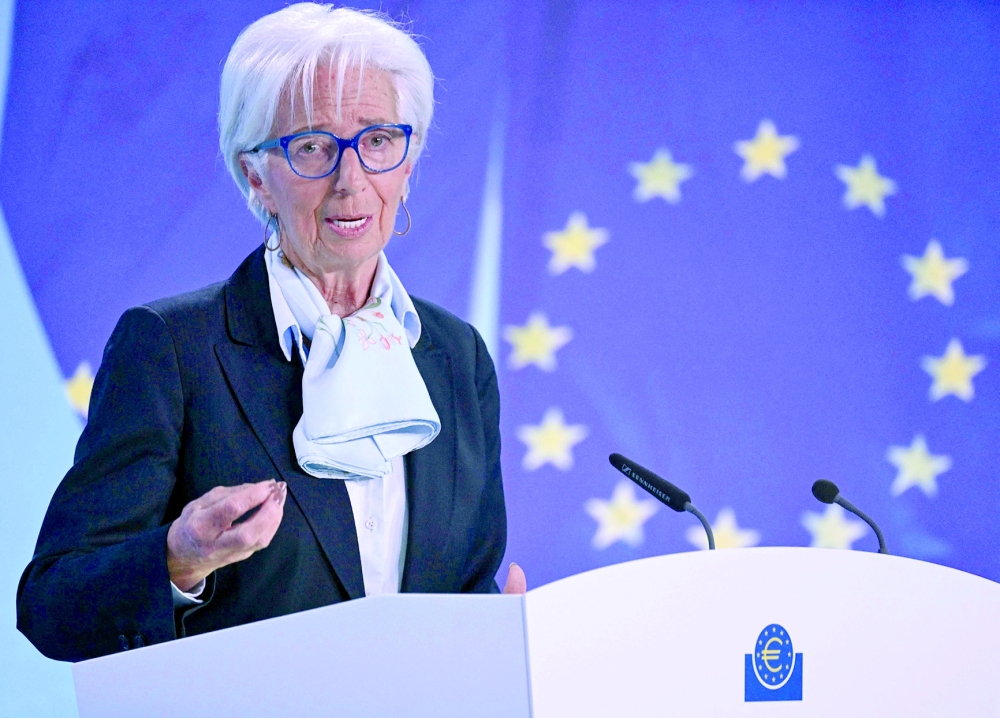





Frankfurt: The European Central Bank held interest rates steady again on Thursday but said slowing inflation could open the door to easing monetary policy, raising hopes of a first cut in June.
It was the fifth consecutive time the central bank has frozen borrowing costs, with the key deposit rate sitting at a record high of four per cent.
The ECB had hiked rates at a record pace to tame red-hot price rises, but calls have been growing for cuts to begin as inflation falls and higher borrowing costs take their toll on the 20-nation single currency area.
Euro zone inflation slowed more than expected in March to 2.4 per cent — not far off the ECB's two-per cent target.
A reduction on Thursday was widely seen as unlikely with officials having repeatedly stressed they are waiting for more data that will only be available for their meeting in June.
But in their statement, the central bank tweaked its language, saying most measures of underlying inflation were easing and wage growth — a particular concern in recent months — was "moderating".
"Past interest rate increases continue to weigh on demand, which is helping to push down inflation," it said, while adding that domestic price pressures were still a cause for worry.
If the ECB's confidence increases "that inflation is converging to the target in a sustained manner, it would be appropriate to reduce the current level of monetary policy restriction," it said.
The central bank insisted that its decisions would continue to be based on incoming data and it was "not pre-committing to a particular rate path", yet many analysts are expecting a first cut in June.
"No policy action, but the ECB officially opens the door to a June rate cut," said analysts at Capital Economics.
The ECB hiked rates 10 consecutive times from mid-2022 as inflation surged after the Ukraine war pushed up energy prices and on the back of pandemic-related supply chain woes.
Euro zone inflation, which peaked at over 10 per cent in late 2022, has steadily declined in recent months and is now expected by the ECB to return to target in 2025.
But the higher borrowing costs have hit the euro zone economy hard, dampening demand as households and businesses feel the squeeze from more expensive loans and mortgages.
The euro zone only narrowly avoided a recession in the second half of 2023, weighed down by a poor performance in its largest economy, Germany.
Like other central banks, the ECB is now weighing the best time to switch gears and support economic growth through lower rates — without endangering the progress on inflation.
The Swiss National Bank kicked off the rate-cutting cycle last month when it lowered its main rate by 0.25 percentage points — becoming the first major central bank to do so.
The US Federal Reserve, which began hiking earlier than the ECB and has kept rates steady at recent meetings, is expected to sit tight a while longer in the face of a robust economy.
Forecast-busting US inflation figures released on Wednesday dealt a blow to hopes for a June rate cut and forced traders to re-evaluate the Fed's outlook for monetary policy, with a warning that the next move could even be a hike.
The possibility of the ECB slashing rates before the Fed has worried some observers.
Lower rates in the euro zone could prompt investors to look elsewhere for higher returns, weakening the euro and making imports more expensive — potentially reigniting inflation.
But many observers believe the Frankfurt-based institution will chart its own course, and are pencilling in three to four cuts this year, by 25 basis points or 0.25 percentage points each time. — AFP
Oman Observer is now on the WhatsApp channel. Click here